Anurag Thakur Champions Natural Farming as National Movement
Synopsis
BJP MP Anurag Thakur has called natural farming a broad people's movement balancing nature, environment, and human health, crediting PM Modi's government with a historic national-level initiative to raise farmer incomes, cut cultivation costs, and protect soil fertility.
Key Takeaways
Anurag Thakur , BJP MP from Hamirpur, Himachal Pradesh , posted on 22 June 2026 describing natural farming as a 'broad people's movement.' He credited the Modi government with a historic national initiative to promote natural farming and raise farmer incomes.
Key stated goals include reducing cultivation costs and protecting soil fertility across India.
The Paramparagat Krishi Vikas Yojana (PKVY) , launched in 2015 , forms the policy backbone for India's organic and natural farming push.
Small and marginal farmers are the primary intended beneficiaries through lower input costs and improved soil health.
Upcoming Union Budget allocations for natural farming clusters will be a key indicator of the programme's scale-up.
BJP MP Anurag Thakur on Monday, 22 June 2026, called natural farming a broad people's movement aimed at balancing nature, the environment, and human health — going well beyond a mere agricultural technique. Thakur credited the central government under Prime Minister Narendra Modi with taking what he described as a historic initiative to promote natural farming at the national level, with the twin goals of raising farmer incomes and cutting cultivation costs.
Context
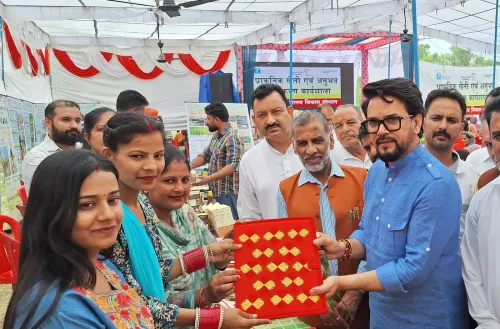
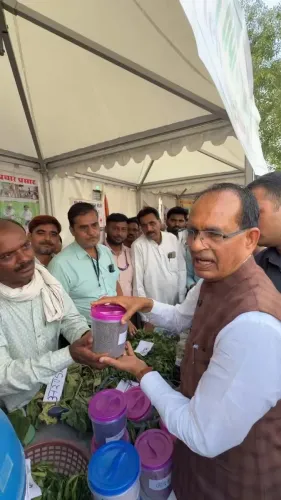
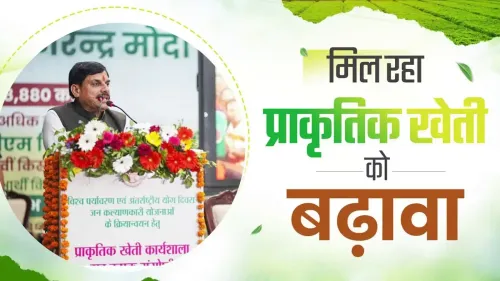
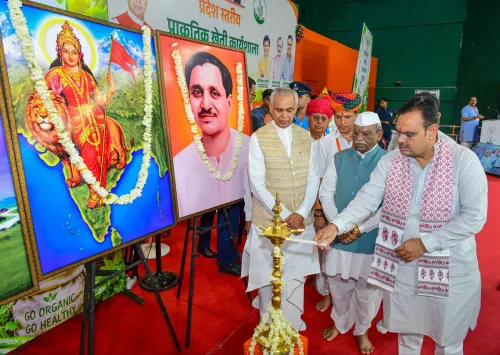
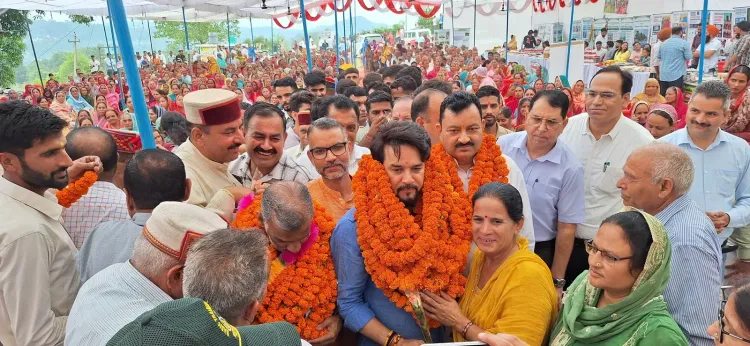
In his post, the Hamirpur MP wrote: 'प्राकृतिक खेती केवल खेती करने की एक पद्धति नहीं, बल्कि प्रकृति, पर्यावरण और मानव स्वास्थ्य के बीच संतुलन स्थापित करने का एक व्यापक जन आंदोलन है' ('Natural farming is not merely a method of cultivation, but a broad people's movement to establish a balance between nature, the environment, and human health'). Thakur further stated that the Modi government has made a historic push to protect soil fertility while reducing the financial burden on farmers. The post was accompanied by four images, underscoring the on-ground outreach around the theme.
Policy Backdrop
The central government's pivot toward natural and organic farming has roots in the Paramparagat Krishi Vikas Yojana (PKVY), launched in 2015, which promoted organic clusters and sought to reduce chemical input dependency across states. Since then, policy emphasis has gradually shifted away from the input-intensive practices of the Green Revolution era, responding to twin concerns: deepening soil degradation and chronic farmer indebtedness. Zero-budget natural farming models have been piloted in several states, receiving varying degrees of central financial and technical support. The broader sustainable agriculture agenda is also tied to India's climate commitments and rural income enhancement targets.
Stakeholders and Impact
Small and marginal farmers are the primary intended beneficiaries of the natural farming push, as reduced dependence on chemical fertilisers and pesticides can directly lower per-acre input costs. Soil health restoration is a long-term gain for farming communities, particularly in states where decades of chemical-intensive cultivation have depleted land productivity. Consumer health advocates and environmental groups have also backed natural farming as a way to reduce chemical residues in food and water systems.
What's Next
Attention will now turn to the allocation for natural farming programmes in the next Union Budget and whether the government expands certified natural farming clusters under central schemes. Thakur's high-profile advocacy signals continued political momentum behind the agenda, potentially translating into larger budgetary commitments or new scheme announcements. Whether state governments — particularly Himachal Pradesh, which has its own organic farming ambitions — align their programmes with central frameworks will be a key indicator of on-ground scale-up.
Point of View
Suggesting the party is laying public groundwork for a significant scheme expansion or budgetary announcement. Positioning PM Modi as the architect of a 'historic initiative' also reinforces the central leadership narrative ahead of state election cycles. Taken together, the statement is as much a political signal as an agricultural policy endorsement.
NationPress
22 Jun 2026
Frequently Asked Questions
What is natural farming and why is the Indian government promoting it?
Natural farming is a chemical-free agricultural practice that relies on locally available biological inputs to restore soil health and cut input costs. The Indian government has promoted it to reduce farmer indebtedness, lower dependence on synthetic fertilisers, and meet climate sustainability goals.
What did Anurag Thakur say about natural farming?
On 22 June 2026, Anurag Thakur called natural farming a broad people's movement to balance nature, the environment, and human health, and credited PM Modi's government with a historic national-level initiative to promote it.
What is the Paramparagat Krishi Vikas Yojana?
The Paramparagat Krishi Vikas Yojana (PKVY) is a central government scheme launched in 2015 to promote organic and natural farming clusters across India, aiming to reduce chemical input use and support sustainable agriculture.
How does natural farming benefit small farmers in India?
Natural farming reduces dependence on costly chemical fertilisers and pesticides, directly lowering per-acre input costs for small and marginal farmers while also restoring soil fertility for long-term productivity.
What should we watch for next on India's natural farming policy?
Key developments to watch include the allocation for natural farming in the next Union Budget and any expansion of certified natural farming clusters under central schemes such as PKVY.