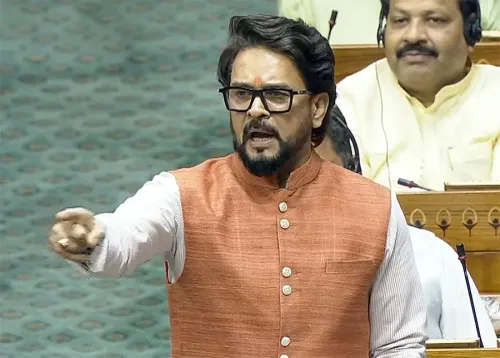
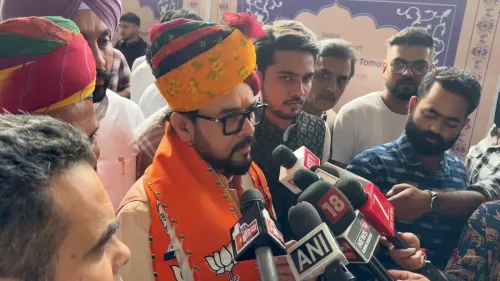
Anurag Thakur Defends Youth Bill, Taunts Rahul on PM's Residence
Synopsis
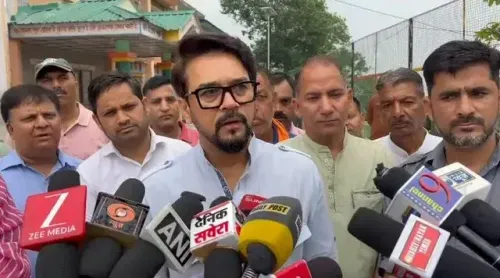
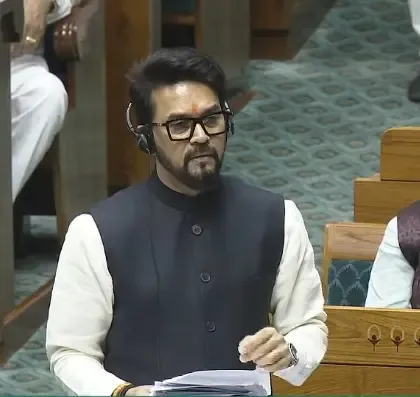
BJP MP Anurag Thakur accused the opposition of fleeing debate on a youth-focused amendment bill in Parliament and fired a pointed personal barb at Congress leader Rahul Gandhi, saying he would never enter the Prime Minister's residence.
Key Takeaways
BJP MP Anurag Thakur posted on X on July 28, 2026 defending a government amendment bill framed as securing the future of India's youth.
Thakur accused the opposition of avoiding parliamentary debate on the bill 'for so many days.' He directly taunted Rahul Gandhi , asserting Gandhi would never get the chance to enter the Prime Minister's residence .
The post fits a recurring BJP pattern of combining legislative defence with personal attacks on Congress leadership during Lok Sabha sessions.
The specific provisions of the amendment bill referenced could not be independently verified at the time of publication.
A government amendment bill aimed at securing the future of India's youth sparked sharp parliamentary friction on Tuesday, July 28, 2026 — and BJP MP Anurag Thakur did not mince words about who he holds responsible for the delay.
Taking to X, Thakur accused the opposition of dodging debate on the legislation for days, writing: 'hum desh ke yuvaon ka bhavishy surakshit rakhne ke liye ye sanshodhan bill lekar aaye' — 'We brought this amendment bill to secure the future of the country's youth, yet the opposition has been running away from even discussing it for so long.'
The post then pivoted sharply from legislative defence to personal provocation. Addressing Congress leader Rahul Gandhi directly, Thakur added: 'No matter how hard you try, you will never get the chance to enter the Prime Minister's residence.' The line — a pointed reference to Gandhi's long-standing political ambition — landed as the kind of combative parliamentary-season broadside that has become a signature of BJP's floor communication strategy.
Opposition Avoidance and the Bill at the Centre
The treasury bench's recurring complaint during Lok Sabha sessions is that the opposition disrupts or boycotts proceedings on consequential legislation, then criticises the government for passing bills without adequate debate. Thakur's post fits squarely into that pattern — framing the amendment as a pro-youth measure that the Congress-led opposition chose to stall rather than scrutinise.
The specific provisions of the amendment bill referenced in the post could not be independently verified at the time of publication. What is clear is that the bill's passage — or its prolonged floor journey — has become a political flashpoint, with the BJP casting it as a youth-welfare imperative and the opposition's conduct as obstructionism.
Thakur vs Gandhi: The Floor War Heats Up
Anurag Thakur, a five-term MP from Hamirpur, Himachal Pradesh and former Union Minister for both Information and Broadcasting and Youth Affairs and Sports, has consistently been one of the BJP's most aggressive parliamentary communicators. His targeting of Rahul Gandhi — Leader of the Opposition in the Lok Sabha — is not incidental. Gandhi has made youth employment, institutional accountability, and political succession central themes of the Congress's recent campaign messaging, making any bill framed around youth welfare a natural battleground between the two camps.
The jibe about 7, Lok Kalyan Marg — the Prime Minister's official residence — is a well-worn BJP rhetorical device, deployed to undercut Gandhi's prime-ministerial viability even as the Congress positions him as its face for the next general election.
Whether the opposition's absence from the debate floor constitutes a tactical walkout, a protest over procedure, or something else is a question Parliament's own record will answer. What Thakur's post makes unmistakable is that the BJP intends to make the Congress pay a political price for every session it sits out.
Point of View
The BJP plans to keep Gandhi's leadership ambitions, not just his party's policy positions, permanently in the crosshairs. For the Congress, the challenge is to respond on the merits of the bill without letting the personal provocation set the agenda.
NationPress
28 Jul 2026
Frequently Asked Questions
What amendment bill is Anurag Thakur defending in his July 2026 post?
Thakur referred to an amendment bill he says is designed to secure the future of India's youth. The specific provisions of the bill could not be independently verified at the time of publication.
Why did Anurag Thakur taunt Rahul Gandhi about the Prime Minister's residence?
It is a recurring BJP rhetorical device aimed at undermining Rahul Gandhi's prime-ministerial ambitions. Thakur used it to pivot from a legislative argument to a direct challenge of Gandhi's political viability.
What did Anurag Thakur say about the opposition avoiding debate?
Thakur said the opposition had been 'running away' from discussing the amendment bill for many days, framing it as deliberate obstruction of legislation meant to benefit the country's youth.
Who is Anurag Thakur and what is his political background?
Anurag Thakur is a five-term BJP Lok Sabha MP from Hamirpur, Himachal Pradesh and a former Union Minister for Information and Broadcasting as well as Youth Affairs and Sports.
What is Rahul Gandhi's current role in Parliament?
Rahul Gandhi is the Leader of the Opposition in the Lok Sabha and the most prominent face of the Indian National Congress.