Anurag Thakur Hits Out at Opposition Over NEET Paper Leak Row
Synopsis
BJP MP Anurag Thakur accused the opposition of exploiting student protests over paper leaks for political gain, defended the Modi government's NEET response including 13 arrests and a re-examination, and cited over 100 paper leaks under opposition-ruled state governments without action.
Key Takeaways
BJP MP Anurag Thakur accused the opposition of politicising student protests over paper leaks instead of cooperating with the government.
Thakur claimed 17 paper leaks occurred during the Congress government's tenure in Rajasthan , and over 100 across opposition-ruled states — figures that are part of his political argument and unverified.
The Modi government secured the arrest of 13 accused in the NEET paper leak case and conducted a re-examination, according to Thakur's post.
PM Modi has announced the creation of fast-track courts to handle paper-leak offences and stricter penalties for future cases.
The Public Examinations (Prevention of Unfair Means) Act, 2024 was Parliament's legislative response to the broader pattern of exam malpractice in India.
Progress on fast-track courts and any new parliamentary legislation will be key markers of the government's follow-through on its stated commitments.
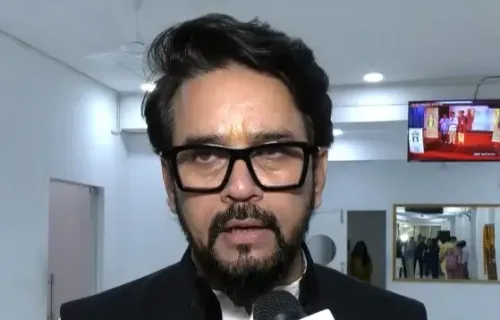
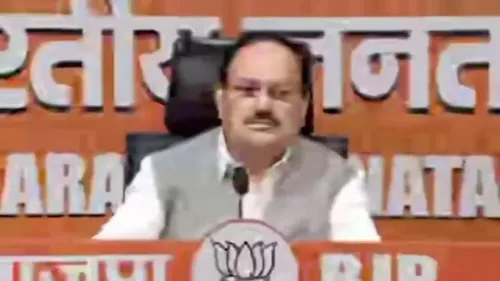
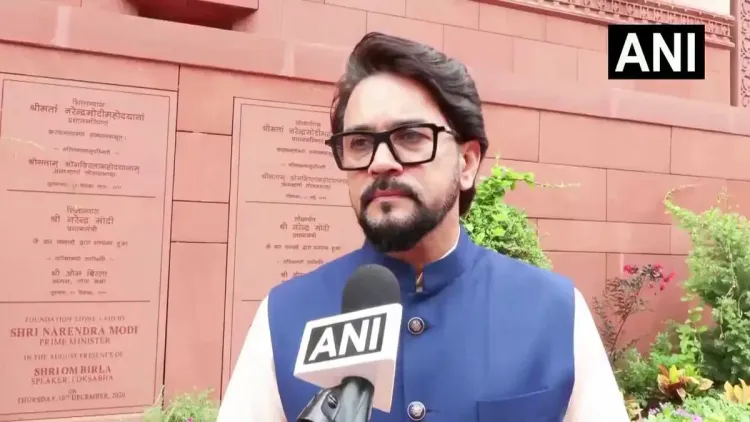
BJP MP Anurag Thakur on Friday, 24 July 2026, launched a sharp attack on the opposition, accusing it of exploiting student protests over paper leaks for political gain rather than cooperating with the government on solutions. Thakur defended the Modi government's response to the NEET paper leak controversy and cited a record of inaction by opposition-ruled state governments.
Context
In his post, Thakur alleged that opposition parties were 'राजनैतिक रोटियाँ सेंक रहे हैं' ('baking their political bread') on the back of student agitation instead of working constructively with the government. He claimed that during the Congress government's tenure in Rajasthan, 17 paper leaks took place, and that opposition-ruled governments across the country collectively saw over 100 paper leak incidents without taking cognisance or action. These specific figures are part of Thakur's political argument and have not been independently verified.
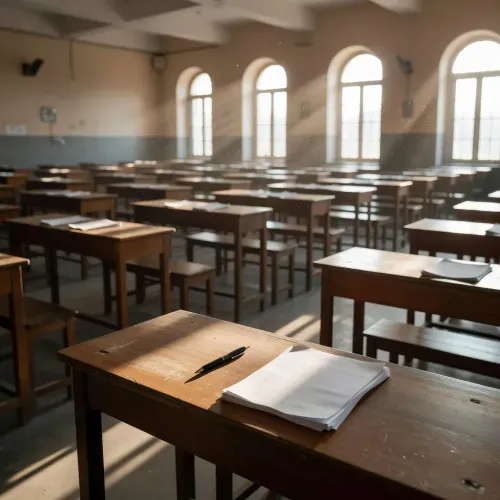
The NEET controversy emerged as one of the most politically charged education issues in recent years, with allegations of question-paper leaks triggering nationwide protests by medical aspirants and calls for accountability from student groups and political parties alike.
Policy Backdrop
Thakur highlighted several steps taken by the central government in response to the NEET paper leak: the swift arrest of 13 accused, a re-examination conducted 'with full transparency and on time', and Prime Minister Narendra Modi's announcement of fast-track courts to handle paper-leak cases. Modi also announced that stricter measures would be taken against future offenders. These figures and claims originate from Thakur's post and the government's stated position.
Paper leaks in competitive examinations have been a persistent problem across India for over a decade, affecting not just NEET but also state-level recruitment and university entrance tests. The Public Examinations (Prevention of Unfair Means) Act, passed by Parliament in 2024, was a legislative step aimed at deterring malpractice through stiffer penalties, including imprisonment and fines.
Stakeholders and Impact
At the centre of the controversy are lakhs of medical aspirants who prepare for years for the NEET examination, and whose futures are directly affected by any compromise in exam integrity. Student groups have demanded not just arrests but systemic reform of the examination delivery mechanism, including greater use of technology and independent oversight.
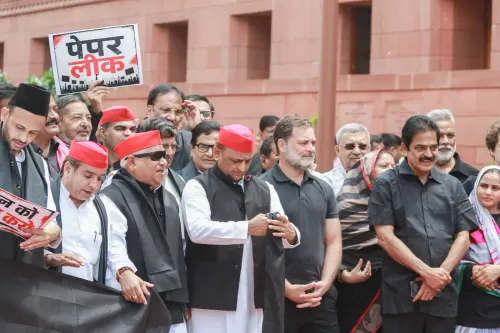
The political dimension is equally significant: the Indian National Congress and other opposition parties have used the paper leak issue to question the government's administrative competence, while the BJP has sought to deflect by pointing to the opposition's own record in states it has governed. The back-and-forth has deepened the political contest over who bears responsibility for a problem that predates the current central government.
What's Next
The establishment of fast-track courts for paper-leak cases, as announced by PM Modi, will be closely watched as a test of the government's follow-through on its reform promises. Any new legislation or amendment introduced in Parliament to further strengthen penalties could become a legislative flashpoint between the treasury benches and the opposition.
With competitive examinations remaining the primary gateway for millions of young Indians into government jobs and professional courses, the pressure on both the central and state governments to deliver credible, tamper-proof examination systems is unlikely to ease ahead of the next cycle of major national-level tests.
Point of View
Using state-level data — however contested — to neutralise a nationally damaging narrative. The announcement of fast-track courts gives the government a forward-looking policy peg, transforming a defensive moment into a legislative promise. Yet the credibility of that promise will hinge on timelines and outcomes, and opposition parties are unlikely to let the NEET controversy fade before those courts are operational. The exchange also signals that exam integrity will remain a live electoral issue, particularly for the large youth demographic that sits competitive examinations each year.
NationPress
24 Jul 2026
Frequently Asked Questions
What did Anurag Thakur say about the NEET paper leak?
Anurag Thakur said the opposition was exploiting student protests for political gain rather than cooperating with the government. He defended the Modi government's response, citing the arrest of 13 accused, a transparent re-examination, and PM Modi's announcement of fast-track courts for paper-leak cases.
How many paper leaks happened in Rajasthan under Congress, according to Thakur?
Thakur claimed 17 paper leaks occurred during the Congress government's tenure in Rajasthan. He further alleged that opposition-ruled governments across India saw over 100 paper leak incidents without taking action. These figures are part of his political argument and have not been independently verified.
What action did the Modi government take on the NEET paper leak?
According to Thakur's post, the Modi government ensured the immediate arrest of 13 accused in the NEET paper leak case and conducted a re-examination in a timely and transparent manner. PM Modi also announced fast-track courts and stricter penalties for future paper-leak offences.
What is India's law against paper leaks?
Parliament passed the Public Examinations (Prevention of Unfair Means) Act in 2024, which introduced stiffer penalties including imprisonment and fines for those found guilty of malpractice in public examinations. The government has also announced fast-track courts to speed up prosecution in such cases.
Why is the NEET paper leak controversy politically significant?
NEET is the gateway examination for medical admissions in India, and any compromise in its integrity directly affects lakhs of aspirants. The controversy has become a flashpoint between the BJP and the opposition, with each side blaming the other for systemic failures in examination administration.