CM Mohan Yadav Flags Ken-Betwa Project to End Bundelkhand Water Crisis

Synopsis
Madhya Pradesh Chief Minister Dr. Mohan Yadav has highlighted the Rs 1 lakh crore Ken-Betwa River Linking Project as the solution to Bundelkhand's chronic water scarcity and out-migration, promising full government compensation to all affected landowners and residents.
Key Takeaways
Mohan Yadav declared on 24 July 2026 that water scarcity and migration in Bundelkhand are nearing an end.
The Ken-Betwa River Linking Project is described as a Rs 1 lakh crore initiative targeting irrigation, industry and drinking water supply.
The project proposes diverting surplus water from the Ken river to the Betwa river across the drought-prone Bundelkhand belt.
A tripartite agreement between the Centre , Madhya Pradesh and Uttar Pradesh was signed in 2021 , providing the project's legal foundation.
The government has assured full compensation to farmers and residents whose land or homes fall within the project's footprint.
Key pending steps include land acquisition, compensation disbursement and environmental and forest clearances from central agencies.
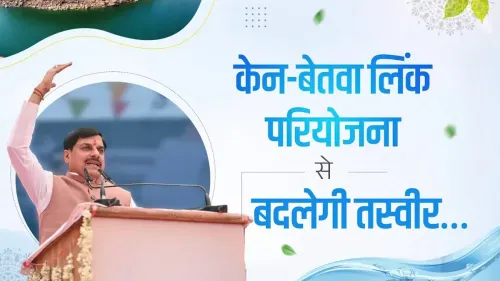
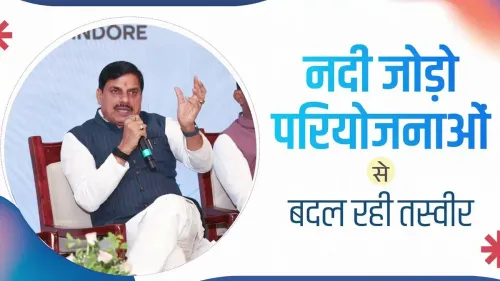
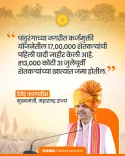
Madhya Pradesh Chief Minister Dr. Mohan Yadav on Friday, 24 July 2026, declared that the era of water scarcity and out-migration in Bundelkhand is nearing its end, pointing to the state government's push for the Ken-Betwa River Linking Project, which he described as a Rs 1 lakh crore initiative to bring water to farms, industries and every household in the region.
Context
Bundelkhand, a drought-prone belt straddling Madhya Pradesh and Uttar Pradesh, has for decades been defined by recurring water stress and large-scale migration of rural communities in search of livelihood. Dr. Mohan Yadav, posting in Hindi on X, stated: 'Bundelkhand mein ab paani ki kami aur palayan ka daur khatam hone waala hai' ('The era of water shortage and migration in Bundelkhand is about to end'). He added that full compensation would be paid by the government to farmers and residents whose land or homes fall within the project's footprint.
The Chief Minister's remarks place the Ken-Betwa River Linking Project at the centre of the state's development narrative for the region. The project proposes to divert surplus water from the Ken river to the Betwa river, enabling irrigation, industrial supply and drinking water access across historically underserved districts.
Policy Backdrop
The Ken-Betwa link has its origins in the National Perspective Plan for river interlinking, prepared by the Ministry of Water Resources in the early 2000s. A tripartite memorandum of agreement was signed in 2021 between the Centre, Madhya Pradesh and Uttar Pradesh, marking a formal commitment from all three governments to advance the project.
India's broader river-interlinking programme has been designed to correct spatial and temporal imbalances in water availability — channelling surplus flows from water-rich basins to deficit regions. The Ken-Betwa link is among the most advanced projects under this national framework, given the inter-state agreement already in place and the sustained political attention it has received across successive governments.
Stakeholders and Impact
Bundelkhand farmers stand to gain irrigated access to land that has historically depended on erratic monsoon rains. Rural households in the region, many of which lack reliable drinking water supply, are among the primary beneficiaries cited by the government. Local industries are also expected to benefit from improved water availability.
Dr. Yadav specifically assured that farmers and residents whose property falls within the project zone will receive full compensation from the government — a commitment aimed at easing concerns over displacement and land acquisition that have historically slowed large infrastructure projects in India.
What's Next
The project's progress will hinge on the pace of land acquisition, the timely disbursement of compensation to affected families, and continued coordination between Madhya Pradesh, Uttar Pradesh and central agencies on outstanding environmental and forest clearances. These clearances have been a longstanding point of complexity for the project.
With CM Yadav publicly reaffirming the government's commitment and the compensation assurance, the political signal is clear: Bundelkhand's water future is being positioned as a flagship deliverable for the BJP-led state government ahead of the next cycle of political accountability in the region.
Point of View
CM Yadav is doing two things at once: reinforcing the BJP's infrastructure-delivery credentials in a politically sensitive region, and pre-empting the land-acquisition resistance that has derailed comparable projects elsewhere. Bundelkhand has been a recurring electoral battleground in both Madhya Pradesh and Uttar Pradesh, making water security a high-stakes political promise. The statement fits a broader pattern of the BJP-led Centre and state governments using river-interlinking as a symbol of transformative governance — but the gap between announcement and execution, particularly on forest and environmental clearances, will be the true test of the project's timeline.
NationPress
24 Jul 2026
Frequently Asked Questions
What is the Ken-Betwa River Linking Project?
The Ken-Betwa River Linking Project is an inter-basin water transfer initiative that proposes to divert surplus water from the Ken river to the Betwa river to provide irrigation, drinking water and industrial supply to the drought-prone Bundelkhand region spanning Madhya Pradesh and Uttar Pradesh.
What is the cost of the Ken-Betwa project?
Chief Minister Dr. Mohan Yadav has cited a figure of Rs 1 lakh crore for the Ken-Betwa River Linking Project in his post on 24 July 2026.
Will farmers get compensation under the Ken-Betwa project?
Yes. CM Yadav has stated that the government will provide full compensation to farmers and residents whose land or homes fall within the project's footprint.
Which states are involved in the Ken-Betwa River Linking Project?
Madhya Pradesh and Uttar Pradesh are the two states directly involved, along with the Central Government. A tripartite memorandum of agreement was signed by all three parties in 2021.
How will the Ken-Betwa project help Bundelkhand?
The project aims to end chronic water scarcity in Bundelkhand by supplying water for agriculture, drinking and industrial use, which the government says will also curb the long-standing trend of out-migration from the region.