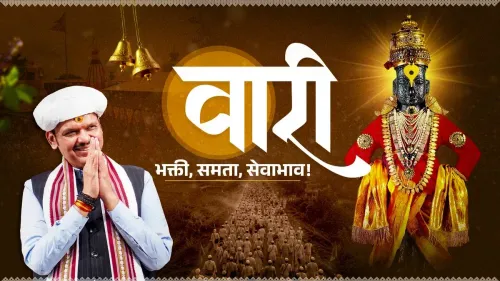
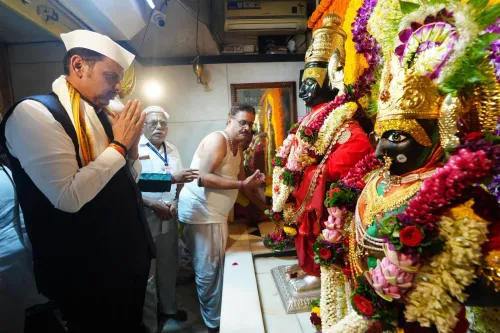
CM Fadnavis Welcomes Warkaris on Ashadhi Ekadashi 2026
Synopsis
Chief Minister Devendra Fadnavis welcomed Warkari pilgrims on Devshayani Ashadhi Ekadashi on 24 July 2026, continuing Maharashtra's tradition of state-level ceremonial acknowledgement of the centuries-old Pandharpur pilgrimage. The CMO Maharashtra post signals ongoing government engagement with the Varkari community and the Ashadhi Wari.
Key Takeaways
CM Devendra Fadnavis extended an official welcome to Warkari pilgrims on Devshayani Ashadhi Ekadashi, 24 July 2026 .
The greeting was posted by the official Chief Minister's Office of Maharashtra on X.
The Ashadhi Wari is a centuries-old foot pilgrimage to the Pandharpur temple of Vitthal in Solapur district .
Lakhs of Warkari devotees participate annually, with palanquins of Sant Dnyaneshwar and Sant Tukaram leading the procession.
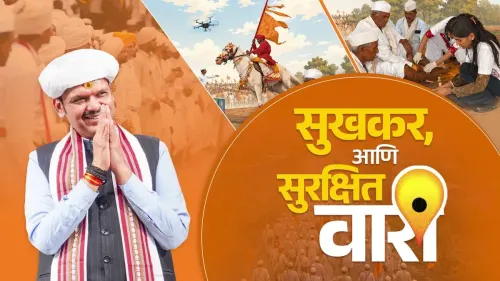
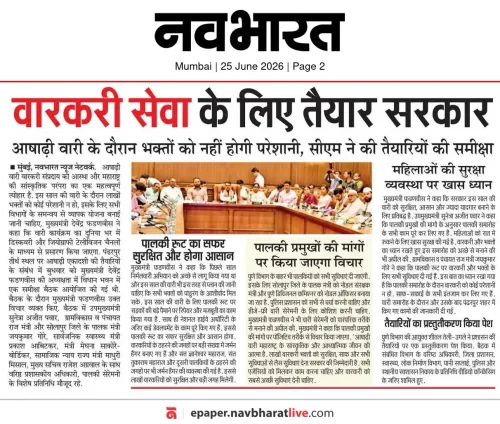
Maharashtra governments have long provided logistical support — crowd management, medical aid, and traffic regulation — along the pilgrimage route.
The next major Varkari event is Kartiki Ekadashi , for which state preparations are expected to begin after the 2026 Ashadhi Wari concludes.
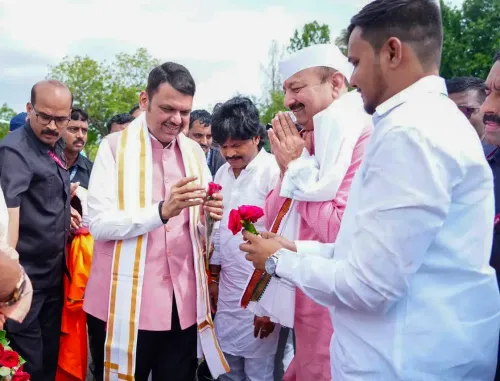
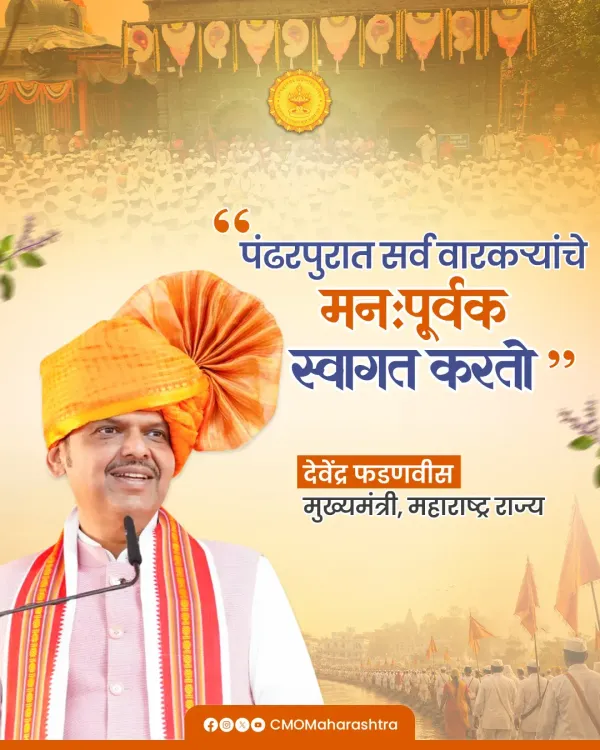
The Chief Minister's Office of Maharashtra announced on Friday, 24 July 2026 that Chief Minister Devendra Fadnavis extended a formal welcome to Warkari pilgrims on the occasion of Devshayani Ashadhi Ekadashi, marking the state government's ceremonial acknowledgement of one of Maharashtra's most significant religious processions.
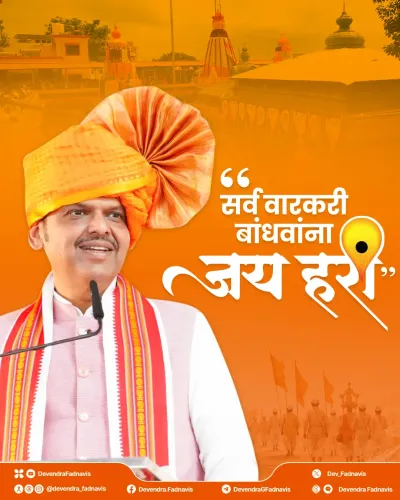
The post, shared from the official CMO Maharashtra handle, read in Marathi: 'देवशयनी आषाढी एकादशीनिमित्त मुख्यमंत्री देवेंद्र फडणवीस यांच्याकडून वारकऱ्यांचे स्वागत!' — translating to 'Chief Minister Devendra Fadnavis welcomes the Warkaris on the occasion of Devshayani Ashadhi Ekadashi!'
Context
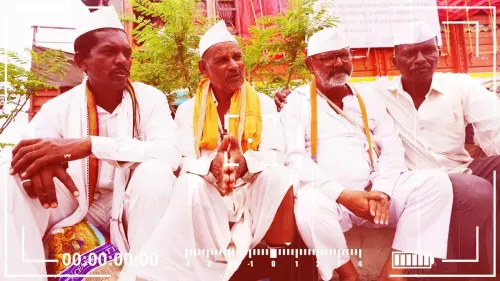
Ashadhi Ekadashi, falling on the eleventh day of the bright fortnight in the Hindu month of Ashadha, is the most sacred day in the Varkari calendar. Hundreds of thousands of devotees, known as Warkaris, undertake a weeks-long padayatra (foot pilgrimage) converging on the Pandharpur temple of Vitthal in Solapur district, Maharashtra.
The procession, called the Ashadhi Wari, is rooted in Maharashtra's centuries-old Bhakti movement, associated with poet-saints such as Sant Dnyaneshwar and Sant Tukaram. The palanquins of these saints are carried from Alandi and Dehu respectively, drawing pilgrims from across the state and beyond.
Policy Backdrop
Maharashtra governments across administrations have consistently extended institutional support to the Ashadhi Wari, treating it as both a cultural heritage event and a large-scale public movement requiring state coordination. Arrangements typically include crowd management, medical aid stations, drinking water facilities, and traffic regulation along traditional pilgrimage routes.
Chief Ministers have customarily issued public greetings on Ashadhi Ekadashi, a practice that reflects the deep intertwining of the Varkari tradition with Maharashtra's public and political life. CM Fadnavis, who has served multiple terms as Chief Minister, has maintained this engagement with the state's religious calendar.
Stakeholders and Impact
The Warkari community numbers in the millions across Maharashtra, making it one of the state's most influential social and spiritual constituencies. The pilgrimage mobilises not only devotees but also volunteers, local administrations along the route, and civic bodies in Pandharpur itself.
For local economies along the Wari route — spanning districts including Pune, Satara, Sangli, and Solapur — the annual procession generates significant activity in hospitality, food supply, and transport. The state's ceremonial welcome signals continued governmental attention to pilgrim welfare and route infrastructure.
What's Next
Following Ashadhi Ekadashi, the next major milestone in the Varkari calendar is Kartiki Ekadashi, when pilgrims return to Pandharpur in the month of Kartik. State authorities are expected to review the logistical performance of the 2026 Ashadhi Wari to inform preparations for the Kartiki Wari later in the year.
The government's continued ceremonial and administrative engagement with the Wari underscores how deeply the pilgrimage is woven into Maharashtra's governance calendar — and any updates to route infrastructure or pilgrim facilities will be closely watched by the Warkari community.
Point of View
Reflecting the Varkari community's vast social and electoral footprint. For the current Mahayuti administration, maintaining this ceremonial continuity is as much about cultural legitimacy as it is about governance. The post also arrives at a moment when the state's management of large religious gatherings faces heightened scrutiny, making visible official attention to pilgrim welfare politically prudent. Longer term, the government's engagement with the Wari is likely to be judged less by ceremonial gestures and more by tangible improvements to route infrastructure and pilgrim facilities.
NationPress
24 Jul 2026
Frequently Asked Questions
What is Ashadhi Ekadashi and why is it important in Maharashtra?
Ashadhi Ekadashi falls on the eleventh day of the bright fortnight in the Hindu month of Ashadha and is the holiest day in the Varkari calendar. Lakhs of Warkari pilgrims walk to the Pandharpur temple of Vitthal in Solapur district, making the Ashadhi Wari one of India's largest annual pilgrimages, rooted in Maharashtra's Bhakti tradition.
What did CM Devendra Fadnavis say to the Warkaris on Ashadhi Ekadashi 2026?
The Chief Minister's Office of Maharashtra posted on X on 24 July 2026 that CM Devendra Fadnavis extended a formal welcome to Warkari pilgrims on the occasion of Devshayani Ashadhi Ekadashi.
What is the Ashadhi Wari pilgrimage route?
The Ashadhi Wari begins at Alandi (palanquin of Sant Dnyaneshwar) and Dehu (palanquin of Sant Tukaram) near Pune, and proceeds through districts including Satara, Sangli, and Solapur before culminating at Pandharpur.
How does the Maharashtra government support the Ashadhi Wari?
The state government typically arranges crowd management, medical aid stations, drinking water supply, and traffic regulation along the traditional pilgrimage routes, coordinating with local administrations across multiple districts.
When is the next Warkari pilgrimage after Ashadhi Ekadashi?
The next major Varkari pilgrimage is Kartiki Ekadashi, when devotees return to Pandharpur in the Hindu month of Kartik, usually falling between October and November.