CM Fadnavis Inaugurates Free Barber, Hirakani Services for Warkaris at Pandharpur
Synopsis
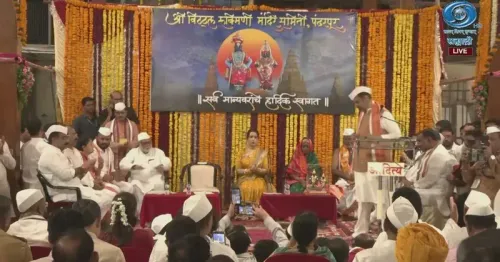
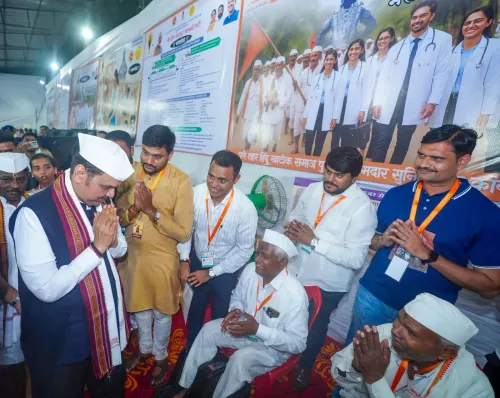
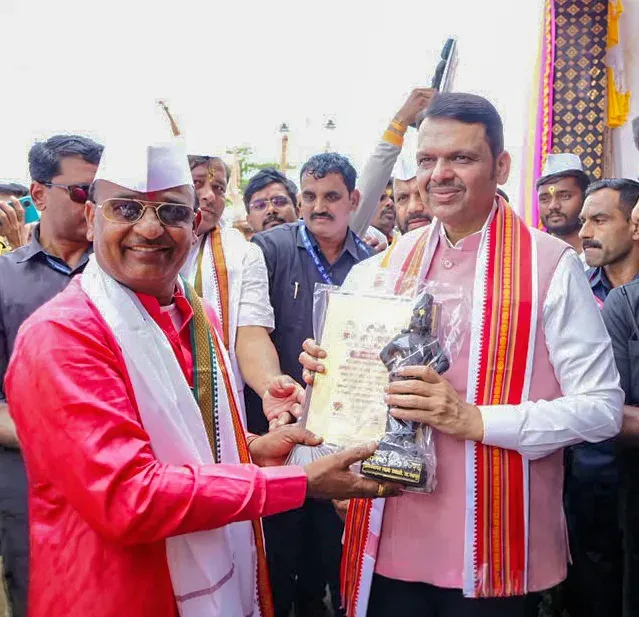
Chief Minister Devendra Fadnavis inaugurated a free haircut facility and a Hirakani Kaksha for nursing mothers at Pandharpur on 24 July 2026, organised by Gram Panchayat Lakshmi Takali for Warkari pilgrims during the annual Wari pilgrimage season.
Key Takeaways
Chief Minister Devendra Fadnavis inaugurated two welfare facilities for Warkari pilgrims at Pandharpur on 24 July 2026 .
The facilities — a free haircut service ( Mofat Keshkartanalay Seva ) and a Hirakani Kaksha (nursing and infant-care room) — were organised by Gram Panchayat Lakshmi Takali .
Minister Jaykumar Gore and former MLA Prashant Paricharkar attended the inauguration.
The initiative is part of a long-standing state-local partnership to provide amenities to Warkari pilgrims during the annual Wari at Pandharpur.
The Hirakani Kaksha specifically addresses the needs of nursing mothers and infants among the pilgrim community.
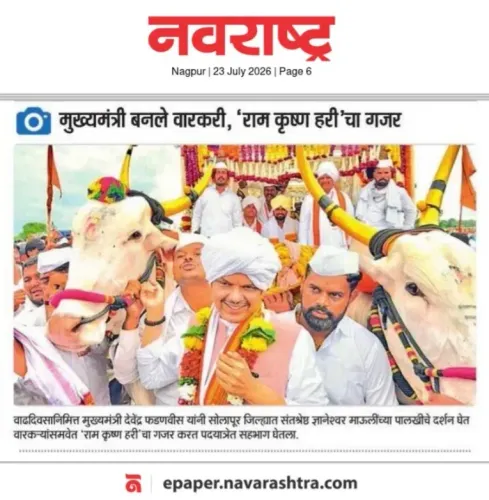
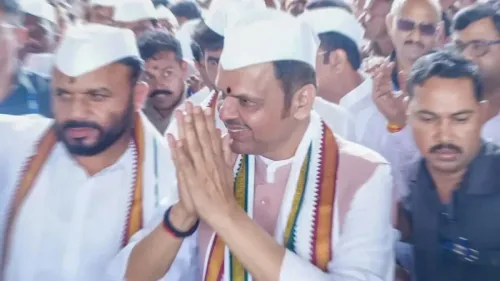
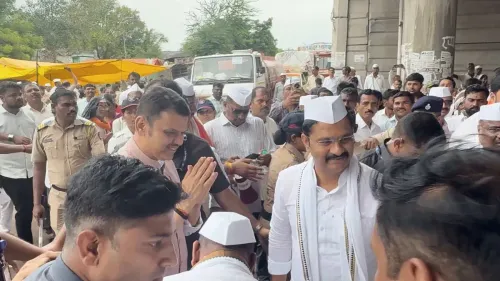
The Chief Minister's Office of Maharashtra announced on Friday, 24 July 2026 that Chief Minister Devendra Fadnavis inaugurated a free haircut service (Mofat Keshkartanalay Seva) and a Hirakani Kaksha — a dedicated nursing and infant-care room — for Warkari pilgrims at Pandharpur, organised by Gram Panchayat Lakshmi Takali.
The post, shared on the official CMO Maharashtra account, stated: 'Mukhyamantri Devendra Fadnavis yanhi Pandharpur yethey Gram Panchayat Lakshmi Takali yanchya vatine Warkaryansathi ayojit Mofat Keshkartanalay Seva ani Hirakani Kaksha che udghaatan kele' — translated: 'Chief Minister Devendra Fadnavis inaugurated the free haircut service and Hirakani Kaksha organised by Gram Panchayat Lakshmi Takali for Warkaris at Pandharpur.' Minister Jaykumar Gore and former MLA Prashant Paricharkar were among the dignitaries present at the event.
Context
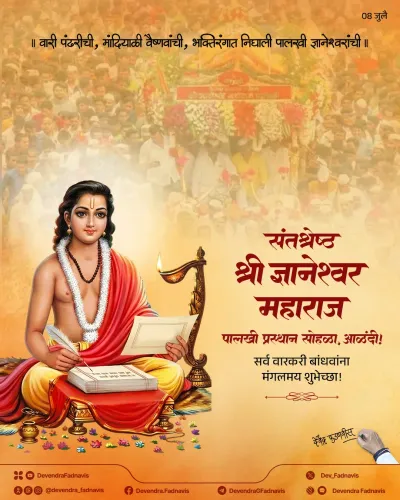
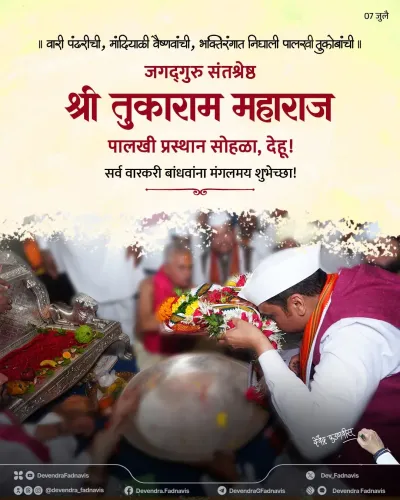
Pandharpur, located in Solapur district, is Maharashtra's foremost pilgrimage town, home to the revered Vithoba temple. Every year, lakhs of Warkari devotees undertake the centuries-old Wari — a walking pilgrimage honouring saints Dnyaneshwar and Tukaram — converging on Pandharpur during the Ashadhi and Kartiki festivals. The sheer scale of the pilgrimage places significant demand on local infrastructure and welfare facilities.
The Hirakani Kaksha is a state initiative named after a historical Maratha figure, designed to provide nursing mothers and infants a safe, hygienic space — a facility that addresses a specific and often overlooked need among women pilgrims making the long journey on foot.
Policy Backdrop
Maharashtra governments have for several decades coordinated medical camps, sanitation facilities, and rest shelters for Warkaris at Pandharpur as part of both rural infrastructure and cultural-tourism policy. The current initiative extends that tradition by involving a gram panchayat — Gram Panchayat Lakshmi Takali — as the primary organiser, reflecting a state-local partnership model.
Successive administrations, including those led by Fadnavis in prior terms, have treated pilgrim welfare as a recurring policy commitment rather than a discretionary gesture. The inclusion of a free barber service alongside the Hirakani Kaksha signals an effort to address both general hygiene and the specific needs of women and infants on the pilgrimage route.
Stakeholders and Impact
The primary beneficiaries are the Warkari pilgrims — a constituency that spans rural Maharashtra and cuts across caste and economic lines. Free grooming services reduce out-of-pocket costs for pilgrims who travel for days, while the Hirakani Kaksha directly supports nursing mothers, a group that has historically had limited access to dedicated facilities at large public gatherings.
For Gram Panchayat Lakshmi Takali, hosting a CM-inaugurated facility raises the local body's profile and may attract additional state support for infrastructure in the Pandharpur region. Minister Jaykumar Gore's presence underlines the regional political significance of the event for the ruling coalition.
What's Next
Observers will watch for additional facility announcements or budget allocations ahead of the next major Wari dates, as well as any coordination between the state's tourism or revenue departments and Pandharpur-area gram panchayats. The state's approach to scaling such services — particularly the Hirakani Kaksha model — across other major pilgrimage sites in Maharashtra may emerge as a policy signal in coming months.
Point of View
But the specific inclusion of a Hirakani Kaksha marks a deliberate effort to signal gender-sensitive governance to a mass constituency. By routing the initiative through a gram panchayat rather than a state department, the Fadnavis administration reinforces its decentralisation credentials ahead of what is typically an electorally sensitive pilgrimage season. The Warkari community, which spans rural Maharashtra and holds considerable moral authority, has historically rewarded administrations that visibly attend to its needs. Sustaining and expanding this model to other pilgrimage corridors will be the real test of whether this is policy or ceremony.
NationPress
23 Oct 2026
Frequently Asked Questions
What is Hirakani Kaksha and why was it inaugurated at Pandharpur?
Hirakani Kaksha is a dedicated nursing and infant-care room designed to provide a safe, hygienic space for breastfeeding mothers and their babies. It was inaugurated at Pandharpur by CM Devendra Fadnavis on 24 July 2026 to support women Warkari pilgrims attending the annual Wari pilgrimage.
Who organised the free haircut service for Warkaris at Pandharpur?
The free haircut service ( Mofat Keshkartanalay Seva ) was organised by Gram Panchayat Lakshmi Takali on behalf of Warkari pilgrims visiting Pandharpur.
What is the Wari pilgrimage in Maharashtra?
The Wari is a centuries-old annual walking pilgrimage undertaken by Warkari devotees in honour of saints Dnyaneshwar and Tukaram, culminating at the Vithoba temple in Pandharpur, Solapur district. It draws lakhs of pilgrims during the Ashadhi and Kartiki festivals each year.
Who attended the Pandharpur inauguration with CM Fadnavis?
Minister Jaykumar Gore and former MLA Prashant Paricharkar were among the dignitaries present at the inauguration of the free welfare facilities at Pandharpur on 24 July 2026.
Does Maharashtra government regularly provide facilities for Warkari pilgrims?
Yes. Maharashtra governments have for several decades arranged medical camps, sanitation, rest shelters, and other welfare facilities for Warkari pilgrims at Pandharpur during the Wari season, treating it as part of rural infrastructure and cultural-tourism policy.