Anurag Thakur Highlights Gratuity Hike, Equal Benefits for Fixed-Term Workers
Synopsis
BJP MP Anurag Thakur highlighted that fixed-term employees are now entitled to social security benefits at par with permanent workers, with the minimum service bar for gratuity removed and the ceiling doubled from Rs 10 lakh to Rs 20 lakh under India's reformed labour laws.
Key Takeaways
Fixed-term employees are entitled to social security benefits equivalent to those of permanent employees under the Code on Social Security, 2020 .
The minimum service period requirement for gratuity has been removed for fixed-term employees; gratuity is now paid on a pro-rata basis.
The statutory gratuity ceiling was doubled from Rs 10 lakh to Rs 20 lakh under the Payment of Gratuity (Amendment) Act, 2018.
The Code on Social Security, 2020 consolidated nine central labour laws and extended coverage to gig and platform workers as well.
Full implementation depends on state-level notifications ; Himachal Pradesh and other states are at varying stages of rule-making under the new codes.
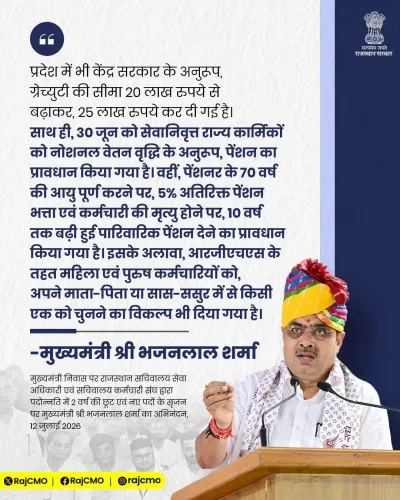
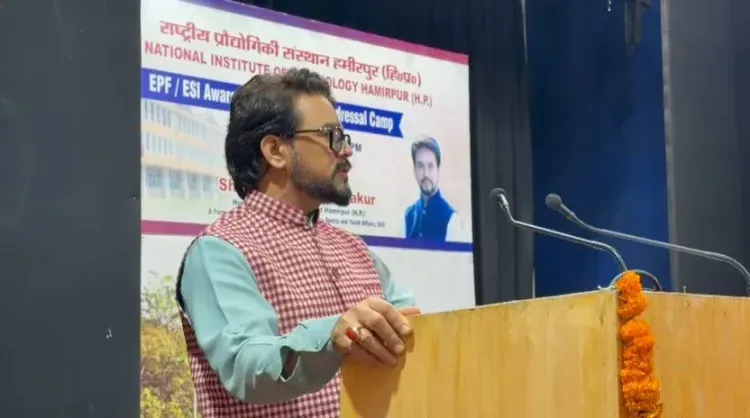
BJP MP Anurag Thakur, representing Hamirpur in Himachal Pradesh, on Wednesday, 8 July 2026, highlighted two key worker-welfare provisions from India's reformed labour framework — equal social security benefits for fixed-term employees and a doubling of the statutory gratuity ceiling from Rs 10 lakh to Rs 20 lakh.
In his post, tagged to Hamirpur, Thakur stated: 'Jo bhi Fixed-term employees hain unhe permanent employees ki tarah hi samajik suraksha labh milega' — meaning all fixed-term employees will receive social security benefits on par with permanent employees, and the minimum service period required for gratuity eligibility has been removed for them. He further noted that the gratuity ceiling has been raised from Rs 10 lakh to Rs 20 lakh.
Context
Fixed-term employment contracts allow companies to hire workers for specific durations without the obligations attached to permanent employment. Historically, such workers were excluded from gratuity entitlements because they rarely completed the standard five-year continuous service threshold required under the Payment of Gratuity Act, 1972. This left a large section of the organised and semi-organised workforce without a key retirement-linked benefit.
Thakur's post draws attention to reforms that address this structural gap, positioning fixed-term workers as equal beneficiaries of social security protections that were previously available only to those with long, uninterrupted tenures.
Policy Backdrop
The provisions Thakur referenced are rooted in two distinct legislative actions. The Payment of Gratuity (Amendment) Act, 2018 raised the statutory ceiling on gratuity payouts from Rs 10 lakh to Rs 20 lakh, benefiting all employees covered under the original 1972 Act. This change brought the ceiling in line with the enhanced gratuity limits applicable to central government employees.
Subsequently, the Code on Social Security, 2020 — one of four landmark labour codes passed by Parliament — explicitly extended gratuity entitlements to fixed-term employees on a pro-rata basis, removing the minimum service period requirement for this category. The Code consolidated nine central labour laws into a single framework, also bringing gig workers and platform workers within the ambit of formal social security coverage for the first time.
Stakeholders and Impact
The beneficiaries of these provisions include contract workers, seasonal employees, project-based hires, and others engaged on fixed-term contracts across manufacturing, construction, retail, and the services sector. For these workers, the removal of the minimum service bar means gratuity is now calculated on a pro-rata basis from day one of employment, providing a financial safety net regardless of contract duration.
The doubling of the gratuity ceiling to Rs 20 lakh is particularly significant for mid-to-senior level employees in the private sector, who had seen the earlier cap eroded by inflation over decades. Employers in states that have notified the Code on Social Security, 2020 are required to factor these obligations into their workforce cost planning.
What's Next
The full implementation of the Code on Social Security, 2020 depends on state-level notifications, as labour is a concurrent subject under the Indian Constitution. Himachal Pradesh and several other states are at varying stages of framing rules under the new codes. Until states publish final rules, the older laws technically remain operative in those jurisdictions.
Thakur's communication from Hamirpur signals continued grassroots outreach on labour welfare provisions, a theme that is likely to feature prominently as the ruling party seeks to demonstrate tangible policy delivery to the workforce ahead of future electoral cycles.
Point of View
He ties national policy to local constituency outreach, a pattern visible across BJP legislators ahead of electoral cycles. The doubling of the gratuity ceiling and the pro-rata extension to fixed-term workers are substantive gains for contract labour, but their real-world impact remains contingent on states completing the rule-notification process. The post reflects the ruling party's effort to own the narrative on labour formalisation without reopening the politically sensitive debate over the codes' contested passage.
NationPress
7 Oct 2026
Frequently Asked Questions
Are fixed-term employees entitled to gratuity in India?
Yes. Under the Code on Social Security, 2020, fixed-term employees are entitled to gratuity on a pro-rata basis without needing to complete the standard five-year minimum service period required for permanent employees.
What is the current maximum gratuity limit in India?
The current statutory gratuity ceiling is Rs 20 lakh , doubled from Rs 10 lakh under the Payment of Gratuity (Amendment) Act, 2018.
What is the Code on Social Security 2020?
The Code on Social Security, 2020 is a central legislation that consolidated nine labour laws to extend formal social security — including gratuity, provident fund, and maternity benefits — to fixed-term, gig, and platform workers in India.
Do contract workers get the same benefits as permanent employees in India?
Under the Code on Social Security, 2020, fixed-term contract workers are entitled to social security benefits, including gratuity, on par with permanent employees, though actual implementation depends on state-level rule notifications.
What did Anurag Thakur say about fixed-term employee benefits?
Anurag Thakur stated that all fixed-term employees will receive social security benefits equal to permanent employees, that the minimum service requirement for gratuity has been removed for them, and that the gratuity ceiling has been raised from Rs 10 lakh to Rs 20 lakh.