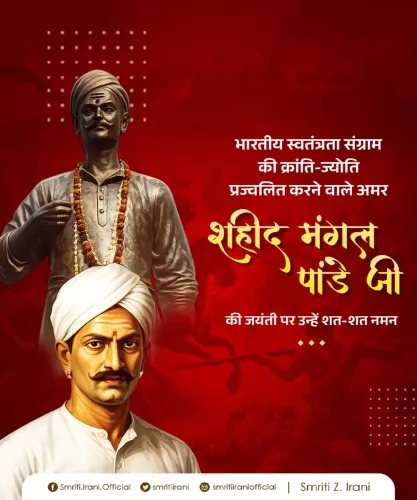
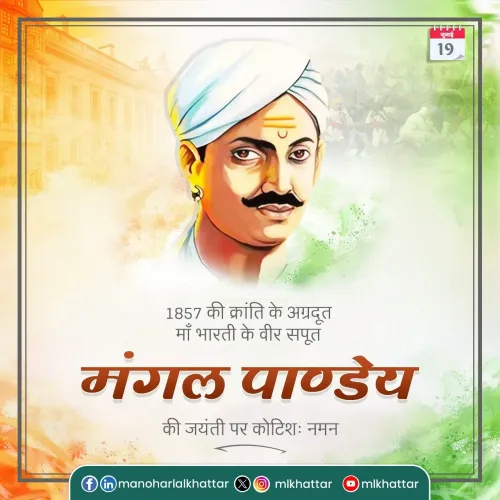
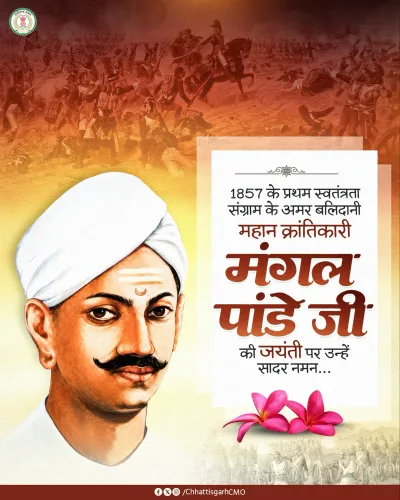
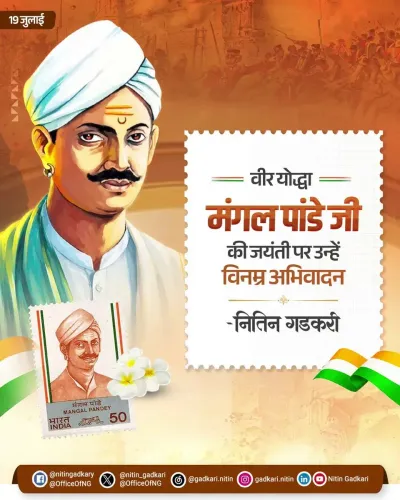
Anurag Thakur pays tribute to Mangal Pandey on birth anniversary
Synopsis
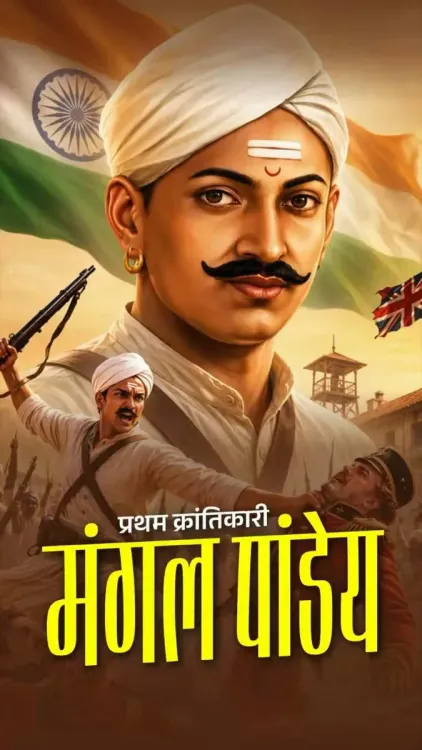
BJP MP Anurag Thakur marked the birth anniversary of 1857 martyr Mangal Pandey on 19 July 2026, offering tribute to the Bengal Army sepoy whose defiance against British colonial rule is seen as a spark of India's first major armed uprising.
Key Takeaways
Anurag Thakur , BJP Lok Sabha MP from Hamirpur, Himachal Pradesh , paid tribute to Mangal Pandey on his birth anniversary on 19 July 2026 .
Mangal Pandey was a Bengal Army sepoy whose 1857 act of defiance is widely regarded as a trigger for India's first major armed uprising against British rule.
Pandey was executed by the British on 8 April 1857 and is remembered as one of India's earliest freedom martyrs.
The Government of India held nationwide commemorations on the 150th anniversary of the 1857 Revolt in 2007 , honouring Pandey among other martyrs.
The tribute reflects the BJP 's broader emphasis on pre-Gandhian resistance leaders as central figures in India's freedom narrative.
With Independence Day 2026 approaching, tributes to 1857 martyrs are expected to increase across political and cultural platforms.
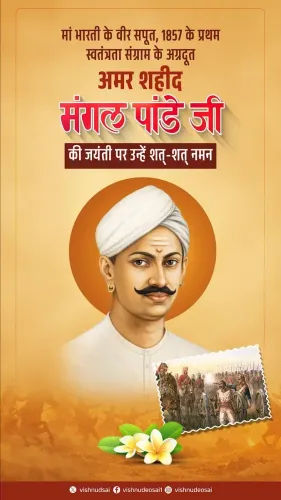
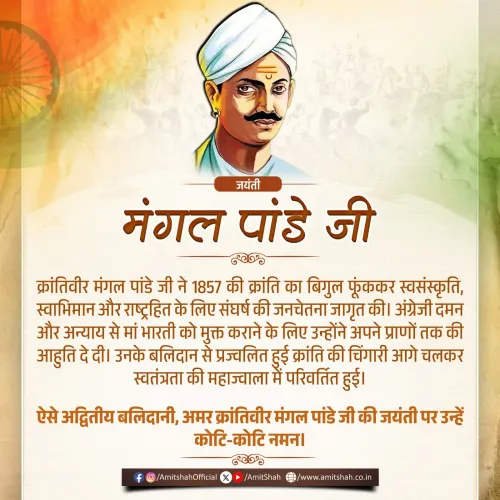
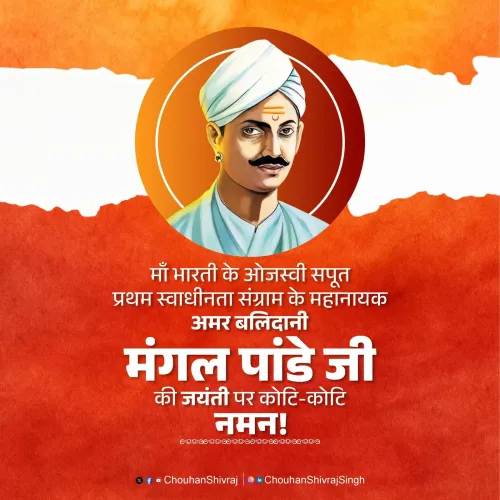
BJP MP Anurag Thakur on Sunday, 19 July 2026, paid homage to Mangal Pandey, the 1857 freedom fighter, marking his birth anniversary with a post on X that saluted Pandey's sacrifice for India's honour and self-respect.
Thakur wrote, '1857 स्वतंत्रता संग्राम के नेतृत्वकर्ता, माँ भारती के स्वाभिमान के लिए स्वयं को समर्पित कर देने वाले अमर बलिदानी मंगल पांडेय जी की जयंती पर कोटि कोटि नमन-वंदन' — translating to: 'Countless salutations on the birth anniversary of the immortal martyr Mangal Pandey, leader of the 1857 War of Independence, who dedicated himself entirely to the self-respect of Mother India.'
Context
Mangal Pandey was a sepoy in the Bengal Army of the British East India Company whose act of defiance in 1857 against the use of greased cartridges — which many soldiers believed violated their religious beliefs — is widely regarded as a spark that ignited the first major armed uprising against British colonial rule in India. His courage in openly confronting the colonial military establishment made him an enduring symbol of early nationalist resistance.
Pandey was executed by the British on 8 April 1857, weeks before the revolt spread across northern and central India. His name has since been enshrined in popular memory and official history as one of the earliest martyrs of India's long struggle for independence.
Policy Backdrop
The Government of India organised nationwide commemorations of the 1857 Revolt on its 150th anniversary in 2007, holding official functions that honoured Mangal Pandey and other martyrs of the uprising. These events underscored the state's recognition of pre-Gandhian resistance figures as integral to the freedom movement's narrative.
The BJP has consistently emphasised such pre-Gandhian leaders in its political and cultural messaging, positioning the 1857 uprising as the foundational act of organised resistance against colonialism — a framing that broadens the freedom movement's timeline beyond the later Congress-led phase.
Stakeholders and Impact
Tributes of this nature resonate with history educators, cultural organisations, and a broad section of the Indian public that regards the 1857 uprising as a defining moment in the national consciousness. For Thakur, a former Union Minister of Information and Broadcasting, such commemorations also carry a cultural-diplomacy dimension, reinforcing the importance of pre-independence martyrs in shaping collective memory.
Social media tributes by elected representatives on martyrs' anniversaries have become a standard mode of public engagement, helping keep historical figures visible in everyday civic discourse, particularly among younger audiences who encounter these names primarily through digital platforms.
What's Next
With Independence Day on 15 August 2026 approaching, tributes to 1857 figures are likely to intensify across political parties and government institutions in the coming weeks. State governments and cultural bodies may organise events honouring Mangal Pandey and other martyrs as part of the broader patriotic calendar. The anniversary period traditionally sees renewed public and parliamentary attention to India's pre-independence heroes, and this year is expected to be no different.
Point of View
Armed-resistance figures in the party's historical imagination — a deliberate counter-narrative to the Congress-centric account of the freedom movement. By invoking Pandey as the 'leader of the 1857 War of Independence,' the post uses language that elevates the uprising beyond a mutiny to a full-fledged nationalist struggle, consistent with how the BJP frames colonial-era history. Such social-media commemorations, while ceremonial in form, serve a dual purpose: keeping these figures in public memory and reinforcing the party's ideological positioning on nationalism. As Independence Day approaches, this kind of messaging is likely to gain frequency and visibility across the ruling party's communication machinery.
NationPress
19 Jul 2026
Frequently Asked Questions
Who was Mangal Pandey?
Mangal Pandey was a sepoy in the Bengal Army of the British East India Company whose act of defiance in 1857 against greased cartridges is widely seen as a trigger for India's first major armed uprising against British colonial rule. He was executed on 8 April 1857 and is remembered as one of India's earliest freedom martyrs.
When is Mangal Pandey's birth anniversary?
Mangal Pandey's birth anniversary falls on 19 July. In 2026, BJP MP Anurag Thakur was among those who paid tribute to him on this date via a post on X.
What did Anurag Thakur say about Mangal Pandey?
Anurag Thakur saluted Mangal Pandey as the 'leader of the 1857 War of Independence' and an 'immortal martyr' who dedicated himself to the self-respect of Mother India, offering 'countless salutations' on his birth anniversary.
Why is Mangal Pandey important in Indian history?
Mangal Pandey is important because his open defiance of British military orders in early 1857 is considered a catalyst for the broader uprising that swept northern and central India that year — the first large-scale armed resistance to British East India Company rule, often called India's first war of independence.
How does the BJP remember 1857 freedom fighters?
The BJP regularly marks the birth and death anniversaries of 1857 figures on social media and in official functions, framing the uprising as the foundational act of organised resistance against colonialism and positioning pre-Gandhian martyrs as central — not peripheral — to India's freedom movement.