APEDA Highlights India's Agricultural Export Growth at AAHAR 2026
Synopsis
At AAHAR 2026, APEDA unveiled India's advancements in agricultural production and exports, uniting stakeholders to enhance international market presence. With significant growth in agri-exports and innovative packaging solutions, India is set to strengthen its role in global agri-food markets.
Key Takeaways
AAHAR 2026 showcases India's agricultural export potential.
APEDA highlights collaborations with state agencies and producers.
Innovative packaging solutions introduced for agricultural products.
Significant growth in exports of processed foods and organic products.
Participation from several Indian states promotes regional specialties .
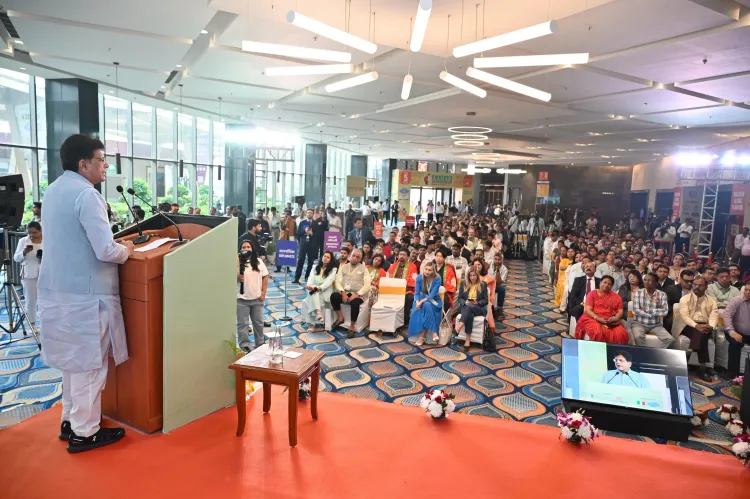
New Delhi, March 11 (NationPress) - APEDA has highlighted India's expanding prowess in the realm of high-quality agricultural production, value enhancement, and export-driven supply chains at the 'AAHAR 2026'. The pavilion served as a platform for exporters, startups, state agencies, and producer organizations, emphasizing opportunities to bolster India's footprint in global markets, as announced on Wednesday.
The 40th edition of AAHAR 2026, inaugurated by the minister, is taking place from March 10 to March 14 at Bharat Mandapam in New Delhi.
APEDA unveiled a dedicated pavilion uniting exporters, state officials, and industry stakeholders to advocate for India's wide-ranging agri-export portfolio.
This milestone event, organized by the India Trade Promotion Organisation (ITPO), features Italy as the country partner, according to the government.
Over the past decade, exports of processed foods, fruits, pulses, and vegetables have surged significantly, showcasing the strength and diversity of farmers, fishermen, and food processors throughout the nation.
India's growing network of free trade agreements is paving the way for new opportunities in agricultural exports, as highlighted by the government.
During the event, APEDA, in collaboration with the Indian Council for Research on International Economic Relations (ICRIER), released research reports on cucumber, cashew, pineapple, and pomegranate.
Additionally, APEDA introduced packaging design solutions and technical standards for select region-specific agricultural products developed with the Indian Institute of Packaging (IIP). This initiative aims to boost product protection, shelf life, and export appeal, particularly for GI-tagged and organic products.
Products included in this initiative are Karbi Anglong Ginger from Assam, G4 Chilli and Jalgaon Banana from Maharashtra, Assam Kaji Nemu, and Prayagraj Surkha Guava from Uttar Pradesh.
The government noted that major export categories showcased at the pavilion comprised basmati rice, non-basmati rice, organic items, and emerging plant-based foods, reflecting India's growing portfolio in global agri-food markets.
Furthermore, several states including Andhra Pradesh, Bihar, Karnataka, Kerala, Maharashtra, Punjab, Tamil Nadu, Telangana, Uttar Pradesh, and West Bengal set up pavilions to display region-specific products and export-ready agricultural offerings.
Point of View
It's clear that APEDA's efforts at AAHAR 2026 showcase a strategic push to enhance India's agricultural export capabilities. This initiative not only highlights the strengths of local producers but also aligns with the government's broader goals of expanding international trade relations.
NationPress
7 Sept 2026
Frequently Asked Questions
What role does APEDA play in agriculture?
APEDA, or the Agricultural and Processed Food Products Export Development Authority, promotes the export of agricultural products from India.
Which states participated in AAHAR 2026?
States including Andhra Pradesh, Bihar, Karnataka, Kerala, Maharashtra, Punjab, Tamil Nadu, Telangana, Uttar Pradesh, and West Bengal set up pavilions at AAHAR 2026.
What products were highlighted at the event?
Key products included processed foods, fruits, pulses, and vegetables, with a focus on GI-tagged and organic items.
Who organized AAHAR 2026?
The India Trade Promotion Organisation (ITPO) is the organizer of AAHAR 2026.