Indian Army, CAPFs mark World Environment Day with green drives across Northeast
Synopsis
India's armed forces took World Environment Day beyond ceremonial gestures — the Army's Spear Corps and BSF ran coordinated plantation and waste-management drives across six Northeastern states, planting climate-resilient native species and handing recyclable waste to certified agencies. In a region that is one of the world's biodiversity hotspots, the scale and multi-state coordination of these drives stands out.
Key Takeaways
The Indian Army and CAPFs observed World Environment Day on 6 June with drives across Arunachal Pradesh , Tripura , Assam , Mizoram , Manipur , and Nagaland .
The Spearhead Division (Spear Corps) conducted plantation and cleanliness drives in Tuting , Boraroopak , and Sigar in Arunachal Pradesh.
The Red Shield Division in Tripura planted Neem , Peepal , and Gulmohar saplings and ran a waste segregation and anti-plastic campaign.
The BSF held drives at its Mizoram and Cachar Frontier Headquarters in Silchar and at border posts across four states.
The BSF drive at Masimpur, Assam was led by Inspector General Ravi Kant , who called each tree planted 'an investment towards a healthier and more sustainable future.'
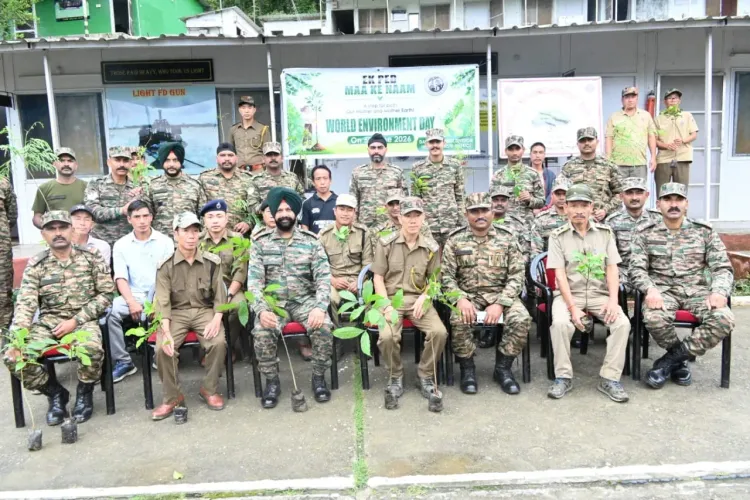
The Indian Army and several Central Armed Police Forces (CAPFs) observed World Environment Day on 6 June with a coordinated series of conservation activities spanning the Northeastern region, covering states including Arunachal Pradesh, Tripura, Assam, Mizoram, Manipur, and Nagaland. The drives, involving tree plantations, cleanliness campaigns, and waste segregation initiatives, brought together troops, their families, students, teachers, and local community members.
Army Activities in Arunachal Pradesh
The Spearhead Division under the Spear Corps organised environmental activities across Tuting, Boraroopak, and Sigar in Arunachal Pradesh. Army personnel joined school children and teachers in tree plantation and cleanliness drives, underscoring the collective responsibility of preserving the region's ecological heritage. Poster-making competitions were also held to promote environmental awareness among younger participants.
Red Shield Division's Drive in Tripura
In Tripura, the Red Shield Division under the Spear Corps launched a comprehensive Swachhata Campaign and mass tree plantation drive across military stations and community areas. Native and climate-resilient saplings — including Neem, Peepal, and Gulmohar — were planted to strengthen biodiversity and support long-term ecological sustainability.
Personnel also undertook an extensive waste management drive, segregating collected waste into recyclable, biodegradable, and non-recyclable categories. Recyclable material was handed over to authorised recycling agencies for scientific processing. Special emphasis was placed on eliminating single-use plastics. The observance concluded with participants taking a pledge to adopt eco-friendly habits and reduce plastic consumption.
BSF Drives Across Assam, Mizoram, Manipur and Nagaland
The Border Security Force (BSF) organised tree plantation drives at its Frontier Headquarters in Mizoram and Cachar in Silchar, Assam, as well as at sector headquarters, battalions, and Border Out Posts in remote border areas across Assam, Mizoram, Manipur, and Nagaland. BSF personnel and their families, including children, planted a large number of indigenous saplings.
The plantation drive at Masimpur, Assam was led by Ravi Kant, Inspector General of Mizoram and Cachar Frontier of BSF. Kant emphasised that 'every tree planted today is an investment towards a healthier and more sustainable future,' and urged all ranks to sustain plantation drives and responsible environmental practices year-round.
Broader Significance
The coordinated observance across multiple forces and states signals a deliberate effort to align military community engagement with national environmental goals. This comes amid growing concern over deforestation and biodiversity loss in India's Northeast — a biodiversity hotspot that is home to several endangered species and fragile ecosystems. For forces deployed in remote and border areas, such drives also serve to strengthen civil-military ties with local communities. The initiative reinforces that the mandate of India's armed forces extends beyond security to active participation in nation-building and ecological stewardship.
Point of View
Where deforestation and climate stress are measurable and ongoing. The fact that the Army and BSF are conducting structured waste segregation and handing recyclable material to certified agencies, rather than simply staging photo-opportunity plantations, suggests a degree of operational seriousness. What is missing from the public record is any data on survival rates of previously planted saplings — a metric that would distinguish sustained ecological commitment from annual ritual. Until forces publish multi-year outcomes, the impact of these drives remains difficult to assess independently.
NationPress
16 Sept 2026
Frequently Asked Questions
What did the Indian Army do on World Environment Day 2025 in the Northeast?
The Indian Army organised tree plantation drives, cleanliness campaigns, and poster-making competitions across Tuting, Boraroopak, and Sigar in Arunachal Pradesh, and a Swachhata Campaign with mass tree plantation in Tripura. Both activities were conducted under the Spear Corps on 6 June.
Which states did the BSF cover in its World Environment Day drives?
The BSF conducted tree plantation drives across Assam, Mizoram, Manipur, and Nagaland, including at its Frontier Headquarters in Mizoram and Cachar (Silchar, Assam) and at sector headquarters, battalions, and Border Out Posts in remote border areas.
What types of saplings were planted during these drives?
The Red Shield Division in Tripura planted native and climate-resilient species including Neem, Peepal, and Gulmohar. The BSF planted saplings of various indigenous species at its locations across the four Northeastern states.
Who led the BSF plantation drive in Assam?
The BSF plantation drive at Masimpur, Assam was led by Ravi Kant, Inspector General of the Mizoram and Cachar Frontier of BSF. He urged all ranks to sustain regular plantation drives and responsible environmental practices throughout the year.
Why are environmental drives by the Army and BSF significant in the Northeast?
The Northeastern region is a globally recognised biodiversity hotspot facing ongoing deforestation and climate stress. Military-led drives in remote and border areas reach locations that civilian conservation efforts rarely cover, while also strengthening civil-military community ties.