Exploring Strategic Communication at India's First Army Conclave in Lucknow
Synopsis
The Indian Army's Central Command convened its inaugural Strategic Communication Conclave in Lucknow, aimed at addressing the evolving nature of warfare and the pivotal role of perception management. This landmark event saw participation from military leaders, diplomats, and communication experts, fostering vital discussions on national security.
Key Takeaways
Strategic communication is essential for national security.
The need for institutionalization and capability-driven approaches.
Perception management shapes legitimacy and outcomes.
Collaboration between military, government, and media is vital.
Discussions on emerging multi-domain operations enhance preparedness.
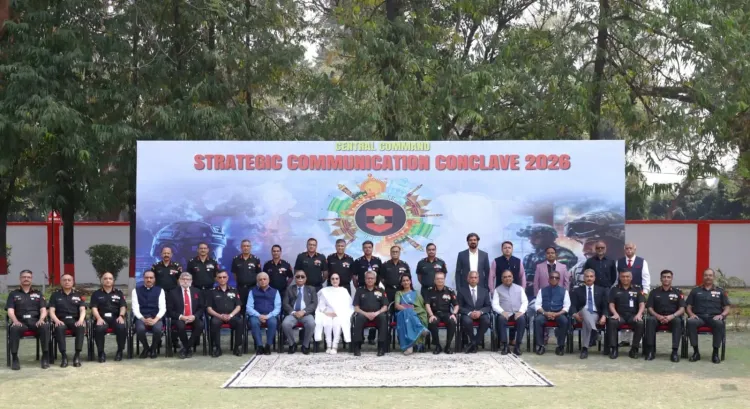
Lucknow, March 7 (NationPress) The Indian Army’s Central Command held its inaugural Strategic Communication Conclave in Lucknow on Saturday, focusing on the evolving landscape of warfare and the essential function of perception management, as stated by an official.
The primary goal of the conclave was to assess strategic communication as an integral capability within India's national security framework and to formulate actionable insights regarding doctrine, structures, processes, and readiness in the rapidly changing information environment.
Nearly 500 participants attended, engaging in discussions and panel forums about strategic communication in the national security context, according to the official statement.
Among the speakers and panellists were senior diplomats, government communication specialists, and media representatives. Attendees included high-ranking military officials from the Central Command as well as communication experts from both the public and private sectors.
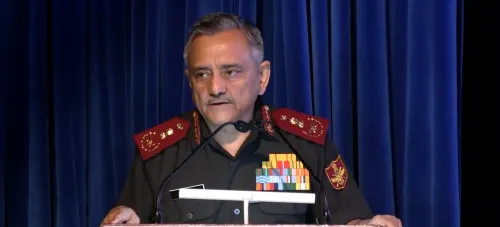
During his opening remarks, Lt Gen Anindya Sengupta, General Officer Commanding-in-Chief of Central Command, emphasized the significant transformation in warfare, which now includes the realms of information and cognition.
He highlighted the critical importance of perception management, noting how perception influences legitimacy, which in turn affects influence and outcomes. He also addressed the weaponization of narratives and the risks posed by conflicts that remain below the level of war.
He asserted that strategic communication should not be reactive, sporadic, or personality-centric but instead should be institutionalized, supported by doctrine, and driven by capability.
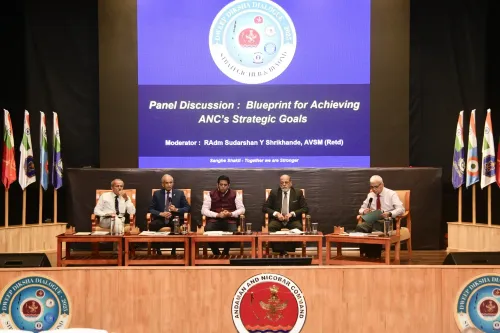
The conclave featured a focused policy-level session on the institutional and national security aspects, under the theme 'Institutionalizing Strategic Communication as a Capability for Future Preparedness in the Emerging Information Space'. Notable speakers included India's first female Permanent Representative to the United Nations, Ambassador Ruchira Kamboj (Retd), Ambassador Yashvardhan Sinha (Retd), and Lt Gen Raj Shukla (Retd).
A dedicated interactive session was held on 'Strategic Communication in Emerging Multi-Domain Operations: Strategies, Structures, Processes and Preparedness', blending policy with operational insights.
Retired civil and military officials, including Ambassador Dilip Sinha, Shantanu Mukharji, Veena Jain, and Lt Gen DP Pandey, provided valuable insights during this session.
Panel discussions with media focused on 'Shaping the Mind Space: Perception Management in the Strategic Domain' and 'Information Power and Strategic Communication', emphasizing the significance of perception management and information influence.
Point of View
It's clear that the Strategic Communication Conclave represents a significant advancement in India's approach to national security. The discussions on perception management and the institutionalization of strategic communication underscore the necessity of adapting to the modern information landscape. This conclave not only highlights the military's commitment to evolving warfare dynamics but also emphasizes collaboration across various sectors to enhance national preparedness.
NationPress
3 Oct 2026
Frequently Asked Questions
What was the purpose of the Strategic Communication Conclave?
The conclave aimed to evaluate strategic communication as a critical capability within India’s national security framework and to develop actionable insights for future preparedness.
Who attended the conclave?
The event was attended by nearly 500 participants, including senior military officials, diplomats, government communication experts, and media representatives.
What themes were discussed at the conclave?
Key themes included the transformation of warfare, perception management, and the institutionalization of strategic communication as a capability.
Who were some of the notable speakers?
Prominent speakers included Lt Gen Anindya Sengupta, Ambassador Ruchira Kamboj, Ambassador Yashvardhan Sinha, and Lt Gen Raj Shukla.
Why is perception management important?
Perception management is crucial as it shapes legitimacy, which influences outcomes in national security and conflict scenarios.