Arrested Pakistani spy Wahab Alam planned Bangladesh escape, return to Bengal with new identity
Synopsis
A Pakistani ISI operative who entered India through the Nepal border in 2012 had a ready escape route: flee to Bangladesh, meet a handler named Pavel in Jessore, and return to West Bengal under a new identity. The STF's interrogation of Wahab Alam has now blown open a cross-border network that used fake Aadhaar, PAN, and voter ID cards to keep him hidden for over a decade.
Key Takeaways
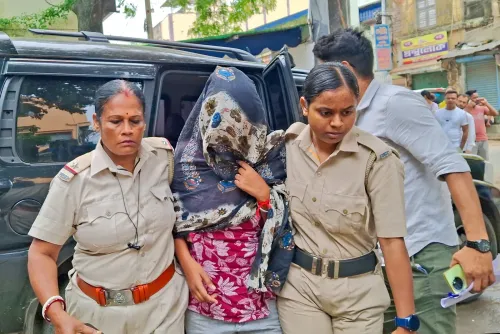
Wahab Alam , a Pakistani national arrested from Habra, North 24 Parganas , was allegedly sent by Pakistan's ISI to spy on the Indian Army, Navy, and Railways in India's eastern sector.
Alam planned to flee to Bangladesh , stay at a safehouse arranged by ISI operative Pavel in Jessore , and return to West Bengal with a fresh identity.
His cover was partially blown when his name was struck off the electoral rolls during the Special Intensive Revision (SIR) exercise before the West Bengal Assembly polls .
Local associate Mohammad Izaz of Topsia was also arrested; he allegedly arranged fake Aadhaar , PAN , and EPIC cards for Alam.
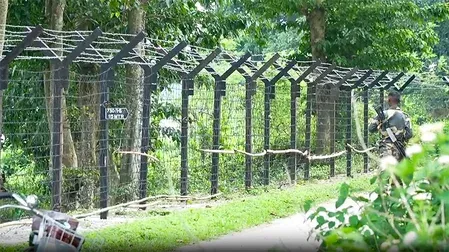
Alam entered India via the India-Nepal border in 2012 and evaded detection for over a decade by shifting bases across West Bengal.
A Pakistani national arrested from Habra in West Bengal had an elaborate plan to flee to Bangladesh, lie low under a new identity, and return to India with fresh espionage assignments, according to interrogation details emerging from the Special Task Force (STF). The suspect, Wahab Alam, was reportedly dispatched to West Bengal by Pakistan's Inter-Services Intelligence (ISI) to gather intelligence on the Indian Army, Navy, and Railways in the country's eastern sector.
The Escape Plan
During interrogation, Alam admitted that his handlers in Pakistan had instructed him to cross into Bangladesh, stay there temporarily, and eventually re-enter India with a fresh cover identity and new operational directives. STF sleuths, through both his questioning and examination of a recovered netbook, have also identified a Bangladesh-based ISI operative named Pavel, who was reportedly operating out of Jessore in Bangladesh.
According to sources, Pavel was tasked with arranging a safehouse for Alam in Bangladesh, briefing him on updated assignments in West Bengal, and facilitating his return to India after a sufficient cooling-off period.
Why Alam Went Underground
Alam acknowledged that both he and his Pakistani handlers grew alarmed when his name was removed from the electoral rolls during the Special Intensive Revision (SIR) exercise conducted ahead of the recently concluded West Bengal Assembly polls. The deletion raised the risk of exposure, prompting his handlers to advise him to vacate his earlier base in Topsia — where he had been an enrolled voter — and relocate to a district bordering Bangladesh.
That directive led him to take shelter in Habra, in North 24 Parganas district, where he was subsequently arrested by the STF.
Local Network and Fake Documents
Investigations have also led to the arrest of Alam's local associate, Mohammad Izaz, who had been residing in Topsia. Alam had been living as a tenant at Izaz's residence. Critically, Izaz allegedly facilitated the procurement of fake Indian identity documents for Alam, including an Aadhaar Card, a PAN Card, and an EPIC card — the voter identity card — enabling the Pakistani operative to blend into local life.
Over a Decade Inside India
Alam reportedly entered India through the India-Nepal border in 2012 and has since moved across multiple locations within West Bengal, shifting bases periodically to evade detection. His ability to remain undetected for over a decade — aided by forged documents and a local support network — points to significant gaps in border and identity verification systems.
The case underscores growing concerns about cross-border infiltration networks operating through India's porous northeastern and eastern frontiers. Investigators are now expected to pursue the Bangladesh-based ISI link, with Pavel's network likely to come under the scanner of intelligence agencies.
Point of View
Acquire Aadhaar, PAN, and voter ID through a local network, and remain enrolled in electoral rolls until a routine revision exercise flagged him, reveals compounding failures across border security, document issuance, and intelligence coordination. What is equally significant is the Bangladesh dimension: the ISI's use of Jessore as a relay point suggests a well-worn corridor that Indian agencies have not yet fully mapped. The arrest is a lead, not a conclusion.
NationPress
13 Aug 2026
Frequently Asked Questions
Who is Wahab Alam and why was he arrested?
Wahab Alam is a Pakistani national arrested by West Bengal's Special Task Force (STF) from Habra in North 24 Parganas district. He was allegedly sent by Pakistan's ISI to collect intelligence on the Indian Army, Navy, and Railways in India's eastern sector.
What was Wahab Alam's plan after being detected?
Alam planned to escape to Bangladesh, stay at a safehouse arranged by ISI operative Pavel in Jessore, receive updated assignments, and re-enter West Bengal under a new identity after a cooling period, as reportedly advised by his Pakistani handlers.
Who is Pavel and what is his role?
Pavel is a Bangladesh-based ISI operative reportedly operating out of Jessore. According to STF interrogation, he was tasked with sheltering Alam in Bangladesh and coordinating his return to India with fresh espionage directives.
How did Wahab Alam obtain fake Indian identity documents?
Alam's local associate Mohammad Izaz, with whom he lived as a tenant in Topsia, allegedly arranged fake Aadhaar Card, PAN Card, and EPIC (voter identity) card for him, enabling Alam to pass as an Indian resident.
How long had Wahab Alam been operating inside India?
Alam reportedly entered India through the India-Nepal border in 2012 and had been moving across different locations in West Bengal for over a decade, shifting bases periodically to avoid detection.