Zhejiang University yeast factory boosts vinblastine output 1,000x
Synopsis
Zhejiang University scientists have engineered brewer's yeast to produce 164.9 mg/L of catharanthine — nearly 1,000 times any prior global record — potentially ending the decades-long scarcity of vinblastine, a cancer drug that currently requires 2 tonnes of plant leaves to yield just 1 gram.
Key Takeaways
Zhejiang University researchers, led by professor Lian Jiazhang , engineered brewer's yeast to produce 164.9 milligrams per litre of catharanthine, the direct precursor to vinblastine.
The yield is nearly 1,000 times higher than any previously published global figure for the same compound.
Vinblastine currently requires 2 tonnes of dried Madagascar periwinkle leaves to produce just 1 gram , making it more expensive than gold by weight.
The findings were published in the peer-reviewed journal Science as a first-release version on July 16, 2026 .
The research involved collaboration with Qu Yang 's group at the University of New Brunswick, Canada , and Wang Yajie 's team at Westlake University .
The biosynthetic pathway — a 30-step cascade — was first inserted into yeast in 2022 ; the instability of a key intermediate was the central obstacle overcome.
A research team at Zhejiang University has engineered ordinary brewer's yeast to produce a key precursor of the anticancer drug vinblastine at nearly 1,000 times the highest previously published yield, potentially transforming the supply chain for one of oncology's most expensive and scarce medicines. The findings were published in the peer-reviewed journal Science as a first-release version on July 16.
Why it matters
Vinblastine has historically been extracted exclusively from the Madagascar periwinkle plant, a process so inefficient that it requires 2 tonnes of dried leaves to yield just 1 gram of the drug — making it more expensive than gold by weight. That extreme scarcity has kept costs high and supply chronically unreliable for decades, limiting patient access globally.
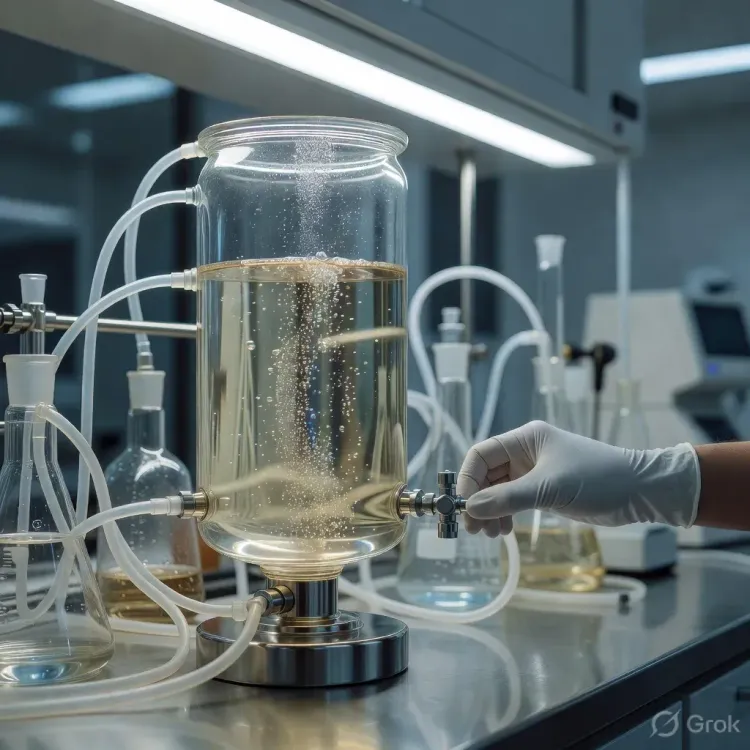
The team's engineered yeast now produces 164.9 milligrams per litre (0.022 ounces per gallon) of catharanthine — the direct biosynthetic precursor to vinblastine — inside a standard fermenter, shattering every previously reported benchmark.
The breakthrough explained
The work was led by Zhejiang University professor Lian Jiazhang, in collaboration with Qu Yang's research group at the University of New Brunswick in Canada and Wang Yajie's team at Westlake University. The foundation was laid in 2022, when Lian's team first inserted the complete 30-step synthesis pathway for vinblastine into yeast — but output remained stuck at just micrograms per litre, far below industrial utility.
The decisive obstacle, according to professor Lian, was cellular architecture. In a video released by the ZJU-Hangzhou Global Scientific and Technological Innovation Centre, he explained: 'It came down to the cell's internal structure. One intermediate in the vinblastine pathway is highly unstable.' Resolving that instability unlocked the dramatic yield jump.
Competitive backdrop
Synthetic biology approaches to plant-derived pharmaceuticals have been gaining momentum globally, with yeast-based production of artemisinin for malaria treatment serving as a landmark precedent. Vinblastine, however, involves a far more complex biosynthetic cascade, making this result particularly significant for the field. The involvement of both Chinese and Canadian institutions signals the cross-border collaborative model that increasingly underpins frontier life-science research.
What's next
Scaling fermentation-based catharanthine production to commercial volumes and converting it efficiently into finished vinblastine remain the critical next steps. Regulatory pathways for biosynthetically derived versions of established drugs will also need to be navigated. If industrial scale-up proves viable, the impact on drug pricing and supply security for cancer patients worldwide could be substantial — and the yeast-platform approach could be extended to other plant-derived drugs facing similar supply bottlenecks.
Frequently Asked Questions
What did Zhejiang University researchers achieve with vinblastine production?
Researchers at Zhejiang University engineered brewer's yeast to produce 164.9 milligrams per litre of catharanthine, the direct precursor to the anticancer drug vinblastine — nearly 1,000 times the highest yield previously reported anywhere in the world. The findings were published in the journal Science on July 16, 2026.
Why is vinblastine so expensive and scarce?
Vinblastine is currently extracted solely from the Madagascar periwinkle plant, and the process is extraordinarily inefficient: it takes 2 tonnes of dried leaves to produce just 1 gram of the drug. That scarcity makes vinblastine more expensive than gold by weight and has kept its supply unreliable for decades.
How does the yeast-based production method work?
Professor Lian Jiazhang's team inserted a 30-step biosynthetic pathway for vinblastine into ordinary brewer's yeast, starting in 2022. The key breakthrough was resolving the instability of a critical intermediate compound inside the yeast cell, which had previously kept yields at just micrograms per litre — far below industrial usefulness.
Who collaborated on the vinblastine yeast research?
The project was led by Zhejiang University professor Lian Jiazhang, with contributions from Qu Yang's research group at the University of New Brunswick in Canada and Wang Yajie's team at Westlake University in China.
What needs to happen before this can reach cancer patients?
The immediate next steps are scaling fermentation to commercial volumes and efficiently converting catharanthine into finished vinblastine at industrial quantities. Regulatory agencies will also need to approve biosynthetically derived versions of the drug before it can enter clinical supply chains.