Arunachal CMO: ₹3,233 Cr Road Push to Link Remote Villages
Synopsis
The Chief Minister's Office of Arunachal Pradesh has outlined a two-phase road-connectivity programme worth over ₹3,233 crore. Phase-I completed 62 of 67 projects; Phase-II (2026–29) allocates ₹2,000 crore specifically for villages outside PMGSY coverage.
Key Takeaways
₹899.58 crore invested in Phase-I, covering 67 roads and bridges , with 62 projects completed .
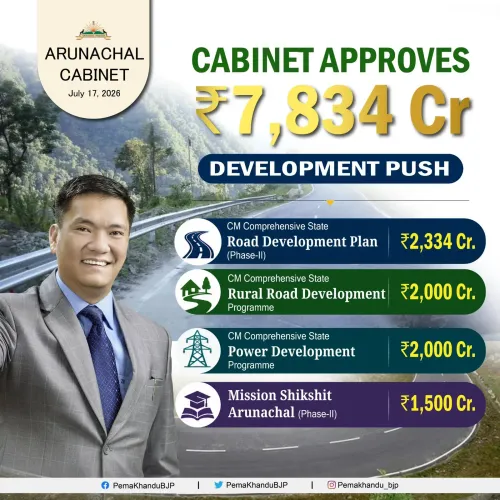
Phase-II runs from 2026 to 2029 with a total outlay of ₹2,334 crore .
A dedicated ₹2,000 crore within Phase-II targets villages not yet covered under PMGSY .
Arunachal Pradesh borders China, Bhutan, and Myanmar , giving road projects both economic and strategic significance.
PMGSY , launched in 2000 , has left a residual connectivity gap in high-terrain states that this state plan aims to close.
Two phases, ₹3,233 crore, and a promise to reach villages that even PMGSY — India's flagship rural roads programme — has not yet touched. The Chief Minister's Office of Arunachal Pradesh announced on Wednesday, 30 September 2026, a sweeping road-connectivity drive that spans completed projects and a bold forward plan, targeting the state's most isolated communities.
Phase-I: 62 of 67 Projects Done, ₹899.58 Cr Spent
The first phase of the programme deployed ₹899.58 crore across 67 roads and bridges. Of those, 62 projects have been completed — a near-total execution rate that is notable for a state where mountain terrain routinely derails construction timelines. The remaining five projects are, by implication, still in progress.
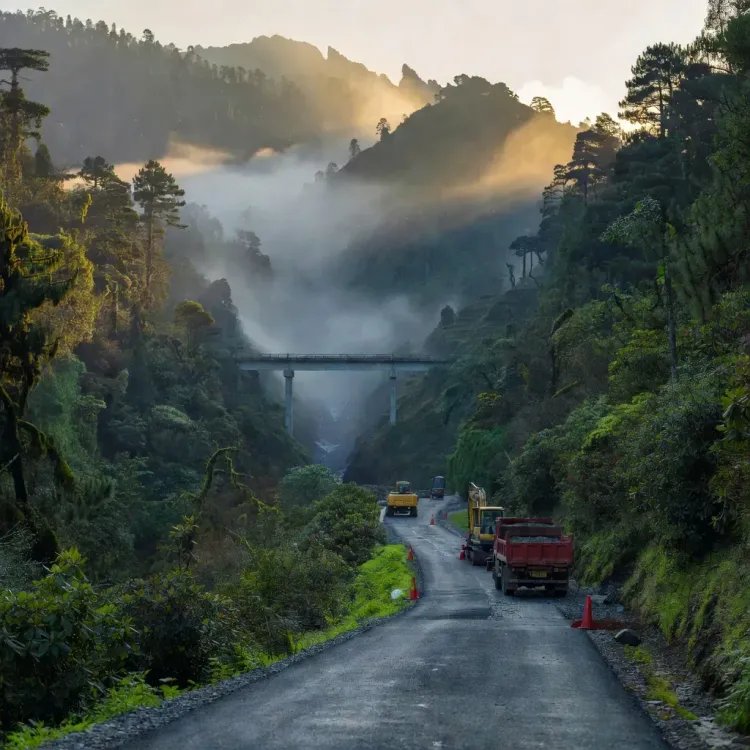
Arunachal Pradesh is India's northeasternmost state, sharing international borders with China, Bhutan, and Myanmar. Its terrain — deep gorges, high ridgelines, and rivers prone to flash floods — makes road construction among the costliest and most technically demanding in the country. Every kilometre here carries strategic weight alongside its economic value.
Phase-II (2026–29): ₹2,334 Cr, With ₹2,000 Cr for PMGSY-Excluded Villages
The second phase, scheduled to run from 2026 to 2029, scales the ambition sharply. A total outlay of ₹2,334 crore has been earmarked for further road development. Of that, a dedicated ₹2,000 crore is planned specifically to deliver all-weather road connectivity to villages that fall outside PMGSY coverage — the habitations that the central scheme, despite more than two decades of operation, has not yet reached.
PMGSY, launched in 2000, was designed to connect unlinked rural habitations with all-weather roads. In states like Arunachal Pradesh, geography and sparse population have left a significant residual gap. The state's Phase-II plan is explicitly targeting that gap — filling in where the central programme ends.
What the Numbers Mean for Arunachal's Hinterland
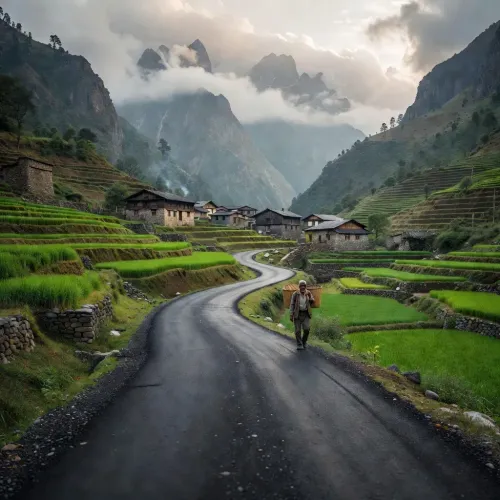
For remote communities in Arunachal Pradesh, an all-weather road is not a convenience — it is access to markets, hospitals, and schools that close off entirely during monsoon months. The Northeast has seen successive governments, both at the centre and in the states, prioritise road and bridge construction as the primary lever for economic integration and border-area development.
Phase-II's three-year window is ambitious. The physical rollout of projects from 2026 onwards, and how tightly they integrate with ongoing central schemes for residual rural connectivity, will be the real test of delivery.
With Phase-I's near-complete execution already on the books, the pressure is now on Phase-II to match the pace — and to finally bring all-weather access to the villages that have waited the longest.
Point of View
Rather than a passive recipient of, central rural-connectivity policy. Dedicating ₹2,000 crore specifically to PMGSY-excluded villages is a direct acknowledgement that the central scheme's design criteria have left habitations behind, and it positions the state to claim credit for closing that gap. In the broader Northeast connectivity arc, where road access doubles as border-area security infrastructure, this kind of state-led supplementary investment is increasingly the template. The real credibility test arrives in 2027–28, when Phase-II's physical progress will either validate or undercut the ambition.
NationPress
30 Sept 2026
Frequently Asked Questions
What is Arunachal Pradesh's Phase-II road connectivity plan?
Phase-II is a ₹2,334 crore road development programme scheduled for 2026–29, with ₹2,000 crore specifically earmarked to provide all-weather road connectivity to villages not covered under PMGSY.
How many projects were completed in Phase-I of Arunachal's road programme?
62 out of 67 road and bridge projects were completed in Phase-I, which had a total investment of ₹899.58 crore.
What is PMGSY and why are some Arunachal villages outside its coverage?
PMGSY (Pradhan Mantri Gram Sadak Yojana) is a central scheme launched in 2000 to connect rural habitations with all-weather roads. In states like Arunachal Pradesh, extreme terrain and sparse populations have left some villages outside the scheme's eligibility or reach.
Why is road connectivity so important for Arunachal Pradesh?
Arunachal Pradesh is India's northeasternmost state with mountainous terrain and international borders with China, Bhutan, and Myanmar. Roads provide remote communities access to markets, healthcare, and schools, and also carry strategic border-area significance.
When will Phase-II road projects in Arunachal Pradesh be completed?
Phase-II is planned to run from 2026 to 2029, though the physical rollout timelines and integration with central schemes will determine actual completion dates.