Arunachal Pradesh signs MoU for India's first river kinetic energy plant

Synopsis
India is set to get its first river kinetic energy demonstration plant — not on a coastal shoreline, but deep in the Himalayas. Arunachal Pradesh's MoU with Norway's Tidal Sail AS brings a technology that generates power directly from river currents with no dams and no large civil works, potentially reshaping how India's remote northeastern communities access clean electricity.
Key Takeaways
Arunachal Pradesh signed an MoU with Tidal Sail AS (Norway) on 14 July for India's first river kinetic energy demonstration plant.
The project capacity is 500 kW , generating electricity directly from river currents without major civil infrastructure.
It is backed by the Union Ministry of New and Renewable Energy (MNRE) and Innovation Norway under the India-Norway Green Partnership .
Science and Technology Minister Dasanglu Pul called it a milestone in the state's clean energy transition.
The technology targets decentralised power for remote and inaccessible regions of Arunachal Pradesh.
Success could lead to broader deployment of river kinetic energy across Himalayan river systems .
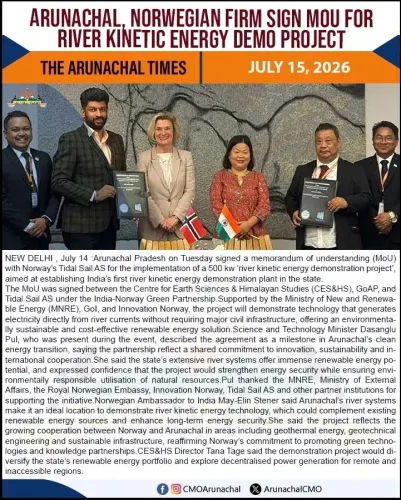
Arunachal Pradesh on Tuesday, 14 July signed a Memorandum of Understanding (MoU) with Norway-based Tidal Sail AS to set up a 500-kW River Kinetic Energy Demonstration Project — marking the first such facility of its kind in India. The agreement was inked between the Centre for Earth Sciences & Himalayan Studies (CES&HS), the Arunachal Pradesh government, and Tidal Sail AS under the India-Norway Green Partnership framework, at a ceremony held in New Delhi.
What the Project Entails
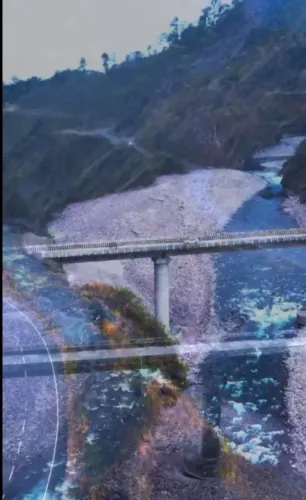
The demonstration plant will generate electricity directly from river currents without requiring major civil infrastructure — a key distinction from conventional hydropower, which demands large dams and significant land acquisition. Officials said the technology is designed to be environmentally sustainable and cost-effective, with the potential to serve remote and inaccessible communities across the northeastern state's extensive river systems.
The project is backed by the Union Ministry of New and Renewable Energy (MNRE) and Innovation Norway, the Norwegian government's primary instrument for innovation-driven growth. According to officials, a successful demonstration could accelerate the deployment of river kinetic energy technology across Himalayan river systems more broadly.
What the Government Said
Arunachal Pradesh's Science and Technology Minister Dasanglu Pul, who attended the signing ceremony, called the agreement a milestone in the state's clean energy transition. 'The partnership reflected a shared commitment to innovation, sustainability and international cooperation,' she said, adding that the state's river systems held 'immense renewable energy potential.'
Pul expressed confidence that the project would strengthen energy security while ensuring environmentally responsible utilisation of natural resources. She also acknowledged the roles of the MNRE, the Ministry of External Affairs, the Royal Norwegian Embassy, Innovation Norway, and partner institutions in supporting the initiative.
Norway's Stake in the Partnership
Norwegian Ambassador to India May-Elin Stener said Arunachal Pradesh's river systems made it an ideal location to demonstrate the technology, which she described as a complement to existing renewable energy sources. She noted that the project extended a growing bilateral cooperation that already spans geothermal energy, geotechnical engineering, and sustainable infrastructure — including collaboration with the Norwegian Geotechnical Institute.
Ambassador Stener reaffirmed Norway's commitment to promoting green technologies and knowledge partnerships with India, framing the MoU as part of a longer strategic alignment between the two countries on clean energy.
Significance for Arunachal Pradesh
CES&HS Director Tana Tage said the project would diversify the state's renewable energy portfolio and explore decentralised power generation for regions that remain difficult to connect to the main grid. He added that successful implementation could reduce dependence on fossil fuels, lower carbon emissions, and preserve river ecosystems.
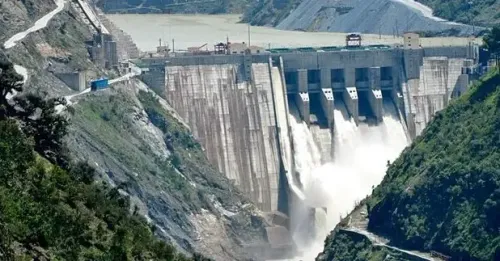
Notably, Arunachal Pradesh already holds substantial conventional hydropower potential, but large-scale dam projects have faced environmental and displacement concerns. River kinetic energy technology, by contrast, operates with a minimal physical footprint — making it a potentially transformative option for the region's energy mix.
What Comes Next
Officials said the MoU opens a new phase in India-Norway renewable energy cooperation, with advanced river kinetic energy technologies expected to be deployed across Himalayan river systems if the demonstration succeeds. The project is anticipated to contribute to sustainable development goals and long-term energy security in Arunachal Pradesh and, potentially, other northeastern states with comparable geography.
Point of View
But Arunachal Pradesh's geography — fast-flowing Himalayan rivers, difficult terrain, and communities beyond grid reach — makes it a more credible fit here than almost anywhere else in India. The real question is whether a 500-kW demonstration can survive the jump to commercial scale, where cost-per-unit and maintenance in remote conditions become decisive. India's northeastern states have seen renewable energy announcements before that stalled at the MoU stage; what distinguishes this one is the structured bilateral backing of MNRE and Innovation Norway, which adds institutional accountability. If the demonstration delivers, it could offer a replicable model for decentralised clean power across the entire Himalayan arc — a significant prize that mainstream coverage has largely missed.
NationPress
13 Oct 2026
Frequently Asked Questions
What is the river kinetic energy demonstration project in Arunachal Pradesh?
It is a 500-kW pilot plant that generates electricity directly from river currents without requiring dams or large civil infrastructure. The project is a collaboration between the Arunachal Pradesh government, CES&HS, and Norway's Tidal Sail AS, making it India's first such facility.
Who is backing the Arunachal Pradesh river kinetic energy project?
The project is supported by the Union Ministry of New and Renewable Energy (MNRE) and Innovation Norway, and is being implemented under the India-Norway Green Partnership framework.
Why is river kinetic energy significant for Arunachal Pradesh?
Arunachal Pradesh has extensive fast-flowing river systems and many remote communities that are difficult to connect to the main power grid. River kinetic energy technology can generate clean electricity with a minimal physical footprint, making it well-suited to such terrain.
How does river kinetic energy differ from conventional hydropower?
Unlike conventional hydropower, which requires large dams and significant land acquisition, river kinetic energy technology harnesses the natural flow of river currents directly, without major civil works. This reduces environmental impact and displacement concerns.
What happens if the demonstration project succeeds?
Officials said a successful demonstration could lead to broader deployment of river kinetic energy technology across Himalayan river systems, potentially benefiting other northeastern states with similar geography and contributing to India's long-term renewable energy targets.