CM Pema Khandu: Arunachal Gets First Ramsar Site at Glaw Lake
Synopsis
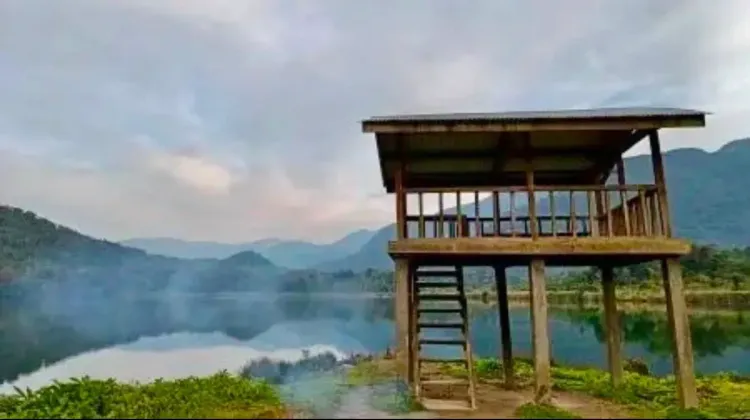
Arunachal Pradesh has its first Ramsar Site: Glaw Lake in Lohit district. CM Pema Khandu announced the designation on 3 August 2026, crediting PM Modi and Union Minister Bhupender Yadav for the historic recognition that puts the state on the global wetland conservation map.
Key Takeaways
Glaw Lake in Lohit district has been designated as Arunachal Pradesh's first-ever Ramsar Site .
The announcement was made by Chief Minister Pema Khandu on 3 August 2026 .
CM Khandu credited PM Narendra Modi and Union Environment Minister Bhupender Yadav for the recognition.
The Ramsar designation is expected to boost biodiversity conservation and enable sustainable livelihoods for local communities.
The listing places Arunachal Pradesh on the global Ramsar network for the first time, extending India's wetland conservation footprint into the northeastern frontier.
A lake tucked in the forested reaches of Lohit district has just put Arunachal Pradesh on the global wetland map. Arunachal Pradesh Chief Minister Pema Khandu announced on Monday, 3 August 2026 that Glaw Lake has been designated as the state's first-ever Ramsar Site — a milestone the northeastern frontier state has long awaited.
Glaw Lake earns its place on the global wetland list
The Ramsar Convention, the international treaty governing the conservation and sustainable use of wetlands, now recognises Glaw Lake as a Wetland of International Importance. For Arunachal Pradesh — a biodiversity hotspot that borders China, Bhutan, and Myanmar and shelters some of the Eastern Himalaya's most intact ecosystems — the designation is the first of its kind. Chief Minister Khandu credited Prime Minister Narendra Modi and Union Minister for Environment, Forest and Climate Change Bhupender Yadav for securing the recognition.
What Ramsar status means for Lohit district
A Ramsar listing is not merely a badge. It obliges the signatory government to maintain the ecological character of the site and opens pathways to international technical cooperation and funding. For the communities around Glaw Lake in Lohit district — one of Arunachal's easternmost and most ecologically rich districts — the designation is expected to formalise conservation efforts while creating frameworks for sustainable livelihoods tied to the wetland's health. CM Khandu noted the recognition would 'strengthen biodiversity conservation, promote sustainable livelihoods, and inspire future generations to protect our priceless ecosystems.'
A frontier state's conservation coming-of-age
Arunachal Pradesh covers roughly 83,743 square kilometres and is home to extraordinary floral and faunal diversity, yet it enters the Ramsar network later than many Indian states. India itself is among the world's top Ramsar nations by number of designated sites. Glaw Lake's inclusion signals that the country's conservation umbrella is now stretching deeper into its northeastern corner — a region where geopolitical sensitivity and ecological significance intersect sharply.
The announcement arrives as India has been steadily expanding its Ramsar portfolio in recent years, reflecting both international commitments and domestic conservation ambitions. For Arunachal Pradesh, being part of that network for the first time is a quiet but consequential step forward.
Glaw Lake is no longer just a local treasure — it is now a globally protected one.
Point of View
The milestone serves a dual purpose: it advances India's international environmental commitments while reinforcing the Centre's developmental and ecological attention to the Northeast — a region that carries outsized strategic weight. Whether the designation translates into on-ground habitat protection and genuine livelihood benefits for Lohit's communities will be the real test of its significance.
NationPress
18 Sept 2026
Frequently Asked Questions
What is Glaw Lake and where is it located?
Glaw Lake is a wetland located in Lohit district in eastern Arunachal Pradesh . It has been designated as the state's first Ramsar Site, recognising it as a Wetland of International Importance.
What is a Ramsar Site?
A Ramsar Site is a wetland designated under the Ramsar Convention , an international treaty adopted in 1971, as a Wetland of International Importance. The designation commits the host country to conserving the site's ecological character and enables international cooperation for its protection.
Is Glaw Lake Arunachal Pradesh's first Ramsar Site?
Yes. Glaw Lake in Lohit district is Arunachal Pradesh's first-ever Ramsar Site , as announced by Chief Minister Pema Khandu on 3 August 2026 .
Who is responsible for Glaw Lake getting Ramsar status?
CM Pema Khandu credited Prime Minister Narendra Modi and Union Minister for Environment, Forest and Climate Change Bhupender Yadav for securing the Ramsar designation for Glaw Lake.
What are the benefits of Glaw Lake's Ramsar designation?
The designation is expected to strengthen biodiversity conservation , open pathways for international funding and technical cooperation, and create frameworks for sustainable livelihoods for communities in and around Lohit district .