CM Pema Khandu Marks Wildlife Week With Arunachal Film
Synopsis
Chief Minister Pema Khandu shared a wildlife film by local filmmakers Mayur Varia, Japang Pansa and Tallo Anthony to mark Wildlife Week (2–8 October), celebrating Arunachal Pradesh's status as one of India's most biodiverse frontiers.
Key Takeaways
CM Pema Khandu shared a wildlife film on 4 October 2026 to mark Wildlife Week (2–8 October) .
The film was captured by cinematographers Mayur Varia and Japang Pansa , and directed by Tallo Anthony .
Arunachal Pradesh lies within the Eastern Himalaya global biodiversity hotspot, sheltering species found nowhere else.
India has observed Wildlife Week in the first week of October since the 1950s to build public awareness of wildlife conservation.
The entirely local creative team highlights a growing indigenous wildlife-filmmaking culture in India's Northeast.
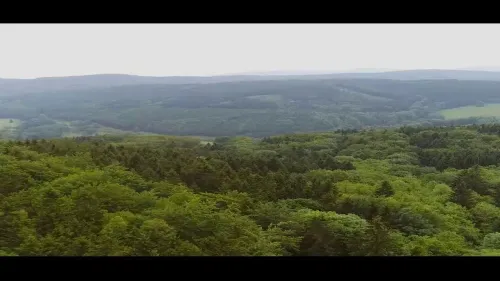
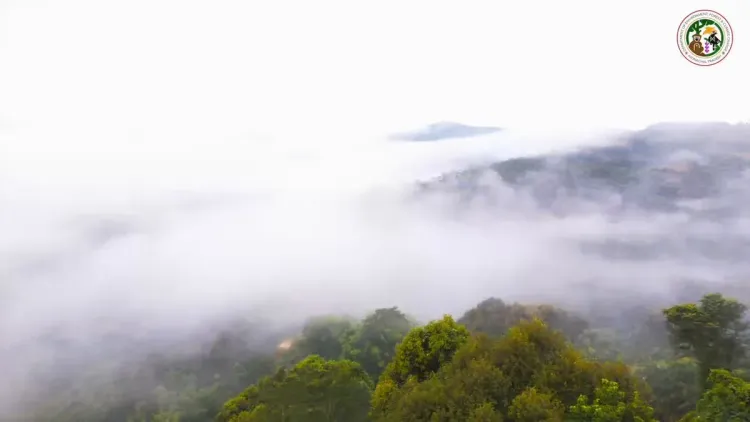
A tiger slipping through mist-draped forest, a hornbill catching first light over the Eastern Himalayas — Arunachal Pradesh Chief Minister Pema Khandu used Wildlife Week (2nd–8th October) to spotlight his state's extraordinary biodiversity, sharing a short film that captures the wild heart of one of India's most ecologically rich frontiers.
The film, shared on Sunday, 4 October 2026, credits cinematographers Mayur Varia and Japang Pansa for the visuals, and filmmaker Tallo Anthony for bringing the footage to screen. CM Khandu described it as 'a beautiful capture of Arunachal Pradesh's magnificent wildlife' and 'a celebration of the rich biodiversity and wild spirit' of the state.
Why Arunachal's Forests Matter to India's Biodiversity Map
Arunachal Pradesh is one of the world's biodiversity hotspots, positioned within the Eastern Himalaya — a global hotspot recognised for its concentration of endemic plant and animal species. The state's forests shelter big cats including the clouded leopard and snow leopard, great Indian hornbills, and thousands of plant species found nowhere else on the planet. It sits at the intersection of the Indo-Malayan and Palearctic biogeographic zones, making its wildlife corridors strategically critical for conservation across South and Southeast Asia.
Wildlife Week and India's Annual Conservation Moment
India observes Wildlife Week from 2 to 8 October every year — a tradition that dates to the 1950s, established to build public awareness around the country's wild heritage. The week has increasingly become a platform for state governments, forest departments, and conservation organisations to amplify documentation efforts, community-led protection drives, and calls for habitat preservation. CM Khandu's decision to anchor the week with a visually striking film — rather than a policy statement — signals a shift toward storytelling as a conservation tool.
Homegrown Lens on a Frontier Ecosystem
What distinguishes this film is its entirely local creative team. Varia, Pansa, and Anthony are names from within the region's emerging documentary and wildlife-filmmaking community — a deliberate choice that reflects growing investment in indigenous voices documenting indigenous landscapes. Wildlife filmmaking in India's Northeast has historically been under-represented compared to the Central Indian tiger belt or the Himalayan west; work like this places Arunachal's forests on a broader visual map.
As the state that borders Bhutan, China, and Myanmar, Arunachal Pradesh's forests are not only ecologically vital but geopolitically sensitive — every camera frame of thriving wilderness doubles as quiet testimony to a living, inhabited frontier.
Point of View
Storytelling-first tribute — rather than a policy announcement — reflects a broader trend among state leaders using cultural and creative output to build conservation advocacy beyond the forest department. Arunachal Pradesh's ecological wealth has long been under-documented on the national stage; amplifying homegrown filmmakers during Wildlife Week is a soft-power assertion of the state's identity as a living biodiversity frontier. In a region where environmental concerns intersect with sensitive border geographies, this kind of visibility carries weight beyond the wildlife calendar.
NationPress
4 Oct 2026
Frequently Asked Questions
When is Wildlife Week observed in India?
India observes Wildlife Week from 2 to 8 October every year. It was established in the 1950s to promote public awareness and action on wildlife conservation.
Why is Arunachal Pradesh important for biodiversity?
Arunachal Pradesh lies within the Eastern Himalaya global biodiversity hotspot. It shelters endemic plant and animal species, big cats including clouded leopards, great Indian hornbills, and sits at the junction of two major biogeographic zones.
Who made the wildlife film shared by Pema Khandu?
The film was shot by cinematographers Mayur Varia and Japang Pansa , and brought to screen by filmmaker Tallo Anthony — all members of Arunachal Pradesh's local creative community.
What did CM Pema Khandu say about the wildlife film?
CM Khandu described it as 'a beautiful capture of Arunachal Pradesh's magnificent wildlife' and 'a celebration of the rich biodiversity and wild spirit' of the state.
What animals are found in Arunachal Pradesh's forests?
Arunachal Pradesh's forests are home to clouded leopards, snow leopards, great Indian hornbills, and thousands of endemic plant species, making it one of India's most ecologically diverse regions.