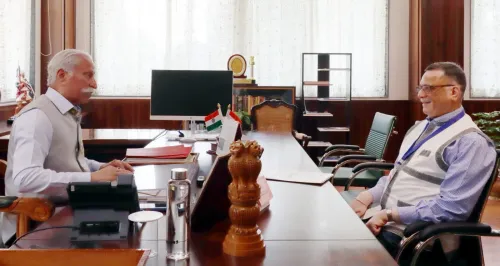
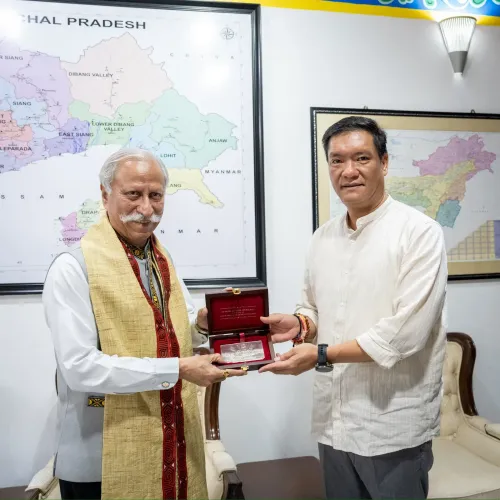
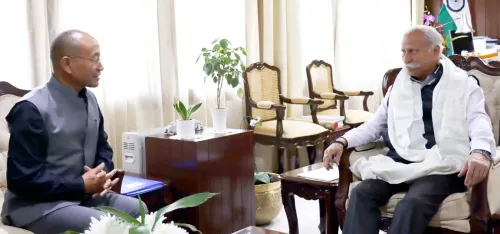
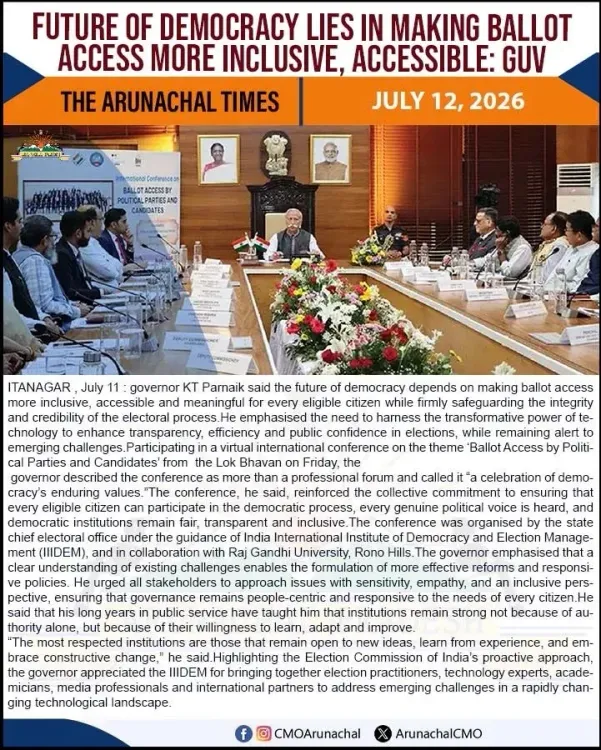
Arunachal Governor K.T. Parnaik backs tech for poll transparency
Synopsis
Arunachal Pradesh Governor Lt. Gen. (Retd.) K.T. Parnaik addressed a virtual international conference on electoral management on 13 July 2026, calling for technology to be leveraged to strengthen transparency, efficiency and public trust in elections — placing the frontier state within a global conversation on democratic reform.
Key Takeaways
Parnaik of Arunachal Pradesh spoke at a virtual international conference on electoral management on 13 July 2026 .
He called for technology to be used to strengthen transparency, efficiency and public trust in elections.
The Election Commission of India has deployed EVMs since 1998-99 and VVPATs since 2013 following a Supreme Court directive.
Arunachal Pradesh , bordering China, Myanmar and Bhutan , faces distinct terrain and logistical challenges that make electoral technology upgrades especially critical.
India has participated in International Electoral Management Bodies conferences since 2016 , sharing its large-scale democratic experience globally.
The remarks signal continued institutional engagement with global best practices ahead of future state assembly election cycles.
Governor Lt. Gen. (Retd.) K.T. Parnaik of Arunachal Pradesh on Monday, 13 July 2026, called for greater use of technology to reinforce transparency, efficiency and public trust in elections, speaking at a virtual international conference on electoral management. The Chief Minister's Office of Arunachal Pradesh shared the Governor's address on its official X account, highlighting the remarks as a signal of the state's engagement with global electoral reform conversations.
Context
Addressing the virtual forum, Governor Parnaik emphasised that technology must be leveraged as a foundational tool — not merely an administrative convenience — to build durable public confidence in democratic processes. The conference brought together election administrators and experts to discuss technology adoption, transparency mechanisms and best practices in conducting elections across diverse political environments. His remarks placed Arunachal Pradesh within a wider global dialogue on modernising electoral management.
Policy Backdrop
India's journey toward technology-driven elections stretches back decades. The Election Commission of India, established in 1950, began a nationwide rollout of Electronic Voting Machines (EVMs) in 1998-99, replacing paper ballots and significantly curbing booth capturing. A landmark 2013 Supreme Court of India directive mandated the introduction of Voter Verifiable Paper Audit Trail (VVPAT) units alongside EVMs, adding a physical verification layer to the electronic count.
From 2016 onward, India has participated in and hosted multiple International Electoral Management Bodies conferences, sharing its large-scale democratic experience with counterparts worldwide. Online voter registration portals and real-time monitoring dashboards have since deepened the technology footprint, positioning India as a reference model for high-volume, geographically complex elections.
Stakeholders and Impact
Arunachal Pradesh, India's northeasternmost state with a population of over 1.3 million, presents distinctive logistical challenges: remote tribal districts, difficult mountain terrain and strategic borders with China, Myanmar and Bhutan. Technology upgrades in such states are not routine administrative exercises — they are operationally critical for ensuring that every eligible voter can participate in a credible poll. State election commissions, field officials and grassroots voters all stand to benefit from the kind of efficiency gains Governor Parnaik advocated.
Virtual international conferences of this kind also carry soft-power significance. When a Governor of a sensitive frontier state speaks at a global electoral forum, it signals institutional confidence and openness to peer learning — a message directed as much at domestic stakeholders as at international observers.
What's Next
Observers will watch for follow-up workshops or technology pilots announced by the Election Commission of India ahead of the next cycle of state assembly elections, as well as any parliamentary debate on electoral reforms that may cite such international deliberations. Governor Parnaik's intervention adds institutional weight to calls for deeper technology integration, particularly in northeastern states where logistical barriers have historically tested the resilience of the electoral machinery. The broader arc points toward a model where transparency tools — from EVMs and VVPATs to digital monitoring — become the baseline expectation rather than the exception.
Point of View
A serving Governor lending his voice to technology-driven transparency carries both symbolic and policy weight. The focus on Arunachal Pradesh is particularly notable: a state with complex terrain, strategic borders and a history of phased infrastructure rollouts, where credible elections are a governance imperative as much as a democratic one. This intervention fits a broader pattern of India projecting its electoral model internationally while simultaneously working to deepen domestic confidence in the process.
NationPress
12 Oct 2026
Frequently Asked Questions
Who is the Governor of Arunachal Pradesh in 2026?
Lt. Gen. (Retd.) K.T. Parnaik is the Governor of Arunachal Pradesh, serving since 2023 . He is a retired Indian Army officer with prior commands in the Eastern sector, including areas bordering China.
What did Arunachal Pradesh Governor K.T. Parnaik say about elections?
Governor K.T. Parnaik emphasised the need to leverage technology to strengthen transparency, efficiency and public trust in elections, speaking at a virtual international conference on electoral management on 13 July 2026 .
What is the virtual international conference on electoral management?
It is a forum bringing together election administrators and experts from multiple countries to discuss technology adoption, transparency mechanisms and global best practices in conducting elections. The specific participating countries and agenda of the July 2026 edition have not been independently detailed in public records.
How has India used technology in elections?
The Election Commission of India rolled out Electronic Voting Machines (EVMs) nationwide from 1998-99 and introduced Voter Verifiable Paper Audit Trail (VVPAT) units from 2013 onward following a Supreme Court directive, alongside online voter registration and real-time monitoring dashboards.
Why is electoral technology important for Arunachal Pradesh?
Arunachal Pradesh has remote tribal districts, difficult mountain terrain and strategic borders with China, Myanmar and Bhutan , making technology-driven solutions critical for ensuring accessible, transparent and logistically manageable elections across the state.