South China Sea code stalls in Manila as ASEAN-China rift widens
Synopsis
After 24 years of talks and 80% of paragraphs provisionally agreed, the South China Sea code still missed the Manila summit. Water cannons, shoal standoffs and a record USD 276 billion Chinese trade surplus with ASEAN suggest Beijing's coercion is quietly eroding the goodwill it seeks, and opening space for India and other partners.
Key Takeaways
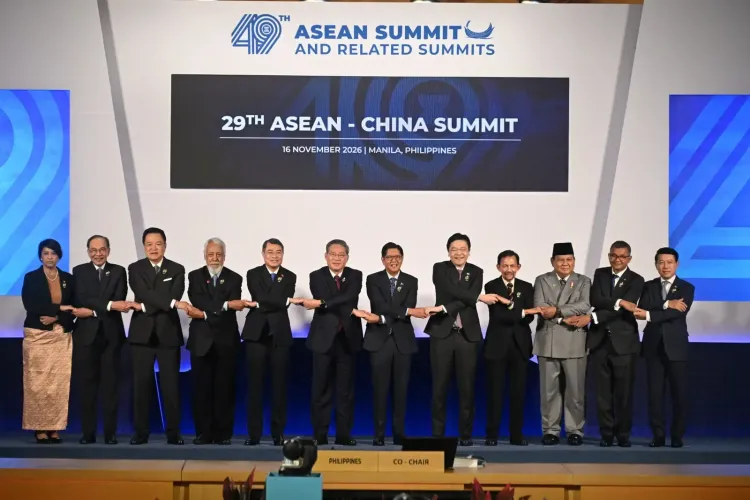
The 49th ASEAN Summit in Manila on 15 November adopted 117 documents but not the South China Sea Code of Conduct .
Foreign Secretary Theresa Lazaro said about 80 per cent of paragraphs are provisionally agreed; scope and legal status remain unresolved.
Singapore , the new ASEAN Chair, will now steer talks rooted in the 2002 DOC .
Chinese coast guard actions hit Philippine vessels in July , September and October 2026 .
China's trade surplus with ASEAN hit a record USD 276 billion in 2025, up 45 per cent .
The ASEAN Maritime Centre 's concept note and terms of reference were approved at the 49th Summit.
The long-pending South China Sea Code of Conduct (COC) failed to make it onto the list of documents adopted at the 49th ASEAN Summit in Manila on 15 November, closing the Philippines' chairmanship without a deal. ASEAN leaders adopted 117 documents, but the code was not among them. In an analysis, a retired Indian Naval officer argues this signals a deepening rift between ASEAN and China.
The author, a Distinguished Fellow with the Council for Strategic and Defence Research, New Delhi, and the Australia India Institute, Melbourne, contends that the missed deadline is a symptom of Beijing's coercion at sea, its lopsided economic statecraft and its disregard for neighbours' sovereignty, rather than a procedural hiccup.
Key Developments at the Manila Summit
ASEAN Secretary-General Kao Kim Hourn told a press conference that of the 117 documents, 85 were adopted at the summit and 32 at related meetings. Philippines Foreign Secretary Theresa Lazaro said provisional agreement had been reached on about 80 per cent of the code's paragraphs.
However, the most contentious issues remain unresolved, especially the geographical scope of the code and whether it would be legally binding. Negotiations now pass to Singapore, the new ASEAN Chair. The process traces back 24 years to the non-binding 2002 Declaration on the Conduct of Parties (DOC).
Notably, the bloc's 2026 communiqué language on the South China Sea was functionally identical to the 2025 statement issued under Malaysia's chairmanship, which the author reads as a measure of Beijing's leverage over ASEAN's consensus-driven process.
Pattern of Maritime Pressure
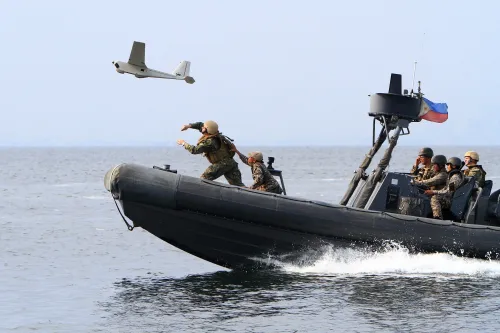
After Vietnam, the Philippines has borne the brunt of Chinese assertiveness. In July 2026, as Manila hosted the 59th ASEAN foreign ministers' meeting, Chinese coast guard ships fired water cannons at Philippine fishing boats, with 12 Chinese Coast Guard ships and three maritime militia vessels involved.
In September 2026, Chinese vessels hindered a resupply mission to the Second Thomas Shoal after two years of relative calm. In October 2026, China Coast Guard ships and aircraft hindered a routine air patrol near Scarborough Shoal and obstructed a fisheries protection operation between Philippine-held Thitu Island and Chinese-held Subi Reef. This was preceded by the ramming of a Filipino government fisheries bureau boat elsewhere in the Spratlys.
Manila had termed Beijing's 2025 plan for a Huangyan Island National Nature Reserve at Scarborough Shoal a ‘clear pretext for occupation’. The first half of 2026 reportedly saw fewer Chinese maritime militia and PLA Navy ships but more coast guard and PLA research vessels, which the author says reflects tactics meant to stay below the threshold of conflict.
The pattern extends beyond Manila. In January 2026, Malaysia acknowledged that Chinese Coast Guard presence at the North and South Luconia Shoals off Sarawak, within its Exclusive Economic Zone, has been the ‘norm’ since 2013. Indonesia, not a disputant, continues to see Chinese vessels in the North Natuna Sea, with incursions reportedly rising a day after President Prabowo Subianto's inauguration. Vietnam has called on all parties to exercise restraint and follow international law.
Legal Disputes and Trade Imbalance
Beijing rejected the 2016 arbitral award by the Permanent Court of Arbitration (PCA), which ruled in favour of the Philippines. Under China Coast Guard Regulation No. 3, the coast guard may detain foreign vessels and persons in ‘waters under China's jurisdiction’ for up to 60 days.
On trade, Chinese exports to ASEAN rose 13 per cent in 2025, producing a record USD 276 billion surplus, up 45 per cent from 2024, according to data cited by the author. Exports to the region rose a further 19 per cent in January-April 2026, while exports to the US fell 10 per cent. ASEAN now accounts for 18 per cent of China's exports against the US share of 11 per cent. Thailand, ASEAN's most industrialised economy, has borne the brunt of Chinese overcapacity.
Beyond the sea, China's 11 dams on the upper Mekong have drawn criticism, with a 2026 IUCN study noting no routine operational data is publicly available for the largest. Toxic waste in northern Thailand's rivers has been traced to mines in Myanmar's Shan State, reportedly run by Chinese companies, including a state-owned firm, in areas controlled by the United Wa State Army (UWSA).
Regional Sentiment and Signs of Pushback
The 2026 State of Southeast Asia Survey found 52 per cent of respondents choosing alignment with China and 48 per cent with the US, yet 43.8 per cent said Beijing could use its power to threaten their sovereignty. The author views the tilt as a temporary response to Washington's perceived unreliability.
Signs of pushback include Manila publicising Chinese actions, Jakarta's more transparent reporting of Natuna incursions, and the ASEAN Maritime Centre, endorsed at the 48th Summit, with its concept note and terms of reference approved at the 49th. For partners such as India, Japan, Australia and the European Union, the author sees an opening in maritime domain awareness, value-adding investment and support for UNCLOS.
With Singapore now holding the gavel, the coming year will test whether the remaining 20 per cent of the code can be bridged or whether the rift hardens into a lasting rupture.
Point of View
In practice, 0 per cent useful — the unresolved fifth is the whole point. Beijing's strategy of keeping coercion below the threshold of war is working tactically but failing strategically, as even a non-claimant like Indonesia hardens its stance. The survey's narrow pro-China tilt is less an endorsement of Beijing than a verdict on Washington's erratic tariffs. For New Delhi, the moment calls for sustained maritime capacity-building in Southeast Asia, not just summit-season statements.
NationPress
26 Nov 2026
Frequently Asked Questions
Was the South China Sea Code of Conduct adopted at the 49th ASEAN Summit?
No, the Code of Conduct was not among the 117 documents adopted at the 49th ASEAN Summit in Manila on 15 November. Negotiations will continue under Singapore's chairmanship.
What issues are blocking the South China Sea Code of Conduct?
The key unresolved issues are the code's geographical scope and whether it will be legally binding. Philippines Foreign Secretary Theresa Lazaro said about 80 per cent of paragraphs have provisional agreement.
How long have ASEAN and China been negotiating the code?
The process dates back 24 years to the non-binding 2002 Declaration on the Conduct of Parties in the South China Sea. Beijing has resisted a legally binding code that the Philippines and Vietnam consider essential.
Which ASEAN countries face Chinese maritime pressure?
The Philippines and Vietnam face the most pressure, while Malaysia reports Chinese Coast Guard presence off Sarawak since 2013. Indonesia, though not a disputant, has seen Chinese vessels in the North Natuna Sea.
What role can India play in the South China Sea dispute?
India, along with Japan, Australia and the EU, can offer maritime domain awareness capacity-building, value-adding investment and support for UNCLOS and the 2016 PCA award, according to the analysis.