CM Assam: ₹3.10 lakh crore Advantage Assam 2.0 projects underway
Synopsis
The Chief Minister's Office of Assam announced on 10 July 2026 that projects worth over ₹3.10 lakh crore from Advantage Assam 2.0 are under implementation, expected to generate 1.02 lakh jobs, with the Tata Semiconductor Facility set to begin production this year and district-level industrial parks planned statewide.
Key Takeaways
Projects worth over ₹3.10 lakh crore from Advantage Assam 2.0 are already under implementation as of the Assam Budget 2026 .
These projects are projected to generate over 1.02 lakh direct and indirect employment opportunities in the state.
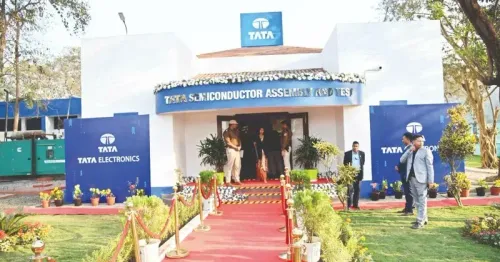
The Tata Semiconductor Facility in Jagiroad , part of India's Semiconductor Mission, is set to begin production in 2026 .
AVFCCL Namrup , a major chemicals-sector project, is described as 'progressing rapidly' alongside the semiconductor facility.
Assam's next industrial phase will focus on industrial parks in every district , creation of land banks , and stronger investment infrastructure.
The strategy reflects a shift from centralised anchor investments to a distributed, district-level industrial footprint across the state.
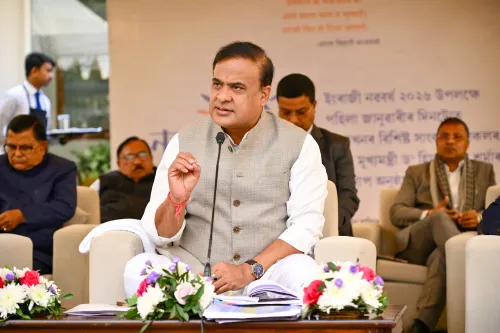
The Chief Minister's Office of Assam on Friday, 10 July 2026, shared key highlights from the Assam Budget 2026, announcing that projects worth over ₹3.10 lakh crore sourced from the Advantage Assam 2.0 investment summit are already under implementation and are projected to generate more than 1.02 lakh direct and indirect employment opportunities across the state.
Context
The budget highlight underscores a significant acceleration in Assam's industrial ambitions. The Chief Minister's Office stated that the Tata Semiconductor Facility is set to begin production this year, and that AVFCCL Namrup — a major chemical-sector project — is 'progressing rapidly.' Together, these anchor projects are expected to serve as catalysts for a wider industrial transformation across the state.
The announcement positions Assam's next phase of industrial policy around district-level industrial parks, the creation of land banks, and the development of stronger investment infrastructure — signalling a shift from large, centralised anchor investments toward a more distributed industrial footprint.
Policy Backdrop
Advantage Assam was first launched in 2018 as the state government's flagship investment promotion summit, designed to diversify Assam's economy beyond its traditional pillars of oil, tea, and agriculture. The follow-up edition, Advantage Assam 2.0, built on that foundation by targeting electronics manufacturing, chemicals, and logistics sectors aligned with central government priorities.
The Tata Semiconductor Facility, located in the Jagiroad area of Assam, was announced under India's Semiconductor Mission — a national programme aimed at building domestic chip-making capacity and reducing the country's dependence on imports. Assam's inclusion in this mission marked a notable departure from the traditional semiconductor investment corridors of southern and western India.
The broader push mirrors the central government's Production Linked Incentive (PLI) framework, which has sought to attract large-scale manufacturing commitments across sectors. Assam's strategy of pairing summit-level investment pledges with district-level infrastructure reflects an effort to ensure that industrial gains percolate beyond state capital corridors.
Stakeholders and Impact
The most immediate beneficiaries of the implementation push are private investors who committed capital at Advantage Assam 2.0 and are now advancing projects to the production stage. For the local workforce, the projected 1.02 lakh direct and indirect jobs represent one of the largest employment generation targets in the state's recent industrial history.
The proposed industrial parks in every district carry particular significance for smaller towns and semi-urban areas that have historically been bypassed by large-scale investment. If implemented, district-level land banks could lower entry barriers for mid-sized manufacturers seeking to set up operations outside established industrial zones.
The AVFCCL Namrup project, linked to the chemicals and fertilisers sector, is also closely watched by agricultural stakeholders, as increased domestic fertiliser production capacity has downstream implications for input costs across Assam and the wider Northeast.
What's Next
Attention will now turn to specific budget allocations and land acquisition notifications for the proposed district industrial parks in the coming fiscal year. The pace at which the state government moves on land bank creation will be a key indicator of whether the district-level industrial push translates from policy intent into on-ground activity.
The commencement of production at the Tata Semiconductor Facility this year, if it proceeds on schedule, will be a landmark moment — making Assam one of very few states in India to host active semiconductor manufacturing. That milestone is likely to shape the next round of investor sentiment toward the state ahead of any future investment summits.
Point of View
The Chief Minister's Office is staking a measurable claim that can be tracked against actual outcomes. The emphasis on district-level industrial parks is a strategic pivot: it broadens the political dividend of industrial growth beyond the state's urban centres and signals inclusivity to a wider voter base. If the Tata Semiconductor Facility does commence production on schedule, Assam will have a rare, high-visibility proof point in a national industrial narrative that has so far been dominated by Gujarat, Tamil Nadu, and Karnataka.
NationPress
8 Oct 2026
Frequently Asked Questions
What is Advantage Assam 2.0?
Advantage Assam 2.0 is the Assam government's second major investment promotion summit, organised as a follow-up to the original Advantage Assam summit held in 2018, aimed at attracting large-scale industrial investment into the state across sectors such as electronics, chemicals, and logistics.
Where is the Tata Semiconductor Facility in Assam located?
The Tata Semiconductor Facility is located in the Jagiroad area of Assam and was announced under India's Semiconductor Mission, a national programme to build domestic chip-manufacturing capacity.
How many jobs will Advantage Assam 2.0 projects create?
According to the Chief Minister's Office of Assam, the projects under implementation from Advantage Assam 2.0 are expected to generate over 1.02 lakh direct and indirect employment opportunities.
What is AVFCCL Namrup?
AVFCCL Namrup is a chemicals and fertilisers sector project in Assam that the state government has described as progressing rapidly alongside the Tata Semiconductor Facility as part of its broader industrial push.
What are the next steps for Assam's industrial policy after Advantage Assam 2.0?
The Assam government has announced that its next phase of industrial policy will focus on setting up industrial parks in every district of the state, creating land banks, and building stronger investment infrastructure to attract mid-sized manufacturers.