Mandaviya: Khelo India giving small-town youth a platform to dream big
Synopsis
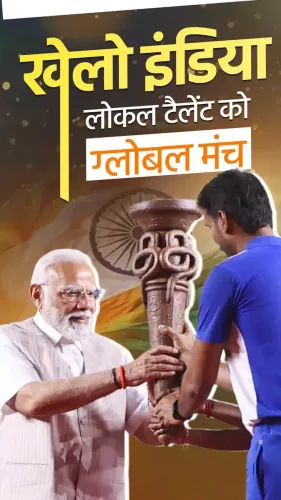
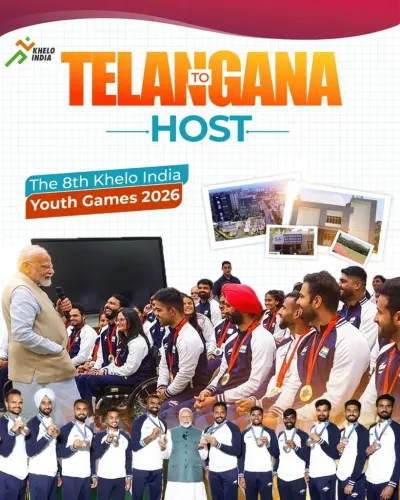
Union Sports Minister Mansukh Mandaviya on 10 July 2026 shared a Prime Minister Modi quote emphasising that the Khelo India programme is providing youth from villages, small towns, and ordinary families a structured platform to pursue big sporting dreams — reinforcing the government's grassroots sports push.
Key Takeaways
Union Sports Minister Mansukh Mandaviya shared a quote from PM Narendra Modi on 10 July 2026 highlighting the Khelo India programme's reach.
The programme specifically targets youth from small towns, villages, and ordinary families , aiming to democratise access to competitive sport.
Khelo India was approved by the Union Cabinet in 2017 with an initial outlay of Rs 1,756 crore for 2017-18 to 2019-20.
The first Khelo India School Games were held in New Delhi in 2018 ; the programme has since expanded to university and winter editions.
Key upcoming markers include the next Khelo India University Games schedule and sports allocation in the forthcoming Union Budget .
State-level adoption of Khelo India district centres remains central to delivering the programme's grassroots promise.
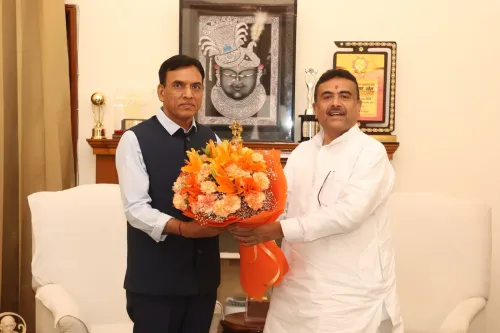
Union Labour and Sports Minister Mansukh Mandaviya on Friday, 10 July 2026, shared a quote attributed to Prime Minister Narendra Modi underlining how the Khelo India programme is opening avenues for youth from small towns, villages, and ordinary families to aspire to greatness in sport.
Mandaviya's post quoted the Prime Minister in Hindi: 'Khelo India karyakram se chhote shahron, gaon aur samanya parivar ke logon ko bhi bade sapne dekhne ka platform mil raha hai' — translating to: 'The Khelo India programme is giving people from small towns, villages, and ordinary families a platform to dream big.'
Context
The post comes as the Khelo India initiative continues to expand its footprint across India's districts, targeting grassroots talent identification and sports infrastructure development beyond metropolitan centres. The minister's decision to amplify the Prime Minister's words signals the government's continued political and administrative emphasis on the programme as a vehicle for youth empowerment.
The share follows a pattern of senior BJP leaders publicly reinforcing the government's sports narrative, particularly as India seeks to improve its standing in international competitions and channel youth aspiration through organised sport.
Policy Backdrop
The Khelo India scheme was approved by the Union Cabinet in 2017 with an initial outlay of Rs 1,756 crore for the period 2017-18 to 2019-20, replacing the earlier Rajiv Gandhi Khel Abhiyan. Its mandate covers talent identification at the district level, financial support for promising athletes, and the creation of sports infrastructure in underserved regions.
The first Khelo India School Games were held in New Delhi in 2018, and the programme has since expanded to include university and winter editions. The explicit focus on rural and semi-urban youth addresses a longstanding gap in Indian sports development, where elite coaching and facilities have historically been concentrated in larger cities.
Successive central governments have increased sports budget allocations and created dedicated verticals for infrastructure, coaching, and competitive exposure — all aimed at broadening the talent base and improving India's Olympic medal prospects.
Stakeholders and Impact
Rural youth, small-town athletes, and state sports departments are the primary stakeholders of the Khelo India ecosystem. For young athletes from modest backgrounds, the programme's district-level identification camps and financial support represent often the only structured pathway into competitive sport.
State governments play a critical implementation role, with Khelo India district centres serving as the physical nodes through which coaching, equipment, and competitive opportunities reach the grassroots. The degree of state-level adoption remains a key variable in determining how evenly the programme's benefits are distributed across India's diverse geography.
What's Next
Attention will now turn to the schedule for the next Khelo India University Games and any revised budgetary allocation in the forthcoming Union Budget. Observers will also watch for announcements on the expansion of district-level Khelo India centres, which are central to the programme's promise of reaching athletes in villages and small towns.
As India builds toward future Olympic cycles, the political and financial commitment to grassroots programmes like Khelo India will be a significant indicator of how seriously the country intends to broaden its sporting base beyond a handful of disciplines and urban academies.
Point of View
Mandaviya is performing a dual function: reinforcing his ministry's alignment with the top political leadership and keeping the Khelo India narrative in the public conversation ahead of potential budget discussions. The framing around 'small towns, villages, and ordinary families' is a deliberate broadening of the programme's identity — moving it from a sports-development scheme to a social-mobility instrument. This connects to a wider BJP governance arc of positioning central schemes as engines of aspiration for non-elite India. Whether that aspiration translates into measurable outcomes — more medals, more funded athletes, more district centres — will define the programme's legacy beyond its political messaging.
NationPress
10 Jul 2026
Frequently Asked Questions
What is the Khelo India programme?
Khelo India is a national sports development scheme launched by the Indian government in 2017 to identify grassroots talent, build sports infrastructure, and provide financial support to promising athletes across India, with a particular focus on rural and semi-urban youth.
Who launched the Khelo India scheme?
The Khelo India scheme was approved by the Union Cabinet in 2017 under the BJP-led NDA government , replacing the earlier Rajiv Gandhi Khel Abhiyan, with an initial outlay of Rs 1,756 crore .
What did Mansukh Mandaviya say about Khelo India?
On 10 July 2026 , Union Sports Minister Mansukh Mandaviya shared a quote from PM Narendra Modi stating that the Khelo India programme is giving people from small towns, villages, and ordinary families a platform to dream big in sport.
What are the Khelo India University Games?
The Khelo India University Games are a national-level multi-sport competition organised under the Khelo India programme for university students, designed to identify and nurture sporting talent at the higher-education level across India.
How does Khelo India benefit rural athletes?
Khelo India benefits rural athletes through district-level talent identification camps, financial support for selected athletes, and the establishment of Khelo India district centres that bring coaching and competitive opportunities closer to small towns and villages.