Gujarat CM Office: State Hits 50 GW Renewable Energy Mark
Synopsis
The Chief Minister's Office of Gujarat announced on 10 July 2026 that the state's installed renewable energy capacity has crossed 50.386 GW — the largest state share in India at 17.82 per cent — anchored by over 13.45 lakh rooftop solar installations and the upcoming Khavda hybrid mega-park in Kutch.
Key Takeaways
Gujarat's total installed renewable energy capacity stands at 50.386 GW , according to the CMO's 10 July 2026 post.
The state contributes 17.82 per cent of India's total renewable energy capacity, the highest share among all states.
More than 13.45 lakh rooftop solar installations have been completed across Gujarat.
The Khavda hybrid renewable energy park in Kutch is described as the world's largest such facility under development.
Gujarat's expansion directly supports PM Modi's net-zero by 2070 pledge and India's 500 GW non-fossil target by 2030.
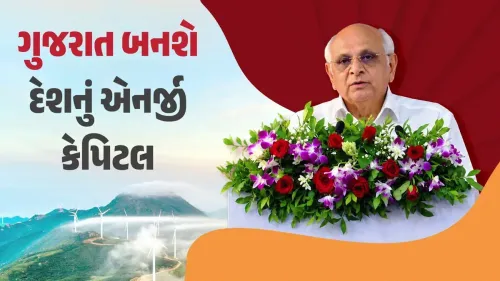
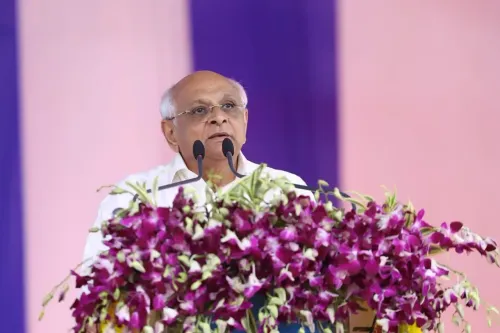
CM Bhupendra Patel 's government has been credited with driving the 'revolutionary initiatives' behind the capacity surge.
The Chief Minister's Office of Gujarat declared on 10 July 2026 that the state has achieved a total installed renewable energy capacity of 50.386 gigawatts, positioning Gujarat as the leading contributor to India's clean energy transition and the country's top renewable energy hub.
Context
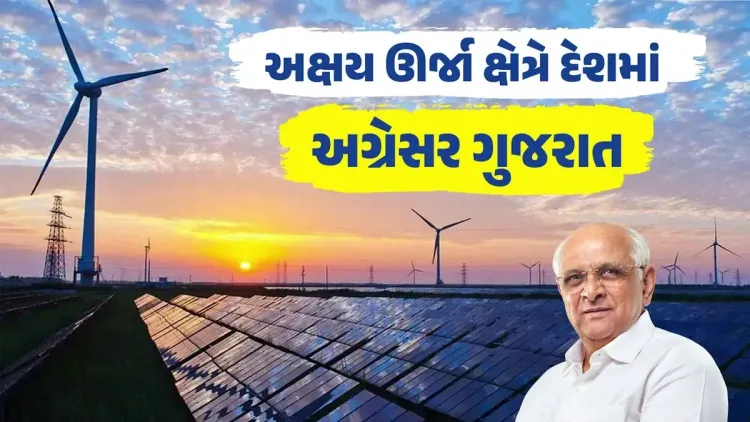
The CMO's post, shared on the occasion of #GlobalEnergyIndependenceDay, states in Gujarati: 'Aksay urja thaki urja aatmanirbharta na sankalp ne sakar karva pratibaddh Gujarat' — ('Gujarat committed to realising the resolve of energy self-reliance through renewable energy'). The announcement credits Chief Minister Bhupendra Patel's leadership and a series of 'revolutionary initiatives' by the state government for the milestone. According to the post, Gujarat's installed renewable capacity now accounts for 17.82 per cent of India's total renewable energy capacity, the highest share of any single state.
Policy Backdrop
Gujarat's push aligns directly with Prime Minister Narendra Modi's net-zero carbon emissions target by 2070, first announced at the COP26 summit in Glasgow in 2021 as part of India's five-point Panchamrit climate strategy. That pledge also includes a national goal of 500 GW of non-fossil fuel power capacity by 2030. Western states such as Gujarat, endowed with high solar irradiation and strong wind corridors, have been designated priority zones under both central and state policies for large-scale hybrid renewable parks and grid expansion.
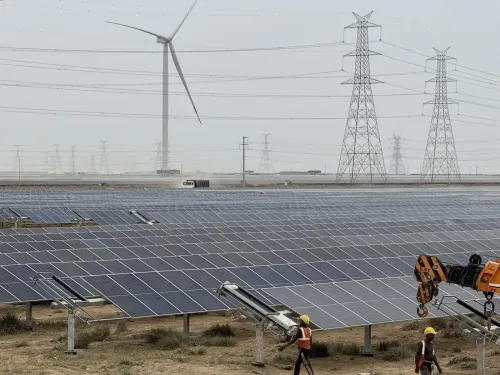
The post highlights that Gujarat leads the country in both wind and solar power generation, and has recorded more than 13.45 lakh rooftop solar installations — a figure the CMO describes as the driver of a 'solar energy revolution' across the state.
Khavda Hybrid Park: A Global Landmark in the Making
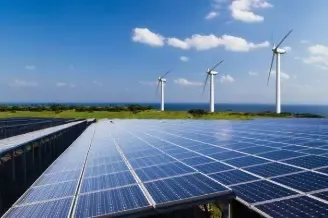
The centrepiece of Gujarat's renewable ambition is the hybrid renewable energy park taking shape at Khavda in Kutch district. The CMO's post describes it as the world's largest hybrid renewable energy park, combining solar and wind generation in a single integrated facility. The Kutch region's vast uninhabited terrain and exceptional wind-solar resource profile made it the preferred site for this project, which is intended to embody the state's stated goal of 'aksay urja thaki urja aatmanirbharta' (energy self-reliance through renewable energy).
The Khavda park is expected to serve as a model for large-scale clean energy deployment, drawing interest from private renewable developers and reinforcing Gujarat's positioning as a destination for green investment. Commissioning timelines and final capacity figures for the park are among the key developments to watch in the coming fiscal cycles.
Stakeholders and Impact
The scale of Gujarat's renewable build-out has direct implications for multiple stakeholders. Renewable energy developers operating in the state benefit from an enabling policy environment and ready infrastructure. Residents of Gujarat — particularly in Kutch — stand to gain from local employment, improved grid reliability, and reduced dependence on fossil fuel imports. At the national level, Gujarat's outsized share of renewable capacity supports India's credibility in meeting its international climate commitments.
What's Next
Attention will now turn to the commissioning schedule of the Khavda hybrid park, upcoming state and central budget allocations for rooftop solar expansion, and the pace of transmission infrastructure upgrades needed to evacuate power from large remote parks to load centres. Gujarat's trajectory will be closely watched as a benchmark for other high-potential states seeking to replicate the model at scale.
Point of View
The CMO is staking a claim for Gujarat as the template other states must follow. The Khavda hybrid park, if commissioned at the scale described, would be a globally significant project and a political asset for both the state government and the ruling dispensation at the Centre. The timing on Global Energy Independence Day underscores a calculated effort to embed Gujarat's clean energy story into a broader national-pride narrative.
NationPress
10 Jul 2026
Frequently Asked Questions
What is Gujarat's total renewable energy capacity in 2026?
According to the Chief Minister's Office of Gujarat, the state's total installed renewable energy capacity has reached 50.386 GW as of July 2026, the largest share of any Indian state.
What is the Khavda hybrid renewable energy park?
The Khavda hybrid renewable energy park is a large-scale facility under development in Kutch district, Gujarat, combining solar and wind power generation. The CMO has described it as the world's largest hybrid renewable energy park.
How many rooftop solar installations does Gujarat have?
The CMO's post states that Gujarat has completed more than 13.45 lakh rooftop solar installations , which it credits as a driver of the state's solar energy revolution.
How does Gujarat contribute to India's net-zero 2070 target?
Gujarat contributes 17.82 per cent of India's total renewable energy capacity, directly supporting PM Modi's pledge of net-zero carbon emissions by 2070 announced at COP26 in Glasgow in 2021.
Who is the Chief Minister of Gujarat overseeing the renewable energy push?
Bhupendra Patel is the Chief Minister of Gujarat. The CMO credits his leadership and the state government's policy initiatives for the renewable energy capacity milestone.