CM Sai Backs Crop Diversification With Rs 15,000/Acre Aid
Synopsis
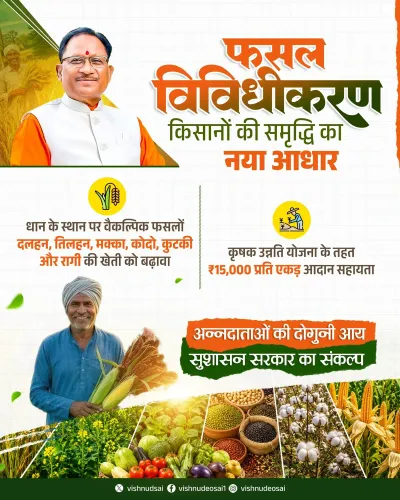
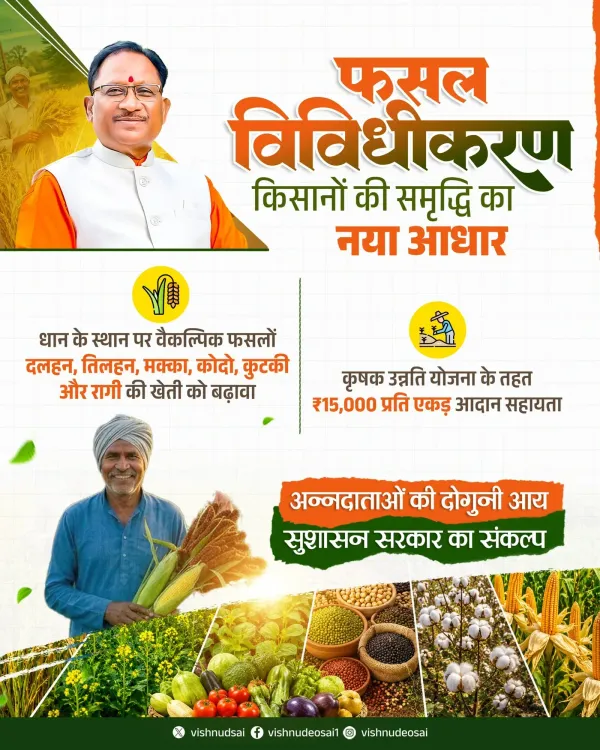
Chhattisgarh CM Vishnu Deo Sai announced Rs 15,000 per acre input support under Krishak Unnati Yojana for farmers growing pulses, oilseeds, maize, kodo, kutki and ragi, aiming to diversify the state's rice-heavy cropping pattern and raise rural incomes.
Key Takeaways
Rs 15,000 per acre input assistance is being provided under the Krishak Unnati Yojana to farmers cultivating alternative crops.
Promoted crops include pulses, oilseeds, maize, kodo, kutki and ragi — a mix of commercial and traditional millet varieties.
The initiative targets Chhattisgarh's large smallholder and tribal farming communities, who have historically grown minor millets alongside paddy.
The policy aligns with India's national push for crop diversification and follows the country's promotion of millets during the International Year of Millets 2023 .
The move aims to reduce dependence on water-intensive paddy and improve soil health, nutritional outcomes and climate resilience.
Kharif season acreage data and scheme disbursement figures will be the key indicators of on-ground uptake.
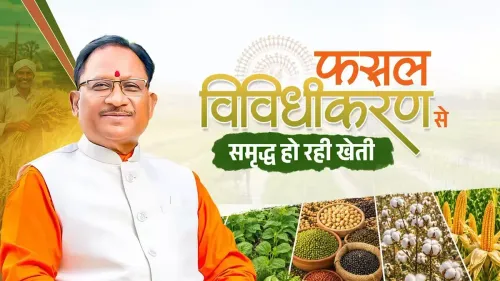
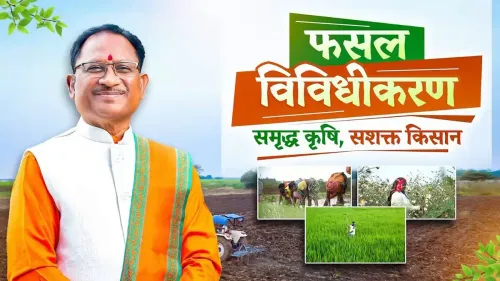
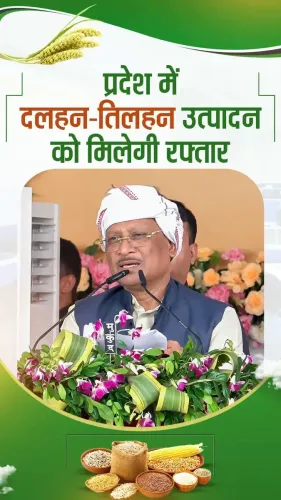
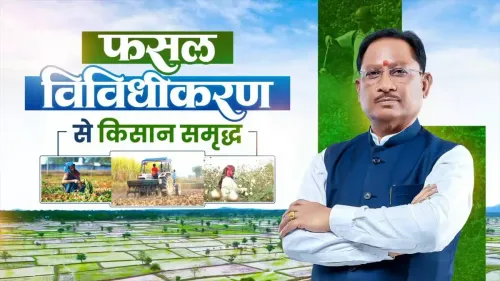
Chhattisgarh Chief Minister Vishnu Deo Sai announced on Friday, 10 July 2026 that the state government is actively promoting crop diversification to raise farmer incomes, offering input assistance of Rs 15,000 per acre under the Krishak Unnati Yojana to cultivators who shift to alternative crops.
Context
Posting in Hindi on X, CM Sai said: 'हमारी सरकार किसानों की आय बढ़ाने और खेती को अधिक लाभकारी एवं टिकाऊ बनाने के लिए निरंतर कार्य कर रही है' ('Our government is continuously working to increase farmers' incomes and make agriculture more profitable and sustainable'). He identified pulses, oilseeds, maize, kodo, kutki, and ragi as the crops being actively encouraged across the state.
The announcement signals a deliberate push by the BJP government in Chhattisgarh to move smallholder and tribal farmers away from the state's historically rice-dominant cropping pattern toward a broader, more resilient basket of crops.
Policy Backdrop
The Krishak Unnati Yojana, the state scheme under which the Rs 15,000 per acre input support is being channelled, is designed to make the economics of alternative crops competitive with paddy for individual farmers. Kodo, kutki, and ragi — minor millets long cultivated by tribal communities in Chhattisgarh — stand to benefit particularly, given the state's large adivasi farming population.
The move aligns with India's broader national emphasis on crop diversification, reflected in central missions such as the National Food Security Mission and the country's promotion of millets during the International Year of Millets in 2023. Diversifying away from water-intensive paddy is widely seen as essential for improving soil health, nutritional outcomes, and climate resilience across India's rain-fed agricultural belts.
Stakeholders and Impact
Chhattisgarh's farming economy is dominated by smallholder and tribal cultivators, many of whom have historically grown minor millets alongside paddy. The per-acre input subsidy is aimed directly at this demographic, lowering the financial risk of switching to or expanding alternative crop cultivation during the kharif season.
Pulses and oilseeds, also on the promoted list, carry additional strategic weight: India remains a net importer of both, and state-level production incentives contribute to national self-sufficiency goals. Maize, meanwhile, has growing industrial and feed-sector demand, offering farmers a potentially higher-value market outlet.
What's Next
The key metrics to watch will be kharif acreage data for the promoted crops at the end of the current sowing season, as well as any disbursement figures the state government releases on how many farmers have enrolled under the Krishak Unnati Yojana input-support window. Supplementary budget provisions or assembly disclosures could offer a fuller picture of the scheme's reach and total outlay. If uptake is strong, the programme could serve as a template for scaling crop diversification incentives in other tribal-majority states facing similar agrarian challenges.
Point of View
000 per acre incentive is designed to make the economics of alternative crops voluntarily attractive for farmers accustomed to paddy support systems. For a state like Chhattisgarh, where minor millets are culturally embedded in tribal agriculture, this is as much a market-linkage challenge as a cultivation one. The scheme fits neatly into the BJP's national narrative of doubling farmer incomes, but its real test will be whether input support translates into assured procurement and better market prices for kodo, kutki and ragi at the mandis. If disbursement is swift and acreage data shows genuine diversification, Chhattisgarh could position itself as a model for millet-led agrarian transition in central India.
NationPress
10 Jul 2026
Frequently Asked Questions
What is the Krishak Unnati Yojana in Chhattisgarh?
Krishak Unnati Yojana is a Chhattisgarh state government scheme that provides input assistance to farmers, including Rs 15,000 per acre for those cultivating alternative crops such as pulses, oilseeds, maize, kodo, kutki and ragi, with the aim of diversifying away from paddy and raising farm incomes.
Which crops are being promoted under Chhattisgarh's crop diversification push?
The Chhattisgarh government is promoting pulses, oilseeds, maize, kodo, kutki and ragi as alternatives to the state's dominant rice cultivation, offering financial support to farmers who adopt these crops.
How much financial help will Chhattisgarh farmers get for growing millets?
Farmers in Chhattisgarh who grow alternative crops including millets like kodo, kutki and ragi are eligible for Rs 15,000 per acre as input assistance under the Krishak Unnati Yojana announced by CM Vishnu Deo Sai.
Why is Chhattisgarh promoting crop diversification away from paddy?
Paddy cultivation is water-intensive and limits income options for smallholder and tribal farmers. Diversifying into pulses, oilseeds and millets improves soil health, reduces water use, enhances nutritional outcomes and aligns with national food security goals.
What is India's policy on millet promotion and how does Chhattisgarh fit in?
India championed the International Year of Millets in 2023, promoting nutri-cereals like ragi, kodo and kutki for their climate resilience and nutritional value. Chhattisgarh's tribal farming communities have traditionally grown these crops, making the state a natural focus for millet-linked incentive programmes.