Assam Budget 2026-27: Transfers, Leave & 8th Pay Commission
Synopsis
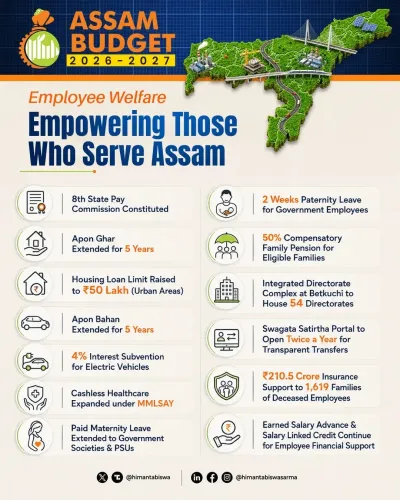
The Chief Minister's Office of Assam has flagged key civil-service provisions in the Assam Budget 2026-27, covering government employee transfers, leave rules, and a reference to the Eighth Pay Commission — signalling a broad overhaul of state workforce conditions.
Key Takeaways
The Chief Minister's Office of Assam posted details from the Assam Budget 2026-27 on 11 July 2026 .
The budget addresses government employee transfers and leave rules as part of civil-service reform.
A reference to the Eighth Pay Commission signals Assam's intent to revise state employee pay structures.
Assam has aligned with central pay commission frameworks since the Seventh Pay Commission in 2016-17 .
State government employees across 33 districts stand to be directly impacted by these budget provisions.
Assembly debates and formal government orders will determine the timeline and fiscal scope of implementation.
The Chief Minister's Office of Assam on Saturday, 11 July 2026 shared details from the Assam Budget 2026-27, highlighting key provisions covering government employee transfers, leave rules, and the anticipated Eighth Pay Commission — signalling the state's intent to overhaul civil-service conditions in the coming fiscal year.
Context
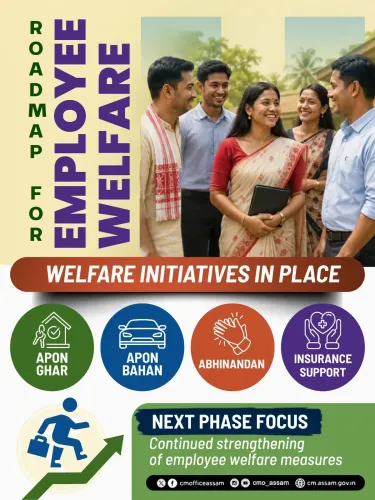
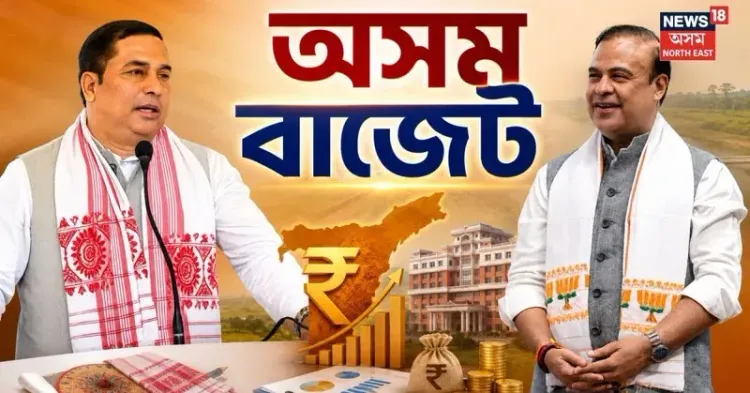
The post, shared in Assamese, teases a cluster of employee-welfare measures bundled into the 2026-27 state budget, ranging from transfer and leave policies to a formal nod toward the Eighth Pay Commission. The Assamese text translates broadly as: 'Assam Budget 2026-27: From government employee transfers and leave to the Eighth Pay Commission!' — indicating that the budget document addresses multiple long-pending demands of the state's civil-service workforce.
Chief Minister Himanta Biswa Sarma's administration has since 2021 embedded civil-service reform measures in successive annual budgets, treating employee welfare as both an administrative and a political priority.
Policy Backdrop
Assam aligned its pay structure with the Seventh Central Pay Commission recommendations from 2016-17 onward, granting state employees revised scales broadly in step with central government staff. The Eighth Pay Commission — expected to succeed the Seventh — is tasked at the national level with reviewing pay, allowances, and service conditions; states typically formulate their own counterpart frameworks drawing on the central template.
Transfer policy and leave rules are perennial items in Assam's budget, reflecting the government's effort to regulate a large civil-service workforce spread across 33 districts. Embedding these provisions in the budget gives them both legal backing and fiscal cover within a single legislative instrument.
Stakeholders and Impact
State government employees — numbering in the lakhs across departments, districts, and public-sector undertakings — are the primary beneficiaries of any revision to transfer norms, leave entitlements, and pay scales. Rationalised transfer rules reduce discretionary postings, while updated leave provisions directly affect take-home service conditions.
A state-level reference to the Eighth Pay Commission framework, if formalised in budget heads, would signal Assam's readiness to begin aligning its pay matrix ahead of any central notification — a move that could have significant fiscal implications given the state's wage bill. The broader pattern across Indian states shows that early movers on pay-commission alignment often use budget announcements as a political signal to employee unions before detailed implementation orders follow.
What's Next
Detailed budget head allocations and any formal government order constituting a state-level pay panel will be the next milestones to watch. Assembly debates on the 2026-27 budget are expected to scrutinise the fiscal headroom available for a potential pay revision and the timeline for implementing revised transfer and leave rules.
If Assam formally constitutes an Eighth Pay Commission equivalent or adopts central recommendations, it would set a precedent among northeastern states and could accelerate similar moves elsewhere in the region — making the fine print of this budget a closely watched document for both civil servants and fiscal analysts.
Point of View
Leave rules, and a pay-commission reference into a single budget announcement is a calculated move by the Sarma government — it consolidates multiple employee demands into one legislative moment, reducing the need for piecemeal orders that invite union pressure. The nod to the Eighth Pay Commission is particularly significant: states that signal alignment early tend to use it as a workforce-management tool ahead of elections, and Assam's next assembly election cycle makes the timing worth noting. Fiscally, however, any pay revision adds substantially to the wage bill of a state that relies heavily on central transfers, so the devil will be in the budget-head allocations. Analysts will watch whether this is a substantive commitment or a political placeholder pending the central commission's final report.
NationPress
10 Oct 2026
Frequently Asked Questions
What does the Assam Budget 2026-27 say about government employee transfers?
The Assam Budget 2026-27 includes provisions related to government employee transfer policy, aiming to regulate postings across the state's civil service. Detailed rules are expected to follow through formal government orders after budget passage.
What is the Eighth Pay Commission and how does it affect Assam employees?
The Eighth Pay Commission is the expected successor to the Seventh Pay Commission (2016) and is tasked with revising pay, allowances, and service conditions for government staff. Assam's budget reference to it suggests the state intends to align its pay matrix with the new commission's framework, potentially benefiting lakhs of state employees.
When was the Assam Budget 2026-27 announced?
The Chief Minister's Office of Assam shared details of the Assam Budget 2026-27 on 11 July 2026 , highlighting civil-service provisions including transfers, leave rules, and the Eighth Pay Commission.
How has Assam handled pay commission revisions in the past?
Assam implemented the Seventh Central Pay Commission's revised pay scales from 2016-17 onward, aligning state employees with central government structures. Successive budgets since 2021 have continued to include employee welfare measures such as transfer and leave policy updates.
Who benefits from the Assam Budget 2026-27 civil-service provisions?
State government employees across Assam's 33 districts are the primary beneficiaries, as the budget provisions cover transfer norms, leave entitlements, and potential pay revision under the Eighth Pay Commission framework.