Assam Budget 2026: State to Map Lean-Season River Water for Lift Irrigation
Synopsis
The Chief Minister's Office of Assam, in its Budget 2026 highlights, announced a lean-season surface water assessment of eight rivers — including Barak, Subansiri, and Kopili — to develop small and medium lift irrigation projects with piped distribution networks for the state's farming communities.
Key Takeaways
The Government of Assam will assess lean-season surface water availability in eight rivers : Barak, Subansiri, Manas, Beki, Puthimari, Jia Bharali, Dhansiri, and Kopili.
The assessment is aimed at developing small and medium lift irrigation projects with piped distribution networks.
The announcement was made as part of #AssamBudget2026 highlights on 10 July 2026 .
The initiative targets the lean season — when river flows are lowest — to address dry-period water scarcity for farmers.
Both the Brahmaputra Valley and the Barak Valley are covered, indicating a state-wide scope.
The move aligns with the national Pradhan Mantri Krishi Sinchayee Yojana (PMKSY) framework for irrigation expansion.
The Chief Minister's Office of Assam announced on Friday, 10 July 2026, as part of the #AssamBudget2026 highlights, that the state government will undertake a detailed assessment of lean-season surface water availability across eight key rivers to develop small and medium lift irrigation projects with piped distribution networks.
Context
The announcement covers eight rivers: Barak, Subansiri, Manas, Beki, Puthimari, Jia Bharali, Dhansiri, and Kopili. These rivers span both the Brahmaputra Valley in central and northern Assam and the Barak Valley in the south, together covering the bulk of the state's agricultural hinterland. The focus on the 'lean season' — the dry months outside the monsoon window — signals the government's intent to address water scarcity precisely when river flows are at their lowest and crop stress is highest.
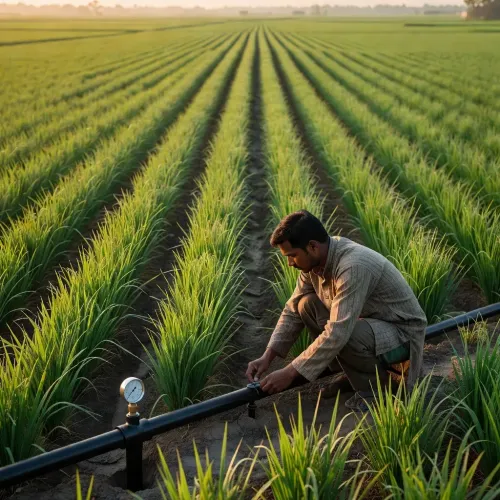
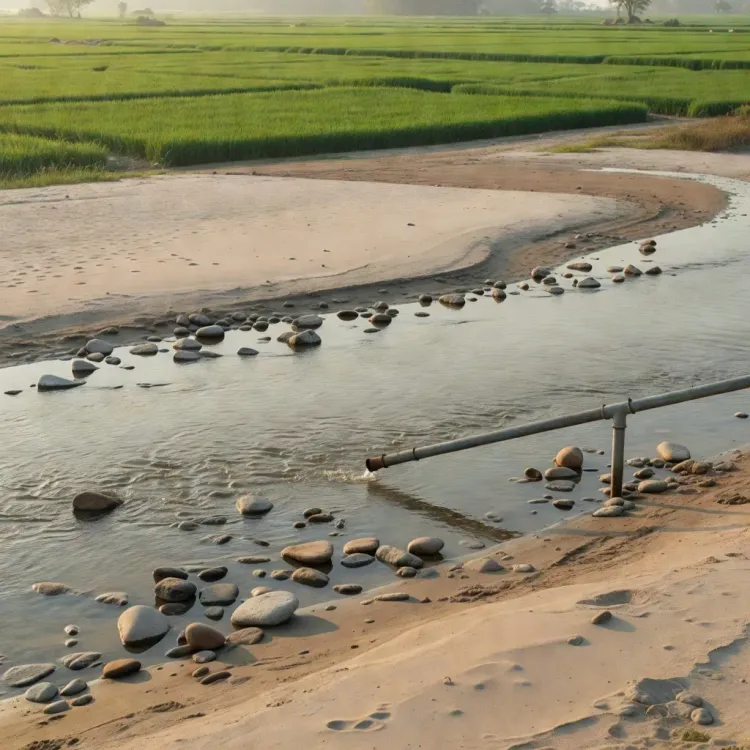
The assessment will feed into the design of lift irrigation infrastructure, where water is mechanically drawn from rivers and distributed through piped networks to fields. This approach reduces dependence on rainfall and mitigates the twin vulnerabilities of flooding during the monsoon and drought during the lean period.
Policy Backdrop
Assam's agriculture has historically been shaped by the extreme seasonal variability of the Brahmaputra and Barak river basins. Successive state budgets have allocated funds for surface-water mapping and lift schemes as part of a longer arc of irrigation modernisation. At the national level, the Pradhan Mantri Krishi Sinchayee Yojana (PMKSY), launched in 2015, provides a framework for expanding irrigated area and improving water-use efficiency, under which state-level projects can seek central co-funding.
The Subansiri, the largest tributary of the Brahmaputra, and the Barak, which anchors the southern valley's agriculture and transport, are among the most strategically significant rivers in this assessment. Including smaller rivers such as Beki, Puthimari, and Jia Bharali suggests the government is targeting district-level coverage rather than limiting the exercise to major waterways.
Stakeholders and Impact
The primary beneficiaries of any resulting projects would be small and marginal farmers in rural agricultural communities across flood- and drought-prone districts of Assam. Piped distribution networks, compared to open-channel systems, reduce water loss through seepage and evaporation, making them particularly suited to lean-season conditions when every unit of available water is critical.
For farming communities in districts that border these rivers, reliable non-monsoon irrigation can enable a second or third crop cycle annually, directly improving household incomes. The assessment phase will also generate river-flow data that could inform flood-management and ecological planning beyond agriculture.
What's Next
The immediate next step is the conduct of the river-flow assessment itself, the findings of which are expected to determine the feasibility, scale, and location of specific lift irrigation projects. Project sanctions, detailed project reports, and budget allocations are likely to follow in subsequent budget cycles or through central-state coordination under PMKSY.
Watchers of Assam's agricultural policy will look for the release of the assessment report and any formal project announcements as indicators of how quickly the state moves from planning to implementation. The inclusion of eight rivers across multiple valleys suggests an ambition to make lean-season irrigation a state-wide programme rather than a pilot.
Point of View
Data-first approach that is relatively uncommon in state budget announcements. By covering eight rivers across both major valley systems, the government is signalling that this is intended as a structural intervention in agricultural water security rather than a targeted constituency measure. The alignment with PMKSY also opens a pathway for central co-funding, which would ease the fiscal burden on the state exchequer. If the assessment is completed and acted upon within a single budget cycle, it could mark a meaningful shift in how Assam manages its considerable but seasonally volatile river resources.
NationPress
10 Jul 2026
Frequently Asked Questions
What is the Assam Budget 2026 lift irrigation announcement?
The Assam government announced in its Budget 2026 that it will assess lean-season surface water availability in eight rivers — Barak, Subansiri, Manas, Beki, Puthimari, Jia Bharali, Dhansiri, and Kopili — to develop small and medium lift irrigation projects with piped distribution networks.
Which rivers are included in Assam's lean-season water assessment?
The eight rivers included are Barak, Subansiri, Manas, Beki, Puthimari, Jia Bharali, Dhansiri, and Kopili, covering both the Brahmaputra Valley and the Barak Valley regions of Assam.
What is a lift irrigation project?
A lift irrigation project mechanically draws water from a river or water body and distributes it to agricultural fields through pipes or channels, enabling irrigation even when natural water flow is insufficient for gravity-fed systems.
Who benefits from Assam's new irrigation scheme?
Small and marginal farmers in rural agricultural communities across Assam's flood- and drought-prone districts are the primary intended beneficiaries, as reliable non-monsoon irrigation can support additional crop cycles.
How does Assam's irrigation plan connect to central government schemes?
The initiative aligns with the Pradhan Mantri Krishi Sinchayee Yojana (PMKSY), launched in 2015, which supports states in expanding irrigated area and improving water-use efficiency, and through which Assam could seek central co-funding for approved projects.