Bhupender Yadav inaugurates HWC Centre of Excellence at WII-SACON
Synopsis
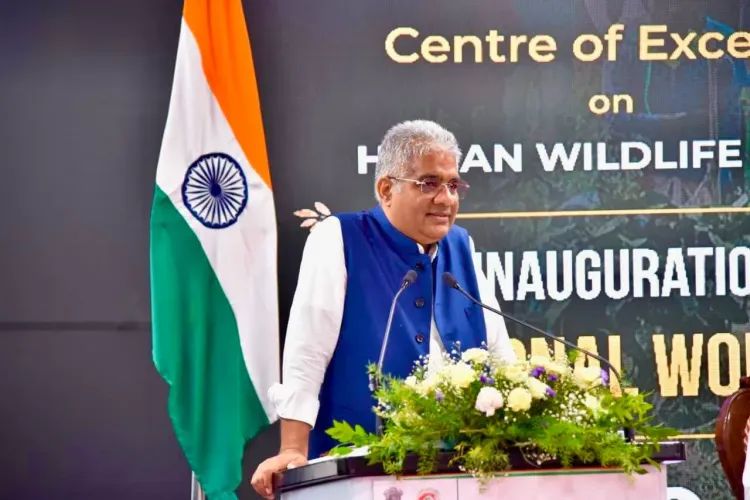
Union Environment Minister Bhupender Yadav inaugurated the Centre of Excellence on Human–Wildlife Conflict at WII-SACON in Coimbatore on 10 July 2026. Announced by PM Modi at the 7th NBWL meeting, the Centre will drive evidence-based research and policy on tiger, leopard, and elephant conflicts, with a mandate for area-specific and species-specific community outreach.
Key Takeaways
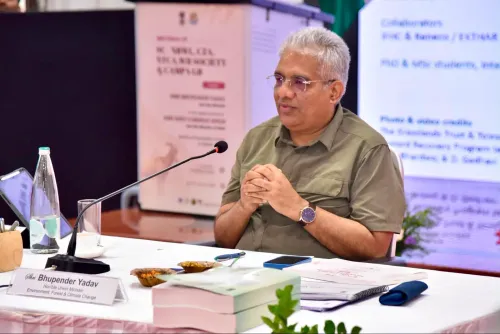
The Centre of Excellence on Human–Wildlife Conflict was inaugurated at WII-SACON, Coimbatore on 10 July 2026 by Union Environment Minister Bhupender Yadav .
The Centre was first announced by PM Narendra Modi at the 7th Meeting of the National Board for Wildlife .
It will serve as a national hub for research, innovation, policy support, capacity building , and dissemination of best practices on human–wildlife conflict.
The Centre has been tasked with developing strategies for managing conflicts involving tigers outside tiger reserves, leopards, and elephants .
Mitigation approaches must be both area-specific and species-specific , with awareness campaigns run 'in mission mode' across urban and rural communities.
State forest departments and local communities are the primary stakeholders expected to benefit from the Centre's outputs.
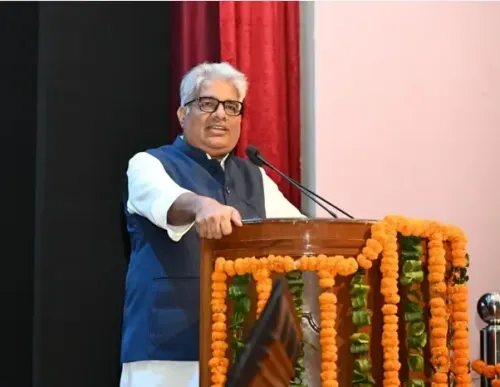
Union Environment Minister Bhupender Yadav on Friday, 10 July 2026, inaugurated the Centre of Excellence on Human–Wildlife Conflict at the Wildlife Institute of India – Salim Ali Centre for Ornithology and Natural History (WII-SACON) in Coimbatore, Tamil Nadu, establishing a dedicated national hub to drive research, policy support, and community-level mitigation of human–wildlife conflict across India.
Context
The Centre was first announced by Prime Minister Narendra Modi during the 7th Meeting of the National Board for Wildlife (NBWL), the statutory advisory body constituted under the Wildlife (Protection) Act, 1972. Its inauguration marks the translation of that announcement into an operational institution. Minister Yadav described the Centre as a 'national hub for research, innovation, policy support, capacity building, and the dissemination of best practices' aimed at strengthening 'scientific and evidence-based management of human–wildlife conflict.'
Yadav also urged the institute to develop a comprehensive strategy for framing policies covering conflicts involving tigers outside tiger reserves, as well as leopards and elephants, and their interactions with local communities — a signal that the Centre's mandate extends well beyond protected-area boundaries.
Policy Backdrop
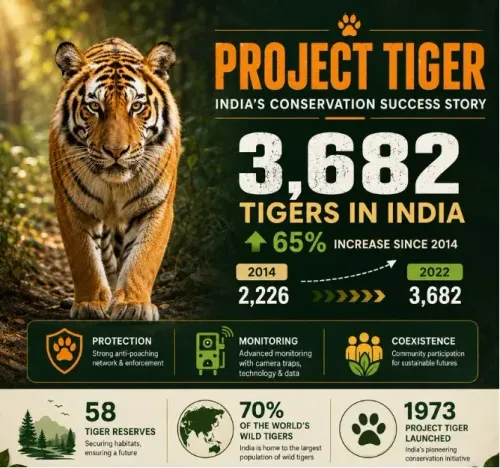
India's legal framework for wildlife conservation dates to the Wildlife (Protection) Act, 1972, which established the NBWL and laid the groundwork for managing human–wildlife encounters. Project Tiger, launched in 1973 and later expanded under the National Tiger Conservation Authority, addressed conflicts within and around tiger reserves, but rising incidents involving elephants, leopards, and tigers in fringe habitats have exposed the limits of reserve-centric approaches.
As development expands into forest margins, the Ministry of Environment, Forest and Climate Change has increasingly prioritised evidence-based, landscape-level coexistence measures. The new Centre at WII-SACON — a premier wildlife research institution — institutionalises that shift, embedding it in a dedicated facility with a cross-species and cross-landscape mandate.
Stakeholders and Impact
The Centre's work is expected to directly benefit rural and urban communities living in proximity to wildlife habitats, as well as state forest departments that currently manage human–wildlife incidents with varying levels of scientific support. Minister Yadav stressed that awareness generation must be undertaken 'in mission mode across both urban and rural areas to educate communities on safely dealing with human–wildlife encounters.'
The approach mandated by the Minister is explicitly area-specific as well as species-specific, moving away from one-size-fits-all responses. This is significant for states such as Tamil Nadu, Karnataka, Kerala, Assam, and Uttarakhand, which report high volumes of human–elephant and human–leopard conflict annually. State forest departments are expected to be primary adopters of the mitigation strategies the Centre develops.
What's Next
The Centre at WII-SACON, Coimbatore is now tasked with producing area-specific and species-specific mitigation frameworks that state governments can operationalise. The emphasis on 'mission mode' awareness campaigns suggests a rollout that will engage local communities, panchayats, and urban local bodies in conflict-prone zones.
Observers will watch whether the Centre's research outputs are formally adopted in state wildlife action plans and whether the next NBWL meeting sets measurable targets for reducing human–wildlife casualties. The inauguration signals that India's wildlife governance is moving toward a more institutionalised, data-driven model — one that treats coexistence not as an afterthought but as a central policy objective.
Point of View
Science-led coexistence policy. By anchoring the Centre in an existing premier research body and giving it an explicit cross-species mandate that includes areas outside protected reserves, the Ministry is acknowledging that the human–wildlife conflict problem has outgrown the Project Tiger-era framework. The 'mission mode' framing for awareness campaigns borrows the language of flagship government programmes, suggesting the Ministry intends to treat conflict mitigation with the same urgency as conservation targets. Whether this institutional momentum translates into measurable reductions in casualties will depend on how quickly state forest departments adopt the Centre's outputs.
NationPress
10 Jul 2026
Frequently Asked Questions
What is the Centre of Excellence on Human–Wildlife Conflict?
It is a newly inaugurated national research and policy hub at WII-SACON in Coimbatore, dedicated to developing scientific, evidence-based strategies to manage and reduce human–wildlife conflict across India.
Who inaugurated the Centre of Excellence on Human–Wildlife Conflict?
Union Environment Minister Bhupender Yadav inaugurated the Centre on 10 July 2026 in Coimbatore, Tamil Nadu.
Where is WII-SACON located?
WII-SACON, the Wildlife Institute of India – Salim Ali Centre for Ornithology and Natural History, is located in Coimbatore, Tamil Nadu .
Which animals does the new Centre focus on for conflict management?
The Centre has been specifically tasked with addressing conflicts involving tigers outside tiger reserves, leopards, and elephants , and their interactions with local communities.
Who announced the Centre of Excellence on Human–Wildlife Conflict?
Prime Minister Narendra Modi announced the Centre during the 7th Meeting of the National Board for Wildlife , after which the Ministry worked to establish it at WII-SACON.