Bhupender Yadav Reviews Ek Ped Maa Ke Naam Plantation at CASFOS
Synopsis
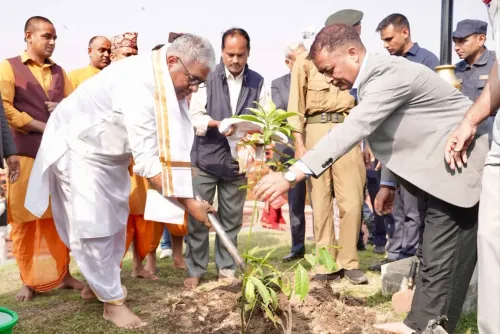
Union Environment Minister Bhupender Yadav visited CASFOS Coimbatore on 10 July 2026 to review plantations made two years ago under the Ek Ped Maa Ke Naam campaign, noting encouraging results. He also planted a jackfruit sapling alongside MOEFCC officials and forest service probationers, signalling a focus on measurable survival outcomes over planting numbers.
Key Takeaways
Bhupender Yadav visited CASFOS Coimbatore on 10 July 2026 to review plantations done under Ek Ped Maa Ke Naam two years ago.
The minister described the plantation results as 'encouraging', indicating positive survival and growth outcomes at the site.
He planted a jackfruit sapling alongside senior MOEFCC officials and CASFOS probationers during the visit.
Ek Ped Maa Ke Naam was launched by PM Narendra Modi on 5 June 2024 on World Environment Day as a citizen-driven tree plantation drive.
India has committed to restoring 21 million hectares of degraded land by 2030 under the Bonn Challenge , with institutional plantation drives supporting this goal.
The visit signals a policy emphasis on survival-rate monitoring rather than mere planting tallies as the measure of afforestation success.
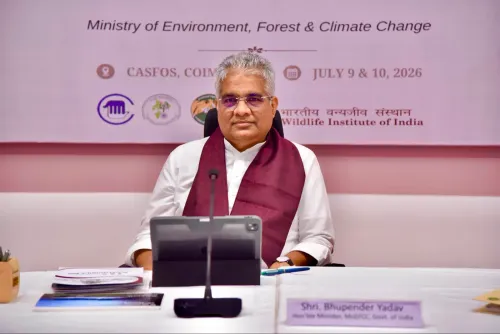
Union Environment Minister Bhupender Yadav on Friday, 10 July 2026, visited the Central Academy for State Forest Service (CASFOS) in Coimbatore, Tamil Nadu, to review plantation work carried out two years ago under the Ek Ped Maa Ke Naam initiative, describing the results as 'encouraging'. He also planted a jackfruit sapling during the visit, accompanied by senior officials of the Ministry of Environment, Forest and Climate Change (MOEFCC) and CASFOS probationers.
Context
The minister's post stated: 'Reviewed the plantation done two years ago under #EkPedMaaKeNaam initiative at CASFOS, Coimbatore. Happy to note that the results have been encouraging. Also, planted a jackfruit sapling, along with senior officials of MOEFCC and CASFOS probationers today.' The visit signals a shift in the government's afforestation approach — from tracking planting numbers to assessing on-ground survival and growth outcomes.
CASFOS Coimbatore is a premier residential training institution under MOEFCC that trains probationary forest officers drawn from state forest services across India. Its campus makes it a natural site for demonstrating institutional afforestation practices to the next generation of forest managers.
Policy Backdrop
The Ek Ped Maa Ke Naam campaign was launched by Prime Minister Narendra Modi on 5 June 2024 — World Environment Day — as a citizen-facing drive encouraging people to plant trees dedicated to their mothers. The initiative was conceived as a mass-participation complement to India's institutional afforestation programmes.
India's National Forest Policy of 1988 set a long-term goal of bringing 33 per cent of the country's geographical area under forest and tree cover. The country also committed in 2015 to the Bonn Challenge, pledging to restore 21 million hectares of degraded land by 2030. Plantation reviews of the kind conducted at CASFOS are seen as part of the government's effort to demonstrate measurable progress against these targets.
Stakeholders and Impact
The most direct beneficiaries of such institutional plantation drives are probationary forest officers who receive hands-on exposure to afforestation methods before they take charge of forest divisions across the country. Embedding plantation review practices into training curricula can influence how state forest departments design and monitor their own programmes.
State forest departments look to MOEFCC-led initiatives for operational guidance, and a ministerial review visit of this nature reinforces the message that survival rates — not just planting tallies — will be the benchmark for evaluating future campaigns. The choice of a jackfruit sapling, a species with both ecological and livelihood value, also underscores an emphasis on purposeful, locally relevant planting.
What's Next
Attention will now turn to whether the MOEFCC publishes formal survival-rate data from the 2024 plantations conducted under Ek Ped Maa Ke Naam across the country, which would provide a verifiable baseline for the campaign's ecological impact. Observers will also watch whether the initiative's outcomes are incorporated into state annual forest plans or featured in upcoming programmes such as Van Mahotsav. A formal accounting of tree survival statistics would strengthen India's reporting under its international restoration commitments.
Point of View
Not just a planting-numbers standard. Coming two years after the campaign's launch, the timing allows for a credible first assessment of whether saplings have taken root, which matters for India's international restoration pledges under the Bonn Challenge. The choice of a training institution as the review venue is also strategic: it embeds accountability culture into the next cohort of forest officers before they enter field postings. If formal survival data follows this visit, it could set a precedent for how all future mass plantation drives are evaluated and reported.
NationPress
8 Oct 2026
Frequently Asked Questions
What is the Ek Ped Maa Ke Naam initiative?
Ek Ped Maa Ke Naam is a nationwide tree plantation campaign launched by Prime Minister Narendra Modi on 5 June 2024, World Environment Day, encouraging citizens to plant trees in honour of their mothers as part of India's environmental awareness and afforestation efforts.
What is CASFOS Coimbatore?
CASFOS — the Central Academy for State Forest Service — is a premier training institution in Coimbatore, Tamil Nadu, under the Ministry of Environment, Forest and Climate Change, responsible for training probationary officers of state forest services across India.
Why did Bhupender Yadav visit CASFOS in July 2026?
Bhupender Yadav visited CASFOS on 10 July 2026 to review plantations carried out two years earlier under the Ek Ped Maa Ke Naam campaign, and he described the results as encouraging. He also planted a jackfruit sapling during the visit.
What is India's forest cover target under national policy?
India's National Forest Policy of 1988 set a long-term goal of bringing 33 per cent of the country's geographical area under forest and tree cover. India also committed in 2015 to restore 21 million hectares of degraded land by 2030 under the Bonn Challenge.
What does planting a jackfruit sapling signify in afforestation drives?
Jackfruit is a species with both ecological value and livelihood potential for local communities, and its selection reflects an emphasis on purposeful, locally relevant planting rather than generic species choices in government afforestation programmes.