Assam Budget 2026: Mission Basundhara 4.0 to digitise land rights

Synopsis
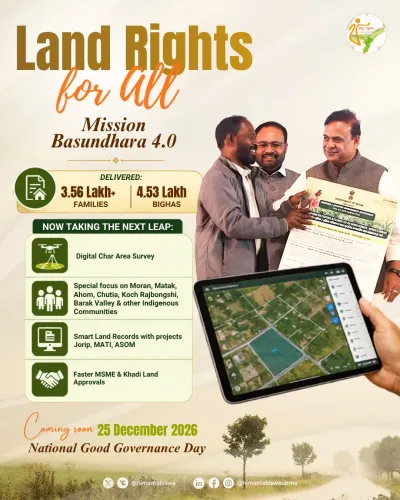
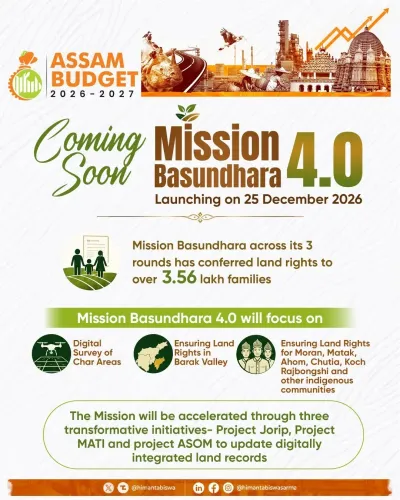
Assam's Budget 2026 reveals Mission Basundhara has granted land rights to over 3.56 lakh families across 4.53 lakh bighas in three phases. The upcoming Phase 4.0 will deploy digital surveys in Char areas and extend coverage to Barak Valley and multiple indigenous communities, backed by Projects Jorip, MATI and ASOM.
Key Takeaways
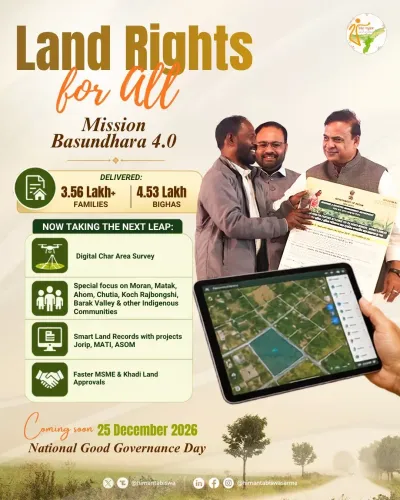
Over 3.56 lakh families have received land rights across 4.53 lakh bighas through three phases of Mission Basundhara .
Mission Basundhara 4.0 will prioritise digital land surveys in Char areas — Assam's erosion-prone Brahmaputra riverine islands.
Coverage will extend to Barak Valley and indigenous communities including Moran, Matak, Ahom, Chutia and Koch Rajbongshi .
Three new projects — Project Jorip , Project MATI and Project ASOM — will form a unified digital land governance ecosystem.
The announcement was made as part of Assam Budget 2026 highlights shared by the CMO on 10 July 2026 .
The Chief Minister's Office of Assam, on 10 July 2026, announced key highlights from the Assam Budget 2026, revealing that Mission Basundhara will enter its fourth phase with a focus on digital land surveys and expanded indigenous community coverage across the state.
Context
The CMO Assam post states that across three phases of Mission Basundhara, over 3.56 lakh families have secured land rights covering 4.53 lakh bighas of land. The programme, which began in 2021–22, was designed to issue land pattas to landless and indigenous families, particularly in riverine and tribal belts that have historically suffered from erosion-driven displacement and unresolved tenure disputes.
The announcement positions Mission Basundhara 4.0 as the next evolution of this effort, with the CMO noting it 'will focus on digital surveys in Char areas and land rights for Barak Valley, Moran, Matak, Ahom, Chutia, Koch Rajbongshi and other indigenous communities.'
Policy Backdrop
Char areas — the riverine islands and sandbanks of the Brahmaputra — present some of Assam's most complex land-tenure challenges. Periodic erosion reshapes boundaries, displaces families, and makes formal land records difficult to maintain. Extending digital surveys to these zones is a significant administrative undertaking that previous phases of the scheme did not fully address.
Barak Valley, in southern Assam, has distinct linguistic and demographic characteristics from the Brahmaputra valley and has long sought parity in state land-settlement programmes. Including the valley alongside indigenous groups such as the Moran, Matak, Ahom, Chutia and Koch Rajbongshi communities signals an attempt to broaden the scheme's geographic and ethnic reach.
The digital push aligns with a national trend of computerising land records, pursued by several states as part of broader e-governance reforms. Assam introduced elements of digital land mapping in the early 2020s, and Mission Basundhara 4.0 appears to consolidate those efforts into a unified framework.
Three Flagship Projects
According to the CMO post, Mission Basundhara 4.0 will be 'powered by Project Jorip, Project MATI and Project ASOM, creating a unified digital land governance ecosystem.' The three projects appear to form the technological and administrative backbone of the new phase, though specific mandates for each have not yet been detailed publicly.
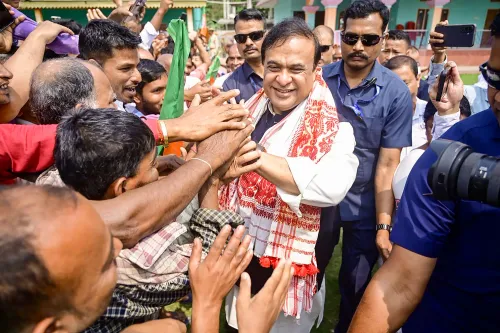
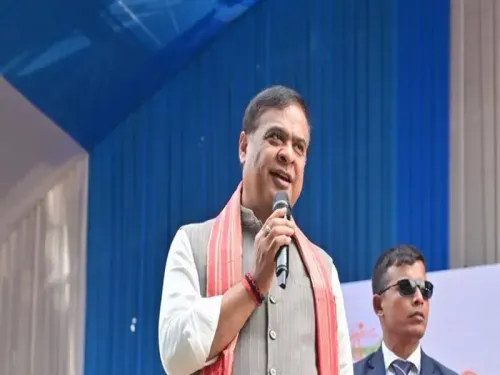
Chief Minister Himanta Biswa Sarma, who has led Assam's land-settlement agenda since taking office in May 2021, has consistently framed land rights for indigenous communities as a priority of his administration. The Budget 2026 announcement suggests that framework will now be institutionalised through dedicated digital infrastructure.
Stakeholders and Impact
The communities most directly affected include landless families in Char areas, long-settled indigenous groups across the Brahmaputra valley, and Bengali-speaking residents of Barak Valley. For these populations, a formal land patta is more than a document — it unlocks access to credit, government welfare schemes, and legal protection against eviction.
Advocacy groups working on tribal land rights in the Northeast have consistently flagged the gap between land-rights announcements and on-ground implementation. The introduction of Projects Jorip, MATI and ASOM as a 'unified digital ecosystem' could address past criticism about fragmented record-keeping, provided the rollout reaches remote Char and hill-fringe areas.
What's Next
Attention will now turn to the budget allocation earmarked for Mission Basundhara 4.0 in the 2026–27 fiscal year, the pilot districts chosen for Project Jorip, MATI and ASOM, and any legislative backing required to formalise land rights in ecologically sensitive Char zones. The success of the digital survey component will depend heavily on ground-level capacity — trained surveyors, updated satellite imagery, and inter-departmental data sharing — in areas where connectivity remains limited.
Point of View
The Budget 2026 announcement is as much a political signal as a policy one. The introduction of three branded digital projects suggests the administration is attempting to institutionalise land governance reform beyond electoral cycles. Whether the digital infrastructure can reach the state's most geographically and administratively challenging zones will be the true test of this phase's credibility.
NationPress
8 Oct 2026
Frequently Asked Questions
What is Mission Basundhara in Assam?
Mission Basundhara is an Assam government programme launched in 2021–22 to issue land pattas (ownership documents) to landless and indigenous families, especially in riverine and tribal areas. By 2026, three phases of the scheme have covered over 3.56 lakh families across 4.53 lakh bighas of land.
What is Mission Basundhara 4.0?
Mission Basundhara 4.0 is the fourth phase of Assam's land-rights programme, announced in the Assam Budget 2026. It focuses on digital surveys in Char (riverine island) areas and extends land rights to Barak Valley and indigenous communities including Moran, Matak, Ahom, Chutia and Koch Rajbongshi.
What are Project Jorip, Project MATI and Project ASOM?
Project Jorip, Project MATI and Project ASOM are three new digital initiatives announced as the technological backbone of Mission Basundhara 4.0. Together they are described as creating a 'unified digital land governance ecosystem,' though specific mandates for each project have not yet been detailed publicly.
What are Char areas in Assam?
Char areas are the riverine islands and sandbanks formed in the Brahmaputra river in Assam. They face complex land-tenure issues due to periodic erosion and shifting boundaries, making formal land records difficult to maintain. Mission Basundhara 4.0 specifically targets these areas for digital land surveys.
How many families benefited from Mission Basundhara so far?
According to the Chief Minister's Office of Assam, over 3.56 lakh families have secured land rights across 4.53 lakh bighas of land through the first three phases of Mission Basundhara.