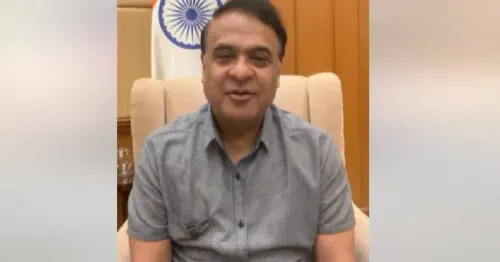
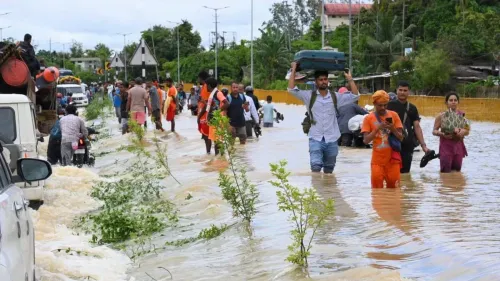
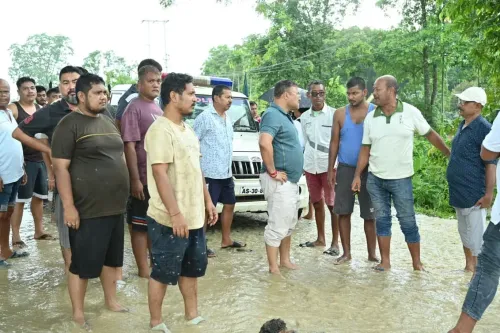
Assam CM Himanta Biswa Sarma pushes AI, tech ecosystem to tackle floods
Synopsis
Assam CM Himanta Biswa Sarma is recasting the state's perennial flood problem as a tech opportunity — calling for an AI and semiconductor ecosystem built by local youth, while simultaneously pushing to manufacture advanced flood-response machinery within Assam itself. It is an ambitious dual agenda, but one that still lacks announced funding or timelines.
Key Takeaways
Assam CM Himanta Biswa Sarma on 25 September 2026 called for technology-driven solutions to flood preparedness following recent floods in Sivasagar and Charaideo .
Sarma envisions Assam building an ecosystem in AI , semiconductors, and advanced deep tech for long-term development.
The Chief Minister urged a shift away from importing advanced machinery, saying Assam should manufacture it locally.
Youth innovation and entrepreneurship are central to the strategy, linking disaster resilience with skilled employment creation.
No specific timelines, funding figures, or programme details were announced alongside the remarks.
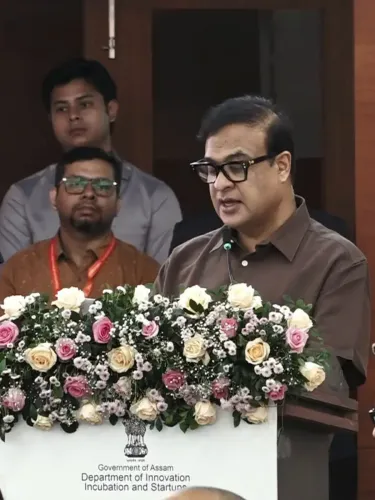
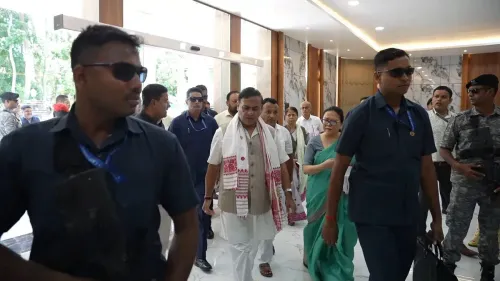
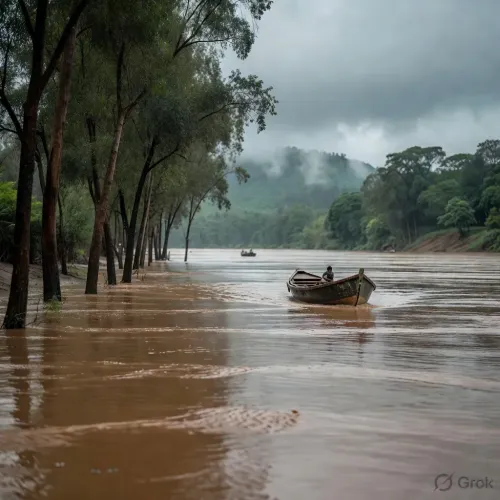
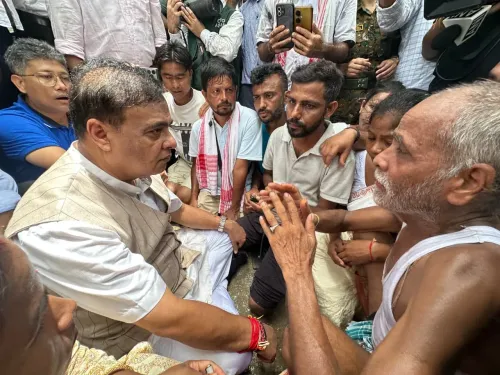
Assam Chief Minister Himanta Biswa Sarma on Friday, 25 September 2026, called for technology-driven flood preparedness solutions, urging the state's youth to develop innovations tailored to Assam's recurring flood crises. His remarks followed devastating floods in Sivasagar and Charaideo districts that exposed critical gaps in the state's disaster response framework.
The Flood Trigger
'Assam is looking for new tech-driven solutions for flood preparedness, especially after the recent floods in Sivasagar and Charaideo, and I believe our youth will be able to come up with such solutions,' Sarma said. The Chief Minister underlined that conventional approaches have proven insufficient against floods that strike the state with near-annual regularity, affecting millions across the Brahmaputra basin.
Vision for an AI and Semiconductor Ecosystem
Beyond immediate flood response, Sarma outlined an ambitious long-term technological agenda for the state. 'The Assam of the future will have an ecosystem in advanced and deep tech like AI, semiconductors, among others,' he said. This vision positions Assam as an aspirant in India's broader push for self-reliance in emerging technologies — a goal that aligns with national semiconductor and AI policy directions.
Push for Local Advanced Manufacturing
Sarma also stressed the need to reduce dependence on imported machinery. 'We should aim to make advanced machinery right here in Assam rather than importing it,' he said. This call for local manufacturing capability connects the immediate challenge of flood resilience — which requires specialised sensors, early-warning systems, and heavy infrastructure — to a wider industrial development agenda for the northeastern state.
Youth at the Centre of the Strategy
The Chief Minister placed young people at the core of both objectives, emphasising their potential to drive research, entrepreneurship, and solutions manufacturing within Assam. Notably, this framing attempts to convert a chronic vulnerability — floods — into an opportunity for locally-led innovation, rather than relying on technologies and equipment sourced from outside the region. Analysts observe that such an approach, if backed by investment and institutional support, could simultaneously build disaster resilience and create skilled employment in a state where youth unemployment remains a persistent concern.
What Comes Next
No specific timelines, funding commitments, or programme details were announced alongside Sarma's remarks. The comments are seen as a policy signal ahead of what is expected to be a broader technology and investment push by the Assam government. Observers will watch for concrete institutional mechanisms — such as state-backed incubators, flood-tech challenges, or semiconductor manufacturing incentives — that would translate this vision into verifiable outcomes.
Point of View
And technology genuinely offers better early-warning and response tools. But the vision of building an AI and semiconductor ecosystem from scratch in a northeastern state, without announced investment, institutional scaffolding, or industry partnerships, risks remaining exactly that: a vision. The pattern of high-aspiration tech announcements without execution architecture is not unique to Assam, and the gap between 'our youth will solve this' and a funded, time-bound programme is where past state-level tech initiatives have stalled. The real test will be whether specific flood-tech challenges, state incubation funds, or semiconductor policy incentives follow within the next budget cycle.
NationPress
25 Sept 2026
Frequently Asked Questions
Why is Assam CM Himanta Biswa Sarma calling for tech-driven flood solutions?
Sarma cited recent floods in Sivasagar and Charaideo districts as evidence that conventional approaches are insufficient, and called for youth-led technological innovation to improve flood preparedness and early response in Assam.
What is the AI and semiconductor ecosystem Sarma is proposing for Assam?
Sarma envisions Assam developing capabilities in artificial intelligence, semiconductors, and other advanced deep technologies to build a long-term innovation and manufacturing base. He said this ecosystem should be driven by Assam's youth and linked to local manufacturing rather than imported equipment.
What specific programmes or funding were announced alongside these remarks?
No specific timelines, funding commitments, or programme details were announced. The remarks are being read as a policy signal, with concrete mechanisms yet to be outlined by the Assam government.
How does local manufacturing fit into Assam's flood preparedness plan?
Sarma argued that Assam should manufacture advanced machinery — including equipment relevant to flood response — within the state rather than importing it. This links disaster resilience directly to an industrial development agenda for the region.
Who is most affected by Assam's recurring floods?
Communities across the Brahmaputra basin bear the heaviest burden, with districts like Sivasagar and Charaideo among those hit in recent flooding. Millions of Assam residents face annual displacement, crop loss, and infrastructure damage from seasonal floods.