Assam CM Himanta receives State Police Accountability Report 2025
Synopsis
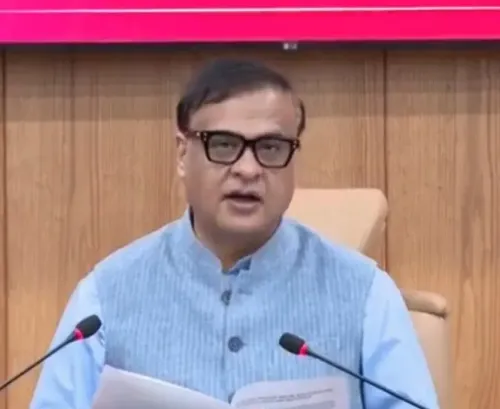
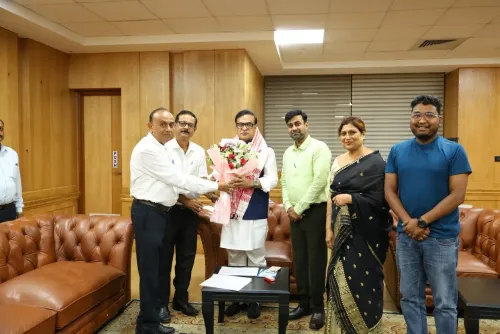
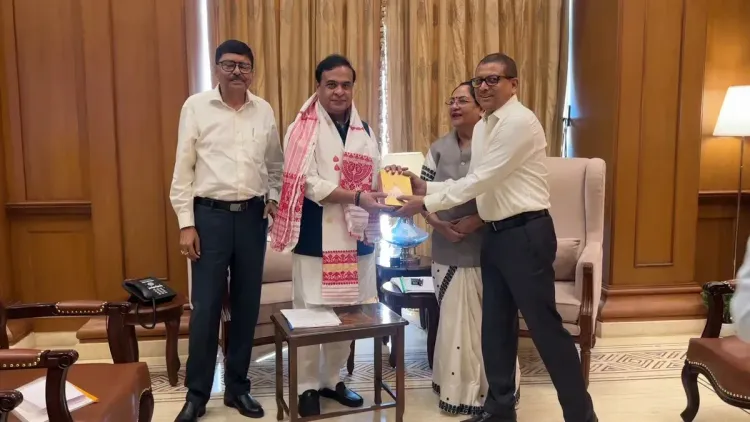
Chief Minister Dr. Himanta Biswa Sarma received the Annual Report 2025 of the State Police Accountability Commission at Lok Sewa Bhawan on June 15, 2026, thanking Chairperson Justice Rumi Kumari Phukan and members for their recommendations to strengthen policing and public accountability in Assam.
Key Takeaways
Himanta Biswa Sarma received the Annual Report 2025 of the State Police Accountability Commission at Lok Sewa Bhawan on June 15, 2026 .
The report was submitted by Justice Smti.
Rumi Kumari Phukan , former Judge of the Gauhati High Court and Chairperson of the Commission.
The commission is a statutory body established in line with the 2006 Supreme Court directive in Prakash Singh v.
Union of India requiring states to create independent police oversight mechanisms.
The Chief Minister thanked the commission for 'valuable recommendations to further strengthen policing and public accountability' in Assam.
The report is expected to be tabled in the Assam Legislative Assembly as the next procedural step.
Follow-up action on the commission's recommendations will be closely watched by civil society and legal observers in the state.
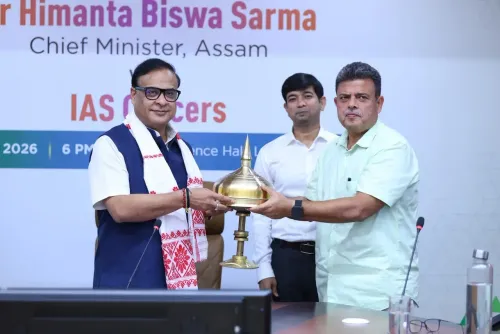
The Chief Minister's Office of Assam announced on Monday, June 15, 2026, that Chief Minister Dr. Himanta Biswa Sarma received the Annual Report 2025 of the State Police Accountability Commission at Lok Sewa Bhawan in Guwahati. The Chief Minister acknowledged the commission's work and thanked its chairperson and members for preparing the report and offering recommendations to strengthen policing and public accountability across the state.
Context
The State Police Accountability Commission is a statutory oversight body in Assam mandated to examine complaints against police personnel and recommend systemic reforms. On receiving the report, Dr. Himanta Biswa Sarma expressed gratitude to Justice Smti. Rumi Kumari Phukan, former Judge of the Gauhati High Court and Chairperson of the Commission, along with its members, for 'preparing the report and offering valuable recommendations to further strengthen policing and public accountability in the state.'
The handover took place at Lok Sewa Bhawan, the seat of the Assam state government in Guwahati, marking the formal submission of the commission's findings to the executive.
Policy Backdrop
Assam's police accountability framework traces its legal foundation to the landmark 2006 Supreme Court judgment in Prakash Singh v. Union of India, which directed all states to establish independent police complaints authorities and accountability mechanisms. The directive was aimed at insulating criminal investigations from political interference and improving civilian oversight of law enforcement.
Multiple Indian states have since constituted such commissions, issuing periodic reports with recommendations on police training, conduct, and grievance redressal. Assam's commission operates within this national framework, with the annual report serving as the primary instrument through which the body communicates its findings and prescriptions to the state government.
Dr. Himanta Biswa Sarma has served as Chief Minister of Assam since 2021, during which the state has undertaken several administrative and security-related reforms. The Gauhati High Court, from which Justice Phukan retired, holds jurisdiction over northeastern states and has historically been a source of judicial officers appointed to statutory oversight roles in the region.
Stakeholders and Impact
The report's recommendations, once acted upon, would directly affect Assam Police in areas such as officer conduct, complaint resolution mechanisms, and accountability protocols. Citizens of Assam — particularly those who file complaints against police personnel — stand to benefit from any structural improvements the government chooses to implement based on the commission's findings.
Civil society groups and legal aid organisations operating in the state have long monitored the outputs of such commissions as indicators of the government's commitment to police reform. The formal receipt of the report by the Chief Minister signals that the recommendations will now enter the executive review process.
What's Next
The immediate next step is the tabling of the Annual Report 2025 before the Assam Legislative Assembly, a standard procedural requirement for statutory commission reports. Observers will watch whether the state government issues a formal action-taken report in response to the commission's recommendations, which would indicate the pace and depth of intended reforms.
The government's follow-through on the commission's prescriptions will be a key measure of its commitment to strengthening civilian oversight of law enforcement in Assam.
Point of View
The true test lies in what the executive does with the recommendations, a step where many Indian states have historically stalled. For a Chief Minister who has positioned himself as a law-and-order reformer, acting visibly on the commission's findings could reinforce that image; ignoring them would invite scrutiny from courts and civil society alike. The appointment of a retired Gauhati High Court judge as chairperson also signals an attempt to lend judicial credibility to a body whose independence is often questioned.
NationPress
14 Sept 2026
Frequently Asked Questions
What is the State Police Accountability Commission of Assam?
The State Police Accountability Commission of Assam is a statutory body that examines complaints against police personnel and recommends measures to improve accountability and conduct within the state police force, established in line with the 2006 Supreme Court directive in Prakash Singh v. Union of India.
Who is the chairperson of the Assam State Police Accountability Commission?
Justice Smti. Rumi Kumari Phukan, a former Judge of the Gauhati High Court, serves as the Chairperson of the State Police Accountability Commission of Assam.
What did CM Himanta Biswa Sarma receive on June 15, 2026?
Chief Minister Dr. Himanta Biswa Sarma received the Annual Report 2025 of the State Police Accountability Commission at Lok Sewa Bhawan in Guwahati on June 15, 2026.
What is the Prakash Singh case and why does it matter for police reform in India?
The Prakash Singh v. Union of India case was a landmark 2006 Supreme Court judgment that directed all Indian states to establish independent police complaints authorities and accountability mechanisms to reduce political interference in policing and improve civilian oversight.
What happens after the Assam Police Accountability Commission submits its annual report?
After submission to the Chief Minister, the annual report is typically tabled before the Assam Legislative Assembly, following which the government is expected to issue an action-taken report outlining steps taken on the commission's recommendations.