Assam CM Himanta outlines five-year land rights plan for tea garden workers
Synopsis
On Independence Day 2026, Assam Chief Minister Himanta Biswa Sarma outlined a five-year roadmap to grant land ownership rights to tea garden workers — addressing a colonial-era structural injustice that has left plantation communities without legal title to the land they have lived on for generations.
Key Takeaways
CM Dr Himanta Biswa Sarma announced a five-year roadmap for land ownership rights in Assam's tea garden regions on Independence Day, August 15, 2026 .
Tea garden workers in upper and lower Assam have historically lived on employer-controlled estate land without individual ownership titles ( pattas ).
The structural land tenure problem dates to colonial-era settlement patterns and has persisted across multiple post-independence state governments.
Formalising land titles would give tea tribe communities collateral rights, security of tenure, and reduced dependence on the plantation economy.
Key implementation details — including survey methodology, distribution targets, and legislative backing — are yet to be publicly specified.
On Independence Day, August 15, 2026, Assam Chief Minister Dr Himanta Biswa Sarma chose a moment of national reflection to make a promise that cuts to the heart of one of the state's oldest injustices — land ownership for the people who built its most iconic industry.
The Chief Minister's Office of Assam announced that CM Dr Himanta Biswa Sarma has outlined a five-year roadmap to secure land ownership rights across Assam's tea garden regions — home to hundreds of thousands of tea tribe workers who have lived and laboured for generations on land they do not legally own.
A colonial debt, still unpaid
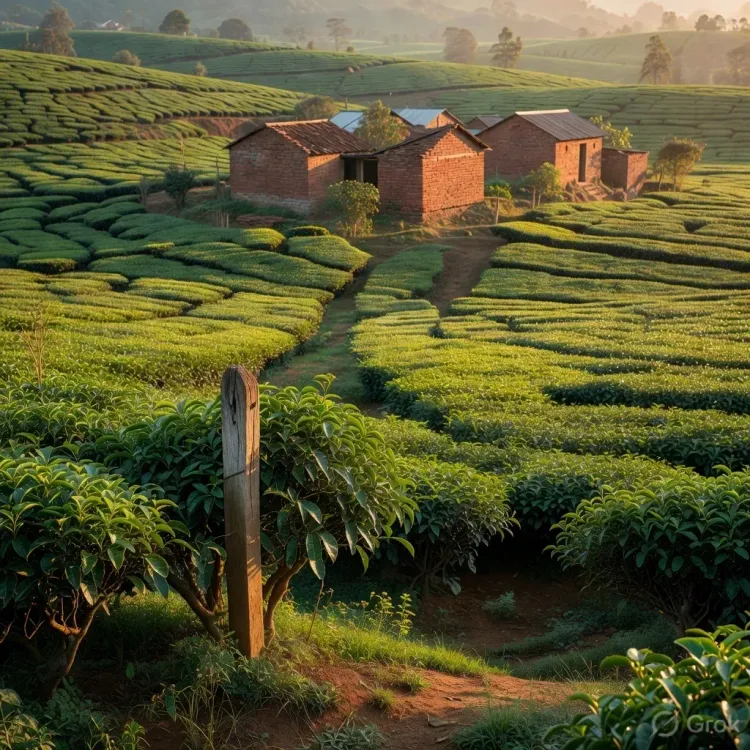
The roots of this crisis run deep. Under colonial-era land settlement patterns, tea estate workers in upper and lower Assam were housed on employer-controlled plantation land — a system that persisted long after independence, leaving entire communities without individual ownership titles or pattas (land deeds). Multiple state governments have attempted surveys and limited distribution drives over the decades, but the structural gap has never been fully closed. What CM Sarma has now put on record is a time-bound commitment: a five-year roadmap to formalise occupancy rights in these plantation areas. The announcement, made on Independence Day, carries deliberate symbolic weight — framing land ownership as unfinished business from 1947.Why this matters for Assam's tea tribes
Assam's tea garden communities — often referred to as the tea tribes — represent one of the state's largest and most politically significant constituencies. Residing on estate land without ownership rights means they cannot use property as collateral for loans, cannot easily contest eviction, and remain structurally dependent on the plantation economy. Formalising land titles would fundamentally alter that equation. State-level land governance reforms targeting historically marginalised plantation populations have gained momentum across India in recent years, and Assam's five-year plan fits squarely within that broader arc.What to watch as the roadmap unfolds
The announcement sets direction, but the critical details — survey methodology, patta distribution targets, and any legislative backing — are yet to be publicly detailed. Upcoming sessions of the Assam Legislative Assembly will be the first test of whether the roadmap translates into statutory teeth. The pace of ground-level surveys and the scale of actual title transfers will ultimately define whether this Independence Day pledge becomes a structural shift or another chapter in a long history of deferred reform. For Assam's tea garden workers, the land under their feet has always been home. Whether the state can make it theirs in law is the question the next five years must answer.Point of View
Making accountability measurable. Historically, Assam's land tenure drives in tea estates have stalled at the survey stage; the real test will be whether this roadmap carries legislative backing or remains an executive directive vulnerable to administrative inertia. If executed, it would represent the most significant structural shift in plantation land governance in the state since independence.
NationPress
15 Aug 2026
Frequently Asked Questions
What is the five-year land roadmap announced by Assam CM Himanta Biswa Sarma?
Chief Minister Dr Himanta Biswa Sarma announced a five-year plan on Independence Day 2026 to ensure land ownership rights — through formal title deeds or pattas — for workers living in Assam's tea garden regions, who have historically lacked individual ownership of the land they occupy.
Why do Assam tea garden workers not own the land they live on?
Colonial-era land settlement patterns placed tea estate workers in housing on employer-controlled plantation land. This arrangement persisted after independence, leaving tea tribe communities without individual legal ownership titles despite generations of continuous residence.
How many people are affected by land rights issues in Assam's tea gardens?
Assam's tea garden regions employ and house hundreds of thousands of tea tribe workers and their families across upper and lower Assam, making this one of the state's largest land governance challenges.
What is a patta in the context of Assam land rights?
A patta is an official land deed or title document issued by the government that legally recognises an individual's ownership or occupancy rights over a specific plot of land.
What will determine whether Assam's tea garden land roadmap succeeds?
Success will depend on the scope and speed of land surveys, the number of pattas actually distributed, and whether the roadmap receives legislative backing in the Assam Assembly — factors that will become clearer in the coming months.