Assam CM Himanta, Sonowal Launch 150 TPD E-Methanol Plant at Kandla
Synopsis
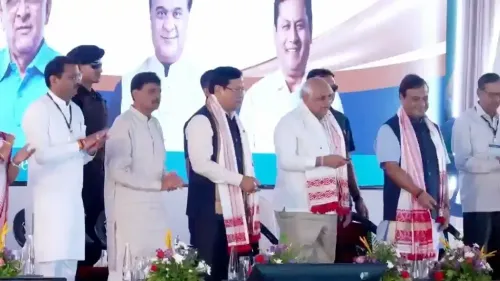
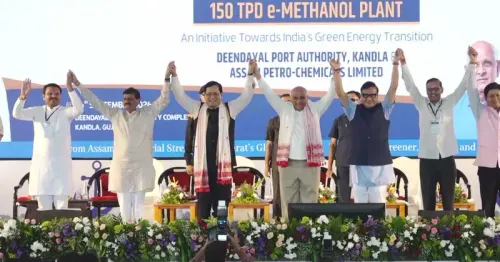
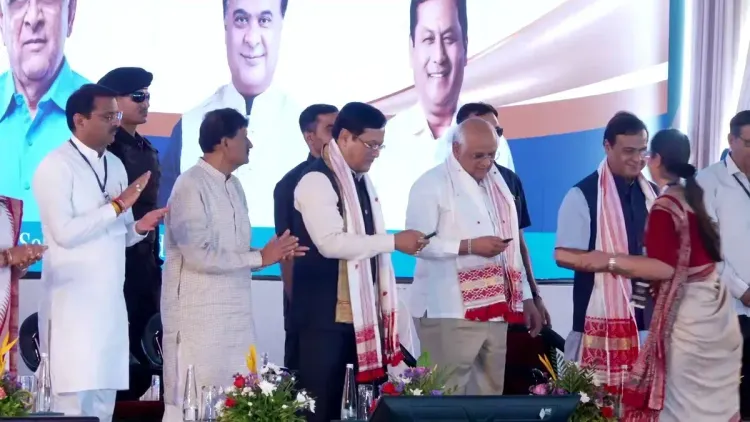
Chief Minister Himanta Biswa Sarma of Assam, Union Minister Sarbananda Sonowal and Gujarat CM Bhupendra Patel laid the foundation stone for a 150 TPD E-Methanol Plant at Deendayal Port, Kandla — a key milestone under India's National Green Hydrogen Mission and its push toward maritime decarbonisation.
Key Takeaways
The foundation stone for a 150 TPD E-Methanol Plant was laid at Deendayal Port, Kandla, Gujarat on September 26, 2026 .
Himanta Biswa Sarma , Union Minister Sarbananda Sonowal (Ports, Shipping and Waterways), and Gujarat CM Bhupendra Patel jointly performed the ceremony.
E-methanol is a synthetic, lower-emission marine fuel produced from green hydrogen and captured CO₂, making it central to maritime decarbonisation.
The project aligns with India's National Green Hydrogen Mission (approved 2023) and the Sagarmala port modernisation programme .
Deendayal Port is one of India's largest cargo hubs and has been designated for green fuel initiatives, providing a built-in shipping market for the plant's output.
The project supports India's broader 2070 net-zero commitment by targeting the hard-to-abate maritime shipping sector.
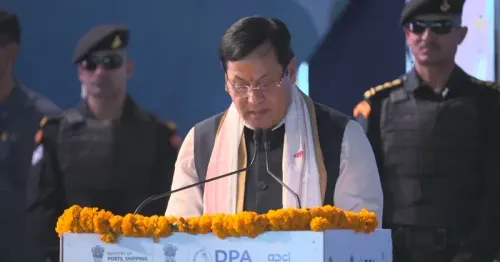
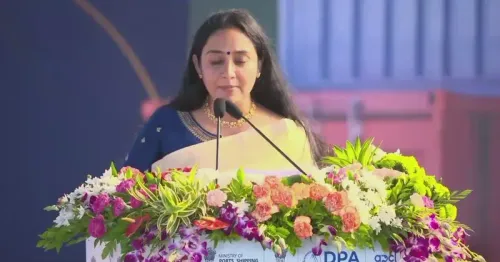
A green fuel milestone just landed at one of India's busiest ports. On Saturday, September 26, 2026, the Chief Minister's Office of Assam announced that Assam Chief Minister Dr. Himanta Biswa Sarma, Union Minister for Ports, Shipping and Waterways Shri Sarbananda Sonowal, and Gujarat Chief Minister Shri Bhupendra Patel jointly laid the foundation stone for a 150 TPD (tonnes per day) E-Methanol Plant at Deendayal Port, Kandla, Gujarat — a project framed as a historic step in India's clean energy transition.
What an E-Methanol Plant at Kandla Actually Means
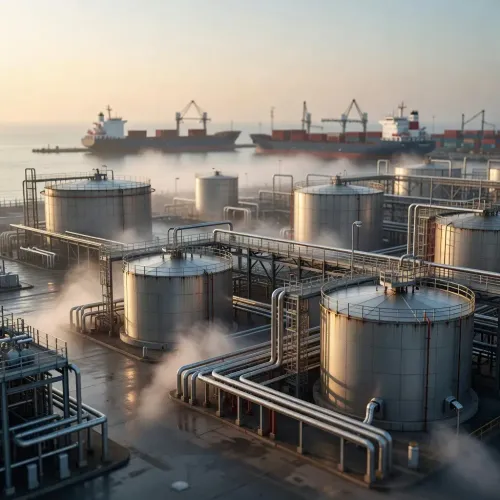
E-methanol — synthetic methanol produced using green hydrogen and captured carbon dioxide — is emerging as one of the most viable alternative marine fuels globally, offering a lower-emission substitute for conventional bunker fuel. A plant rated at 150 tonnes per day would make the Kandla facility a significant-scale pilot in an Indian port setting, directly feeding the maritime sector that sails in and out of Deendayal Port, which ranks among India's largest cargo hubs by volume.
The choice of Deendayal Port is deliberate. The port has already been earmarked for green fuel initiatives, and positioning an e-methanol plant there creates an immediate potential offtake market — ships that refuel at Kandla. That tight supply-to-demand loop is exactly what makes port-adjacent green fuel projects commercially viable, not just symbolically meaningful.
Three Governments, One Foundation Stone — The Political Architecture
The presence of leaders from Assam, Gujarat, and the Union government on a single dais at Kandla signals how deliberately this project has been constructed as a federal showcase. Sarbananda Sonowal, who holds the ports portfolio and previously served as Assam's Chief Minister before Himanta Biswa Sarma took the role in May 2021, brings direct ministerial authority over the port. Bhupendra Patel, Chief Minister of Gujarat since September 2021, anchors the state where the plant will physically stand. Sarma's presence extends the project's symbolic footprint beyond Gujarat, underlining that India's green energy ambitions are not regionally siloed.
Where This Fits in India's Green Fuel Architecture
India approved the National Green Hydrogen Mission in 2023, with e-methanol identified as one of the key downstream derivatives — a cleaner, storable carrier of green hydrogen for industrial and transport decarbonisation. The Kandla project slots directly into that mission's logic. It also runs parallel to the Sagarmala programme, the central government's long-running port modernisation initiative, which has increasingly incorporated green infrastructure mandates.
India's 2070 net-zero target demands that hard-to-abate sectors — maritime shipping among them — find credible fuel alternatives well before mid-century. Ports are the natural chokepoint: get green fuel production co-located with refuelling infrastructure, and the economics for ship operators improve sharply. The Kandla plant, if commissioned on schedule, would be one of the earliest large-scale demonstrations of that model on Indian soil.
What to watch now: the commissioning timeline, the technology partner behind the plant, and whether similar e-methanol or green ammonia facilities are announced at other major ports — signals that this is a replicable model, not a one-off ribbon-cutting.
Point of View
Multi-ministry presence at the ceremony is politically significant: it demonstrates that the Centre is using marquee green projects as platforms to project cooperative federalism, particularly among BJP-governed states. If the commissioning timeline holds and technology partners are formalised, Kandla could become a template for green fuel co-location at India's other major ports. The larger test is whether offtake agreements with shipping lines materialise quickly enough to justify the capital outlay and avoid the fate of other well-announced green pilots that stalled at the foundation-stone stage.
NationPress
26 Sept 2026
Frequently Asked Questions
What is the E-Methanol Plant at Kandla?
It is a proposed 150 TPD (tonnes per day) facility at Deendayal Port, Kandla, Gujarat, that will produce e-methanol — a synthetic, cleaner marine fuel made from green hydrogen and captured carbon dioxide. Its foundation stone was laid on September 26, 2026.
Who laid the foundation stone of the Kandla E-Methanol Plant?
Assam Chief Minister Dr. Himanta Biswa Sarma, Union Minister for Ports, Shipping and Waterways Sarbananda Sonowal, and Gujarat Chief Minister Bhupendra Patel jointly laid the foundation stone at Deendayal Port, Kandla.
What is e-methanol and why is it important for India?
E-methanol is methanol synthesised using green hydrogen and captured CO₂, offering a lower-emission alternative to conventional bunker fuel used in shipping. India sees it as a key derivative under the National Green Hydrogen Mission to decarbonise the maritime sector and support its 2070 net-zero target.
What is Deendayal Port and why was it chosen for this plant?
Deendayal Port at Kandla, Gujarat, is one of India's largest cargo ports. It has been designated for green fuel initiatives, making it a strategic location where e-methanol can be produced close to its primary market — ships refuelling at the port.
How does the Kandla e-methanol project connect to the National Green Hydrogen Mission?
India's National Green Hydrogen Mission, approved in 2023, promotes the production of green hydrogen and its derivatives, including e-methanol, for industrial and transport decarbonisation. The Kandla plant is a direct implementation of that policy for the maritime shipping sector.