Assam CM Himanta's cancer foundation offers free mammography
Synopsis
The Assam Cancer Care Foundation is offering free mammography at district-level Assam Cancer Care Centres under CM Himanta Biswa Sarma's leadership, targeting the Northeast's high cancer incidence rates with accessible early-detection services for women across the state.
Key Takeaways
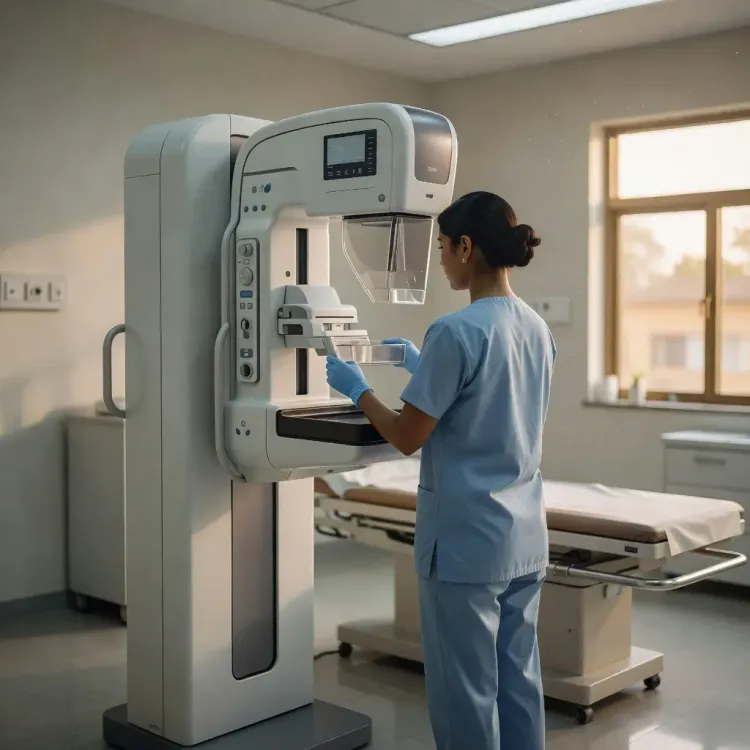
Free mammography is now available at Assam Cancer Care Centres under the Assam Cancer Care Foundation .
The initiative is part of CM Dr.
Himanta Biswa Sarma's administration's push for early-detection cancer programmes.
The Assam Cancer Care Foundation was launched in 2020 in partnership with Tata Trusts to build a state-wide oncology network.
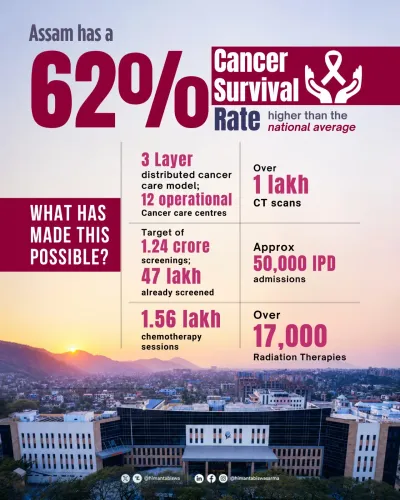
Northeast India carries some of the highest age-adjusted cancer incidence rates in the country, making early detection especially critical.
District-level Cancer Care Centres are designed to eliminate the need for patients to travel long distances for cancer diagnosis and treatment.
A single screening test can be the difference between catching breast cancer early — and catching it too late. On Saturday, 26 September 2026, the Chief Minister's Office of Assam announced that the Assam Cancer Care Foundation, under the leadership of Chief Minister Dr. Himanta Biswa Sarma, is providing free mammography at Assam Cancer Care Centres across the state.
Northeast India's cancer burden — and why early detection is urgent
Northeast India records some of the highest age-adjusted cancer incidence rates in the country. The region's elevated rates make early-detection infrastructure not just beneficial but essential — and Assam's successive governments have responded by investing in decentralised oncology services that bring diagnosis closer to patients who might otherwise travel hundreds of kilometres for care.
Breast cancer, when detected at an early stage through routine mammography, carries dramatically improved survival rates. Offering the test free of cost removes the single biggest barrier — affordability — that keeps women in lower-income districts from ever getting screened.
How the Assam Cancer Care Foundation came to be
The Assam Cancer Care Foundation was formally launched in 2020 as a government-backed entity, built in partnership with Tata Trusts, to create a state-wide network of cancer hospitals and screening facilities. The model was deliberate: instead of funnelling all patients to a single referral centre, the Foundation established district-level Assam Cancer Care Centres offering diagnosis, treatment, and palliative care where people actually live.
Since Dr. Himanta Biswa Sarma took office as Chief Minister in May 2021, the administration has prioritised early-detection programmes alongside the construction of new treatment centres — a two-track approach that addresses both prevention and cure.
Free mammography at district centres
The announcement positions free mammography as the next step in that early-detection push. By making the service available at Assam Cancer Care Centres — facilities already embedded in the district health infrastructure — the Foundation aims to reach women who have never had access to breast-cancer screening. The post's call-to-action phrase, 'Early Detection can save lives,' frames the initiative as a direct, actionable public-health message rather than a policy announcement.
Advocates have long argued that awareness alone is insufficient; pairing messaging with zero-cost access is what actually moves screening rates. This initiative attempts exactly that combination.
With further rollout of screening services to additional districts on the horizon, the real test will be whether demand can be met at scale — and whether diagnostic capacity keeps pace with the public-health ambition behind it.
Point of View
Not availability. Northeast India's high cancer burden has historically been compounded by late-stage diagnoses, meaning a screening drive that actually reaches rural and semi-urban women could shift those numbers in ways that treatment capacity alone never will. For CM Himanta Biswa Sarma, this initiative also reinforces a political identity built around visible, people-facing health delivery — a model other states in the region will be watching closely.
NationPress
26 Sept 2026
Frequently Asked Questions
What is the Assam Cancer Care Foundation?
The Assam Cancer Care Foundation is a government-backed body launched in 2020, in partnership with Tata Trusts, to build and operate a network of cancer hospitals and screening facilities across Assam at the district level.
Where can I get free mammography in Assam?
Free mammography is available at Assam Cancer Care Centres, which are district-level facilities set up by the Assam Cancer Care Foundation across the state.
Why is cancer screening important in Northeast India?
Northeast India records some of the highest age-adjusted cancer incidence rates in the country. Early detection through screening significantly improves survival rates and reduces the burden of late-stage treatment.
Who is leading the cancer care initiative in Assam?
Chief Minister Dr. Himanta Biswa Sarma, who has been in office since May 2021, has led the expansion of cancer infrastructure and early-detection programmes through the Assam Cancer Care Foundation.
Is mammography free for all women in Assam?
According to the Chief Minister's Office of Assam, free mammography is being provided at Assam Cancer Care Centres; the service is aimed at women in Assam as part of an early-detection drive.