Assam CM Office: ₹58.59 Cr Disbursed Under Nijut Moina, Nijut Babu
Synopsis
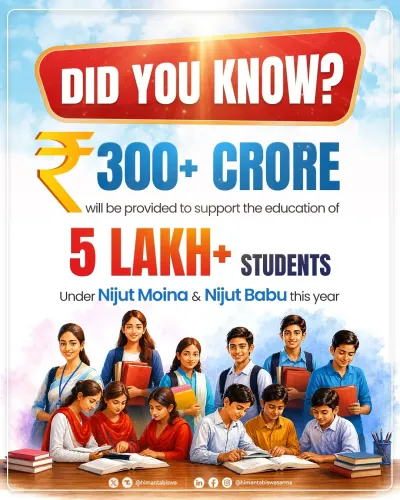
The Chief Minister's Office of Assam announced on 15 October 2026 that 4,39,598 girl students will receive ₹48.22 crore under Nijut Moina and 1,02,501 boys will receive ₹10.37 crore under Nijut Babu — together channelling ₹58.59 crore in monthly educational assistance to over 5.42 lakh students.
Key Takeaways
₹58.59 crore total disbursed across both schemes in this cycle.
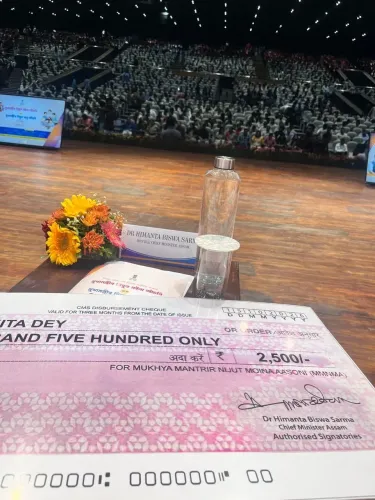
Nijut Moina covers 4,39,598 girl students with monthly rates of ₹800 (Classes XI–XII), ₹1,250 (UG), and ₹2,500 (PG).
Nijut Babu reaches 1,02,501 boy students with ₹1,000/month (UG) and ₹2,000/month (PG).
Combined beneficiary count stands at over 5.42 lakh students across Assam.
The girl-focused scheme allocates nearly 4.6 times more funds than the boys' scheme, reflecting priority on female enrolment retention.
Both schemes use direct benefit transfers, bypassing institutional intermediaries to put money directly in students' hands.
Over half a million students across Assam are about to see direct cash land in their accounts — a combined ₹58.59 crore flowing through two parallel scholarship schemes that the state government runs for both girls and boys pursuing education beyond Class X.
Nijut Moina: over 4.3 lakh girl students, ₹48.22 crore
The Nijut Moina scheme will reach 4,39,598 girl students with a total disbursement of ₹48.22 crore in this cycle. The monthly assistance is tiered by level of study: ₹800 per month for students in Classes XI and XII, ₹1,250 per month for undergraduates, and ₹2,500 per month for those pursuing postgraduate degrees. The design is deliberate — the amounts rise as the years of study lengthen and the opportunity cost of staying in education grows.
Keeping girls in school through the critical Class XI–XII transition — historically a high-dropout window — and then supporting them through college and a master's degree is the spine of the scheme. The tiered structure signals that the government wants to reward, not just initiate, educational persistence.
Nijut Babu: 1.02 lakh boys, ₹10.37 crore
Running alongside it, the Nijut Babu scheme will disburse ₹10.37 crore to 1,02,501 boy students. The rates are ₹1,000 per month at the undergraduate level and ₹2,000 per month for postgraduate study. The scheme does not extend to the Class XI–XII stage — that coverage gap underlines that the government treats secondary-level girl retention as the more acute policy problem in Assam.
Together, the two schemes put 5,42,099 students on direct benefit transfers, all tagged under the hashtag #NijutBabuMoina that the Chief Minister's Office of Assam used in its announcement on Thursday, 15 October 2026.
Why direct transfers for students matter in Assam
Several states have experimented with monthly stipends to reduce higher-education dropout rates, but Assam's dual-track model — running gender-specific schemes simultaneously rather than folding everything into one — allows the government to calibrate amounts and eligibility differently for girls and boys. The larger per-student and per-rupee allocation for girls under Nijut Moina reflects the documented enrolment gap at the secondary-to-higher-education transition in the Northeast.
Direct benefit transfers also reduce leakage compared with older voucher or fee-waiver models, putting cash directly in students' — or guardians' — hands to cover transport, books, and living costs that institutional fee-waivers never reach.
With the next disbursement cycle now in motion and more than half a million students on the rolls, the real test will be whether enrolment numbers in Assam's colleges and universities move in the same direction as the money.
Point of View
Rather than merging them into a gender-neutral fund, gives the government flexibility to set differentiated amounts and eligibility windows that a single scheme cannot. The much larger per-student allocation for girls signals where Assam's policymakers believe the enrolment attrition problem is sharpest. The real question as this cycle rolls out is whether disbursement speed and banking access in rural Assam allow the money to reach students before the academic pressures that cause them to drop out.
NationPress
15 Oct 2026
Frequently Asked Questions
What is the Nijut Moina scheme in Assam?
Nijut Moina is an Assam government scheme providing monthly financial assistance to girl students — ₹800 for Classes XI–XII, ₹1,250 for undergraduate, and ₹2,500 for postgraduate studies — to support their continuation in education beyond Class X.
What is the Nijut Babu scheme and who benefits from it?
Nijut Babu is a parallel Assam government scheme for boy students, offering ₹1,000 per month at the undergraduate level and ₹2,000 per month at the postgraduate level to help them continue higher education.
How much money has been announced under Nijut Moina and Nijut Babu in 2026?
A combined ₹58.59 crore has been announced — ₹48.22 crore for 4,39,598 girl students under Nijut Moina and ₹10.37 crore for 1,02,501 boy students under Nijut Babu.
How many students benefit from Assam's Nijut Moina and Nijut Babu schemes?
More than 5.42 lakh students in total — 4,39,598 girls under Nijut Moina and 1,02,501 boys under Nijut Babu — are beneficiaries in the current disbursement cycle.
Why does Nijut Moina give higher amounts than Nijut Babu?
Nijut Moina is specifically designed to address higher female dropout rates at the secondary-to-higher-education transition; the larger amounts, especially at the PG level (₹2,500 vs ₹2,000), reflect the government's assessment that girls face greater financial barriers to continuing education in Assam.