Assam CM Office Meets AFD on Biodiversity, Blue Economy
Synopsis
The Chief Minister's Office of Assam met with Agence Française de Développement at Lok Sewa Bhawan on 10 July 2026. Talks focused on biodiversity conservation and the blue economy as pillars of Assam's climate-resilient growth agenda, deepening the Indo-French development partnership.
Key Takeaways
The Chief Minister's Office of Assam held discussions with AFD and Ms.
Nidhi Batra at Lok Sewa Bhawan, Guwahati on 10 July 2026 .
Talks focused on biodiversity conservation and the blue economy as dual pillars of Assam's sustainable growth vision.
AFD is a French public development agency with a long track record of financing environmental and urban sustainability projects in India.
Assam's engagement aligns with India's national push for state-level climate-resilient planning and inland waterway-linked economic development.
Riverine communities and biodiversity-dependent groups are the primary stakeholders who could benefit from any resulting programmes.
Follow-up project proposals or memoranda of understanding between the Government of Assam and AFD are the key developments to watch.
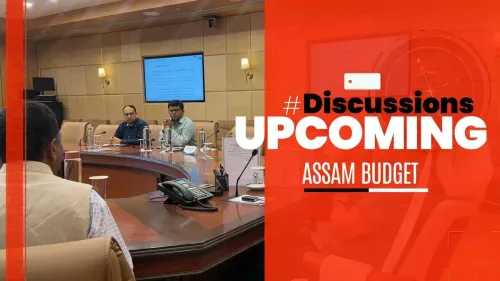
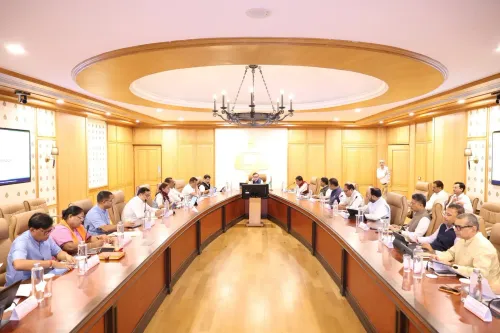
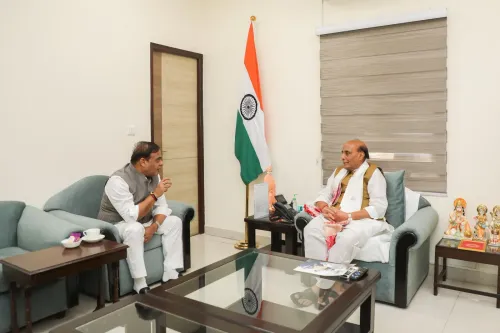
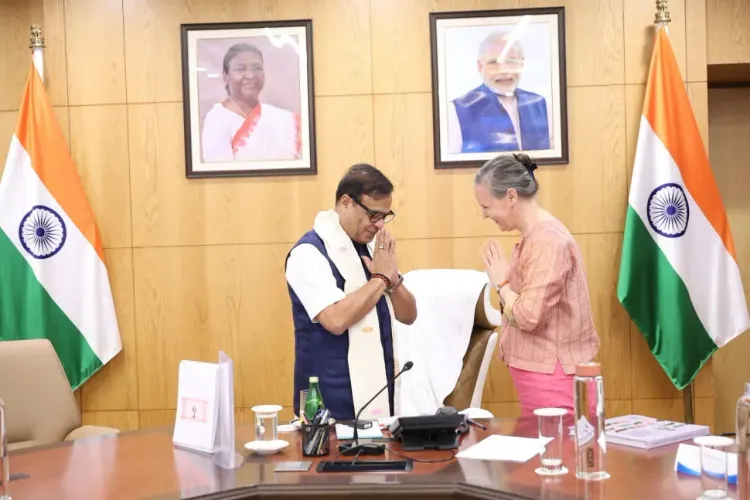
The Chief Minister's Office of Assam held discussions with representatives of the Agence Française de Développement (AFD) and Ms. Nidhi Batra at Lok Sewa Bhawan, Guwahati, on 10 July 2026, focusing on deepening collaboration in biodiversity conservation and the blue economy.
Context
The meeting at Lok Sewa Bhawan — the state secretariat complex that houses the Government of Assam's key offices — brought together senior officials and AFD representatives to explore avenues for joint action. The discussions centred on advancing Assam's vision for sustainable and climate-resilient growth, with biodiversity conservation and blue economy initiatives identified as priority areas.
AFD is a French public development agency that finances climate, biodiversity and sustainable infrastructure projects across partner countries. Its engagement with India spans several decades under the broader Indo-French development partnership framework, which has supported environmental and urban sustainability projects since the 2000s.
Policy Backdrop
Assam sits at the heart of one of South Asia's most ecologically significant regions, with the Brahmaputra river system and several globally recognised biodiversity hotspots within its borders. The state has increasingly sought to align its development planning with international climate finance frameworks.
The blue economy concept — which links sustainable use of water and riverine resources to economic activity — is particularly relevant for Assam, given its extensive inland waterway network. This engagement with AFD fits into India's broader national push for state-level climate-resilient planning, encouraging states to integrate conservation goals with livelihood and economic strategies.
AFD's portfolio in India has historically included support for urban infrastructure, water management and biodiversity-linked programmes, making it a natural partner for a state with Assam's ecological profile.
Stakeholders and Impact
Riverine communities and groups dependent on Assam's rich biodiversity stand to be the most direct beneficiaries of any outcomes from this collaboration. Fishers, farmers on floodplains and communities reliant on forest ecosystems could see improved livelihood support if conservation-linked economic programmes are developed.
The state government's engagement with an agency of AFD's scale also signals intent to attract structured international funding rather than rely solely on domestic allocations for environmental programmes. Such partnerships can unlock technical expertise alongside financial support, strengthening institutional capacity within the state administration.
What's Next
The immediate focus will be on whether the discussions at Lok Sewa Bhawan translate into formal project proposals, memoranda of understanding, or specific funding commitments from AFD directed at Assam's biodiversity and river-economy sectors. Northeast India's states have increasingly positioned themselves as destinations for international climate finance, and a concrete AFD-Assam project could set a precedent for similar engagements across the region.
Observers will watch for any follow-up announcements on jointly designed programmes, particularly those linking conservation targets with measurable economic outcomes for riverine and forest-dependent communities in the state.
Point of View
The state is signalling that it sees ecological assets not as constraints on growth but as engines of it, consistent with a broader shift in how Northeast Indian states are positioning themselves for global climate finance. The involvement of a bilateral development agency like AFD also suggests the state is seeking technical co-design of programmes, not just funding. If this dialogue produces a formal instrument, it could strengthen Assam's leverage in future negotiations over national climate adaptation resources.
NationPress
10 Jul 2026
Frequently Asked Questions
What did the Assam CM Office discuss with AFD?
The Chief Minister's Office of Assam discussed strengthening collaboration with AFD in biodiversity conservation and the blue economy to advance the state's sustainable and climate-resilient growth agenda.
What is AFD and why is it relevant to Assam?
AFD, or Agence Française de Développement, is a French public development agency that finances climate, biodiversity and sustainability projects in partner countries including India. Its expertise in environmental finance makes it a relevant partner for Assam's ecologically rich region.
Where did the Assam-AFD meeting take place?
The meeting took place at Lok Sewa Bhawan in Guwahati, which is the state secretariat complex housing the Government of Assam's key offices.
What is the blue economy and how does it relate to Assam?
The blue economy refers to sustainable use of water and riverine resources for economic activity. For Assam, which has an extensive inland waterway network anchored by the Brahmaputra river system, it represents a framework for linking conservation with livelihoods.
Who benefits from an Assam-AFD collaboration on biodiversity?
Riverine communities, fishers, floodplain farmers and groups dependent on Assam's forests and water bodies stand to benefit most directly from any programmes developed through an Assam-AFD collaboration.