Assam CM Office Spotlights MMUA Goat Farm Success Story

Synopsis
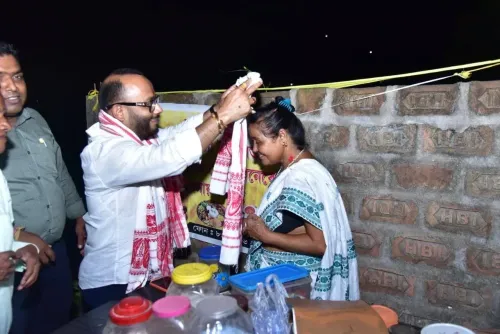
The Assam CM's Office shared the story of a woman who achieved self-reliance through goat farming under the Mukhyamantrir Mahila Udyamita Abhiyan, the state's micro-enterprise scheme for women. The post spotlights MMUA's goal of turning financial assistance and training into ground-level economic independence for rural women.
Key Takeaways
The Chief Minister's Office of Assam on October 22, 2026 shared a beneficiary success story under the Mukhyamantrir Mahila Udyamita Abhiyan (MMUA) .
The featured beneficiary started a goat farm using MMUA support and has become financially self-reliant.
MMUA provides financial assistance and training to women in Assam for setting up micro-enterprises.
Livestock and agri-allied businesses are a core focus of the scheme given their low barrier to entry in rural Assam.
No comprehensive beneficiary count or scheme-wide progress data has been publicly released yet by the Assam government.
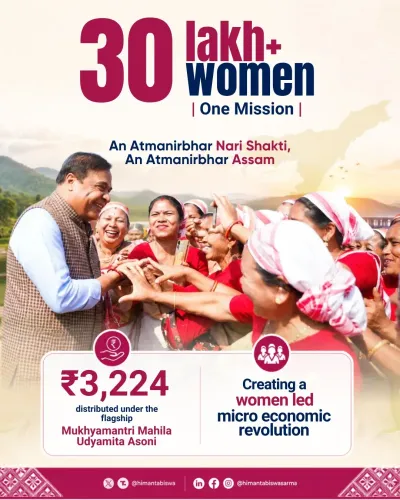
A goat farm. A determined woman. And a government scheme that turned one into the launchpad for the other. The Chief Minister's Office of Assam on Thursday, October 22, 2026, shared the story of a woman who built financial independence by starting a goat-rearing enterprise under the Mukhyamantrir Mahila Udyamita Abhiyan (MMUA) — the state's flagship programme for women's micro-entrepreneurship.
What MMUA promises — and what this story shows
The Mukhyamantrir Mahila Udyamita Abhiyan was designed specifically to move women in Assam from financial dependence to self-reliance, channelling state support toward micro-enterprises — including agri-allied ventures like livestock rearing. The scheme offers a combination of financial assistance and training, giving rural women the two things most likely to make or break a small business: seed capital and practical know-how.
The beneficiary highlighted in this post chose goat farming — a low-barrier, relatively fast-return activity well-suited to rural Assam's geography and market access. Her story, as shared by the CMO, is being positioned as a replicable model of what the scheme can deliver when its design meets individual drive.
Assam's longer push for women's economic inclusion
The MMUA fits into a pattern that Assam's successive state governments have pursued: using targeted, small-scale livelihood schemes anchored in self-help group ecosystems to draw women into formal economic activity. Livestock and agri-business ventures have consistently featured in these efforts because they require modest upfront investment, can be managed alongside domestic responsibilities, and plug into existing rural supply chains.
Nationally, this mirrors a broader trend of state-level micro-enterprise promotion that has accelerated across India's northeastern states, where conventional wage employment remains thin and self-employment is often the only viable path to income for rural women.
The metric that matters next
Individual success stories are compelling — but the question MMUA's architects will eventually have to answer publicly is: how many women, across how many districts, have crossed into genuine self-reliance? The Assam government has yet to release a comprehensive beneficiary count or scheme-wide progress report. When that data does arrive, it will tell whether MMUA is a policy that scales or one that spotlights.
For now, one woman's goat farm in Assam stands as both a human milestone and a political signal — proof of concept the CMO is betting can inspire thousands more.
Point of View
Where structural barriers to formal employment make self-help-group-backed livelihoods the most tractable route to women's economic inclusion. The scheme's long-term credibility, however, will hinge on published outcomes: beneficiary numbers, income uplift data, and enterprise survival rates. Until then, individual spotlights serve as both inspiration and political optics.
NationPress
22 Oct 2026
Frequently Asked Questions
What is the Mukhyamantrir Mahila Udyamita Abhiyan (MMUA) in Assam?
The Mukhyamantrir Mahila Udyamita Abhiyan is an Assam government scheme designed to support women's entrepreneurship and self-employment by providing financial assistance and training for micro-enterprises, including agri-allied and livestock businesses.
How does MMUA help women start a goat farm?
Under MMUA, eligible women can receive financial support and practical training to launch micro-enterprises such as goat farming, which requires modest capital and suits rural Assam's geography and market access.
Who can apply for the MMUA scheme in Assam?
The scheme targets women entrepreneurs and rural women in Assam seeking to start or scale small micro-enterprises. Specific eligibility criteria, including income or residency requirements, should be verified through official Assam government portals.
Has the Assam government released MMUA beneficiary data?
As of October 2026, a comprehensive beneficiary count or scheme-wide progress report for MMUA has not been publicly released. The CM's Office has shared individual success stories to illustrate the scheme's impact.
Why does Assam focus on livestock schemes for women's empowerment?
Livestock and agri-allied businesses have a low upfront cost, can be managed alongside domestic responsibilities, and connect to existing rural supply chains — making them among the most accessible routes to self-employment for rural women in Assam.