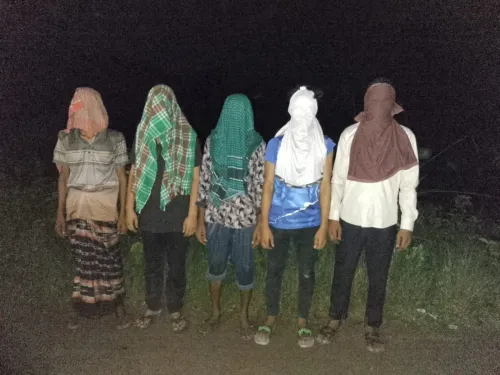
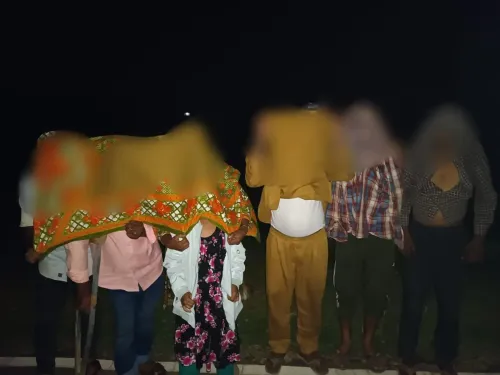
CM Himanta Orders Overnight Expulsion of 38 Illegal Immigrants from Assam
Synopsis
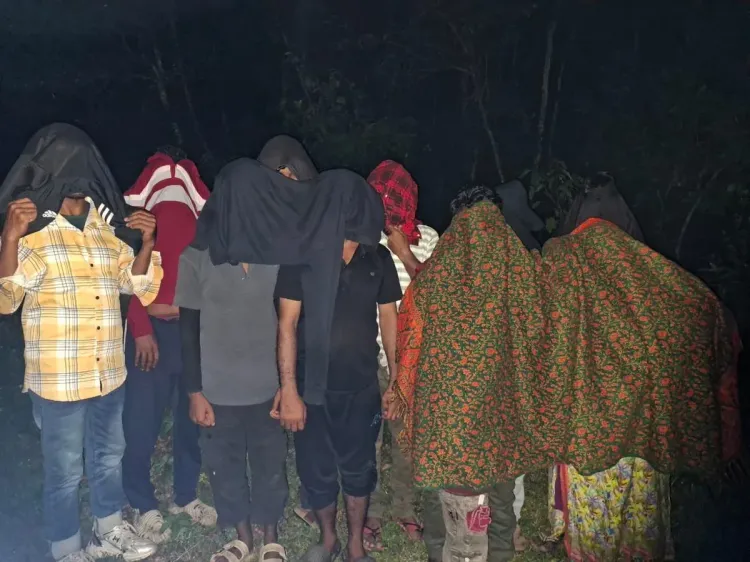
Assam Chief Minister Himanta Biswa Sarma announced that 38 illegal immigrants were caught and expelled in a single overnight operation on 18 November 2026, reinforcing his government's 'Detect, Delete, Deport' mission rooted in the 1985 Assam Accord.
Key Takeaways
38 illegal immigrants were caught and expelled from Assam in a single overnight operation on 18 November 2026 .
CM Himanta Biswa Sarma personally announced the operation, framing it under his government's 'Detect, Delete, Deport' mandate.
The drive is rooted in the Assam Accord of 1985 , which requires detection and deportation of foreigners who entered after 25 March 1971 .
The NRC updated in 2019 excluded approximately 1.9 million people from Assam's citizenship register, forming part of the legal backdrop for enforcement.
Deportations involve coordination between state police, the Border Security Force , and Bangladeshi authorities for repatriation.
The operation signals an accelerating tempo in Assam's immigration enforcement under the current BJP-led administration.
In the dead of night, Assam Chief Minister Himanta Biswa Sarma announced on Wednesday, 18 November 2026, that 38 illegal immigrants were caught and expelled from the state — a single-operation tally that underscores the administration's escalating pace of enforcement along India's most porous northeastern frontier.
Sarma framed the overnight operation in stark terms: 'Assam is on a mission to Detect, Delete and Deport every illegal who seeks to destroy our culture, heritage and national security.' The phrasing is deliberate — 'Detect, Delete, Deport' has become the operational motto of his government's immigration enforcement push since he took charge in 2021.
Roots in the Assam Accord — a four-decade-old promise
The legal and moral foundation for these drives stretches back to the Assam Accord of 1985, the peace agreement that ended the six-year Assam Agitation by committing both the state and central governments to detect, delete from electoral rolls, and deport every foreigner who entered the state after 25 March 1971. For decades, enforcement was fitful at best. The Sarma administration has sought to change that calculus — dramatically.
The National Register of Citizens (NRC), updated in 2019, excluded approximately 1.9 million people from Assam's citizenship list. That figure became both a legal resource for enforcement and a political flashpoint, with ongoing court proceedings determining the status of those excluded. Meanwhile, state authorities have conducted multiple eviction and deportation drives, working in coordination with the Border Security Force and Bangladeshi counterparts for repatriation.
38 expelled in a single overnight sweep
The scale of the 18 November operation — 38 individuals detected and expelled before dawn — signals a tempo shift. Single-night operations of that size are significant in the context of Assam's enforcement history, where such drives have typically been drawn-out administrative processes rather than swift nocturnal sweeps. Sarma's choice to announce it personally, and to emphasise the number emphatically ('Not 1, Not 2 but 38'), suggests the government views operational speed as a political message in itself.
Assam shares a long and historically fluid border with Bangladesh, which official discourse consistently identifies as the primary source of undocumented entrants. Deportations require active coordination with Bangladeshi authorities for acceptance of returnees — a diplomatic dimension that runs quietly beneath the headline operations.
A pattern hardening into policy identity
Under Sarma, anti-illegal-immigration enforcement has become arguably the defining pillar of his government's identity — intertwined with concerns about demographic change in border districts, electoral roll integrity, and national security. It also slots into a broader national framework that includes the NRC and related citizenship legislation, giving state-level operations a pan-India resonance.
What to watch now: whether further large-scale deportation rounds are announced in quick succession, any renewed push to update or legally finalise the NRC, and how Dhaka responds to the repatriation pipeline — a diplomatic variable that could complicate or accelerate the stated mission.
Thirty-eight expelled in a single night. For Sarma, that is not an endpoint — it is a proof of concept.
Point of View
Visible enforcement on immigration consistently polls as a high-salience issue among indigenous Assamese communities, making each announced deportation round both a governance act and a political statement. The diplomatic variable — Bangladesh's willingness to accept returnees — remains the quiet constraint that no announcement resolves.
NationPress
18 Nov 2026
Frequently Asked Questions
How many illegal immigrants were expelled from Assam on 18 November 2026?
38 illegal immigrants were caught and expelled from Assam in an overnight operation announced by Chief Minister Himanta Biswa Sarma on 18 November 2026 .
What is the 'Detect, Delete, Deport' policy in Assam?
'Detect, Delete, Deport' is the operational motto of the Sarma government's immigration enforcement drive in Assam, referring to detecting illegal immigrants, deleting them from electoral rolls, and deporting them — a mandate that traces back to the Assam Accord of 1985 .
What is the Assam Accord and how does it relate to deportations?
The Assam Accord of 1985 was a peace agreement ending the Assam Agitation that committed the central and state governments to detect and deport all foreigners who entered Assam after 25 March 1971 . It forms the legal basis for ongoing deportation drives.
How many people were excluded in the Assam NRC update?
The National Register of Citizens (NRC) updated in 2019 excluded approximately 1.9 million people from Assam's citizenship list, with their final status subject to ongoing legal proceedings.
Where are illegal immigrants deported to from Assam?
Illegal immigrants expelled from Assam are primarily repatriated to Bangladesh , with deportations carried out in coordination between Assam state police, the Border Security Force , and Bangladeshi authorities.