Kejriwal Hits Back at BJP Over Punjab Stubble Burning Remarks
Synopsis
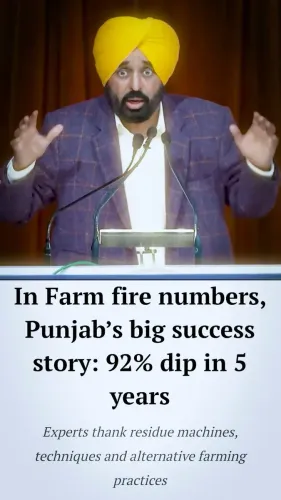
AAP convenor Arvind Kejriwal on November 18 invoked a Union minister's own acknowledgement of falling stubble-fire counts to accuse BJP and Congress of running a smear campaign against Punjab's farmers despite evidence of improvement.
Key Takeaways
AAP convenor Arvind Kejriwal posted on November 18, 2026 citing a Union minister's concession that Punjab farmers have significantly reduced stubble burning .
Kejriwal accused BJP and Congress of combining to malign Punjab's farmers through what he called 'dirty politics' ( gandi rajniti ).
Stubble burning or parali has been a seasonal pollution flashpoint in the Indo-Gangetic plain since at least 2019 , tracked annually via ISRO satellite data.
The Commission for Air Quality Management has run subsidy schemes for happy seeders and bio-decomposers across Punjab and Haryana to curb farm fires.
Kejriwal's framing strategically links BJP and Congress as co-opponents in Punjab , where AAP won a landslide in 2022 .
Final confirmation of this season's fire-count trend awaits formal data from the Union Environment Ministry or Punjab Agriculture Department .
A central minister's own acknowledgement has become a political flashpoint. AAP convenor Arvind Kejriwal on Wednesday, November 18, turned a Union minister's concession on stubble burning data into a sharp rebuke of the BJP and Congress, accusing both parties of running a smear campaign against Punjab's farmers even as their own side admits the numbers are improving.
Posting on X in Hindi, Kejriwal wrote: 'Kendriya mantri khud maan rahe hain ki Punjab ke kisanon ne parali jalane mein kaafi kami ki hai.' ('Central ministers themselves are admitting that Punjab's farmers have significantly reduced stubble burning.') He then added: 'It is unfortunate that their party, in league with Congress, keeps abusing Punjab's farmers day and night under the guise of dirty politics.'
The stubble-burning number that cuts both ways
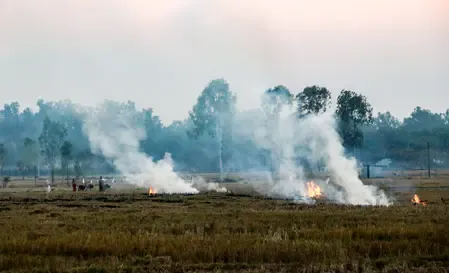
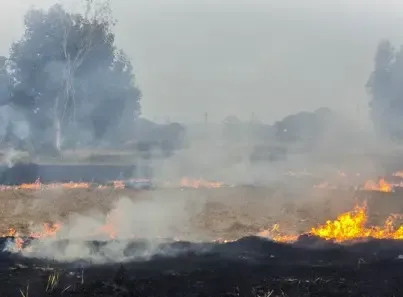
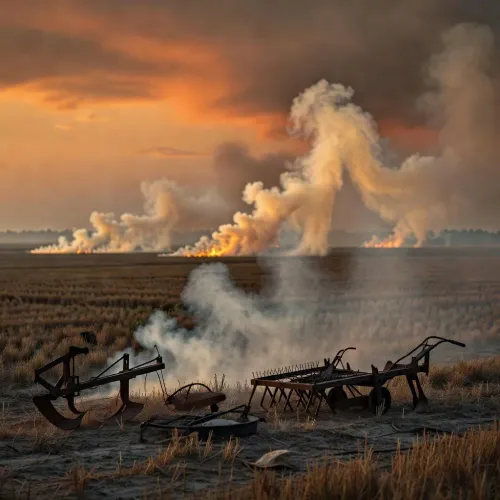
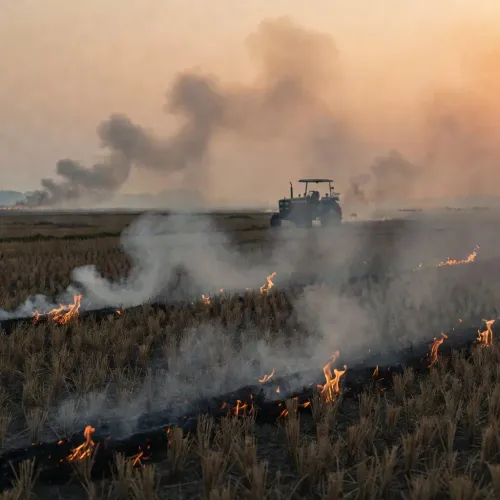
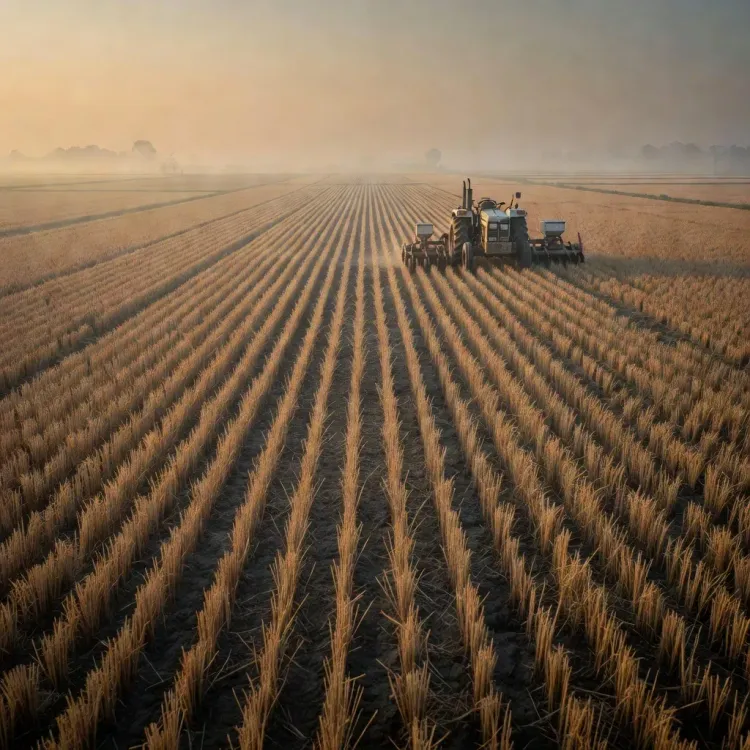
Stubble burning — the post-harvest torching of paddy residue known as parali — has been a recurring winter crisis across the Indo-Gangetic plain since at least 2019, when the Commission for Air Quality Management began coordinating state-level crackdowns and subsidy drives for alternatives like happy seeders and bio-decomposers. Satellite data released annually by ISRO and state agriculture departments has become the de facto scoreboard in this political tug-of-war, with each party claiming the numbers vindicate their position.
Kejriwal's post seizes on a moment when that scoreboard appears to favour the AAP government in Punjab: a Union minister's own statement conceding a 'significant reduction.' In political terms, that admission is more potent than any AAP press release — it closes the loop on a talking point opposition parties have pressed hard every October and November.
BJP and Congress in Kejriwal's crosshairs
The AAP convenor's framing is deliberate — lumping BJP and Congress together as co-conspirators in what he calls 'dirty politics' (gandi rajniti). That framing serves a dual purpose in Punjab, where Congress was the state's dominant force before AAP's 2022 landslide and BJP remains the ruling party at the Centre. By painting both as allies in attacking farmers, Kejriwal seeks to reinforce AAP's self-image as the only party that actually delivers for rural Punjab rather than scoring points off it.
Opposition parties have historically criticised AAP's Punjab government for relying on incentive schemes rather than strict enforcement, arguing that fire counts — however reduced — remain unacceptably high given Delhi-NCR's seasonal air-quality emergency. Kejriwal's post does not engage those enforcement critiques directly; it rests its entire case on the minister's own concession.
What the satellite data season will decide
The final word on this season's stubble-burning numbers will come from ISRO's farm-fire satellite counts and any formal statement from the Union Environment Ministry or the Punjab Agriculture Department. If those numbers confirm a sharp downward trend, Kejriwal's argument gains empirical weight beyond one minister's remark. If they tell a more complicated story, the political exchange will sharpen further.
For now, Punjab's farmers sit at the centre of a fight they did not start — cited as villains in one political season and as proof of progress in the next, depending entirely on who is making the argument and why.
Point of View
Neutralising the stubble-burning attack line before the season's final data arrives. The deliberate conflation of BJP and Congress under a single 'dirty politics' umbrella reinforces AAP's core positioning in Punjab as an outsider party governing against entrenched elite interests. Longer term, the exchange underscores that farm-fire data has fully migrated from an environmental metric into an electoral one — whoever owns the narrative around falling fire counts in Punjab owns a significant piece of the rural vote. The real test arrives when ISRO's satellite numbers close out the season.
NationPress
18 Nov 2026
Frequently Asked Questions
What did Kejriwal say about Punjab stubble burning on November 18?
Kejriwal posted on X stating that central ministers themselves have admitted Punjab farmers significantly reduced stubble burning, and accused BJP and Congress of jointly maligning those farmers through political attacks despite this improvement.
What is parali or stubble burning and why does it cause pollution?
Parali is paddy residue left in fields after the rice harvest. Farmers burn it quickly to clear fields before the wheat sowing season; the smoke contributes heavily to the severe winter smog that blankets the Indo-Gangetic plain, including Delhi-NCR, every October and November.
What government schemes exist to reduce stubble burning in Punjab?
Since 2019 the Commission for Air Quality Management and state governments have run subsidy programmes providing farmers access to happy seeders, super-SMS attachments, and bio-decomposer sprays as alternatives to burning paddy residue.
How is stubble burning data tracked in India?
ISRO's satellites monitor active farm fires across Punjab and Haryana each season, releasing daily and cumulative fire counts that state agriculture departments and pollution bodies use to assess year-on-year trends.
Why does Kejriwal link BJP and Congress together on Punjab farm issues?
In Punjab, Congress governed the state before AAP's 2022 victory and BJP is the ruling party at the Centre. By framing both as allied critics of Punjab farmers, Kejriwal reinforces AAP's positioning as the only governing party on the side of the rural voter in the state.