CM Assam Congratulates Nuruddin Ahmed on Saurabh Award
Synopsis
The Chief Minister's Office of Assam announced that CM Himanta Biswa Sarma has congratulated veteran theatre artist Nuruddin Ahmed on receiving the Assam Saurabh Award 2025, honouring his distinguished career in stagecraft, puppetry and visual design.
Key Takeaways
Shri Nuruddin Ahmed has been conferred the Assam Saurabh Award, 2025 , one of the state's top cultural honours.
Himanta Biswa Sarma personally extended congratulations through the official CMO account on 27 October 2026 .
Ahmed is a veteran practitioner of stagecraft, puppetry and visual design with a career rooted in Assam's theatre traditions.
The Assam Saurabh Award is instituted by the Government of Assam to recognise distinguished contributions in culture and the arts.
The recognition aligns with Assam's broader pattern of using state awards to highlight individuals preserving indigenous performing arts and visual traditions.
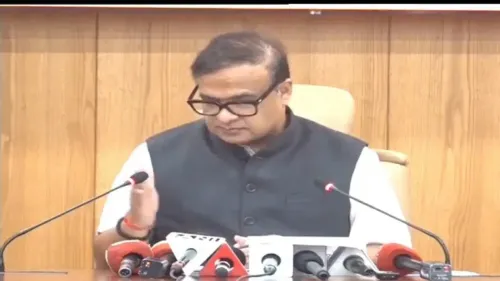
A quiet master of puppetry, stagecraft and visual design has just received Assam's formal salute. The Chief Minister's Office of Assam announced on Tuesday, 27 October 2026, that Chief Minister Dr. Himanta Biswa Sarma has congratulated Shri Nuruddin Ahmed on being conferred the prestigious Assam Saurabh Award, 2025 — the state's distinguished honour for contributions to culture and the arts.
A career spent keeping the stage alive
Nuruddin Ahmed is described by the Chief Minister's Office as a veteran whose practice spans three demanding disciplines — stagecraft, puppetry and visual design. Each sits at a different intersection of technical skill and living cultural tradition, and together they trace a career dedicated to forms that demand both patience and craft. The CMO noted that his 'remarkable contributions to theatre and cultural heritage continue to enrich Assam's artistic legacy and inspire future generations.'
What the Assam Saurabh Award represents
The Assam Saurabh Award is a state-level honour instituted by the Government of Assam to recognise distinguished service in culture, arts and allied fields. It sits among the state's most visible mechanisms for placing senior cultural practitioners into public memory — a signal, not just to the recipient, but to the wider community of performing-arts workers about what the state chooses to value. Assam governments have periodically deployed such awards to spotlight individuals preserving performing arts and visual traditions, particularly at a moment when generational shifts in artistic practice make institutional recognition all the more consequential.
Why this matters for Assam's theatre community
CM Himanta Biswa Sarma, who has been at the helm of the Assam government since 2021, has consistently used public platforms to acknowledge cultural contributors. For the theatre community — artists who often work outside commercial circuits — state recognition translates into visibility, documentation impetus, and occasionally, policy attention. Ahmed's award arrives at a time when indigenous performing traditions across Northeast India are navigating the twin pressures of changing audiences and underfunded preservation efforts.
The acknowledgement of a practitioner rooted in puppetry and visual design is especially pointed: these are forms that rarely command marquee billing but form the structural backbone of regional theatrical heritage. Ahmed's work, the CMO's statement implies, is the kind that endures quietly and shapes everything around it.
Point of View
Where public recognition of heritage practitioners serves both symbolic and political purposes — affirming the government's custodianship of Assamese identity. Awards in puppetry and stagecraft, disciplines that rarely generate commercial headlines, carry an implicit message about which cultural forms the state considers worth preserving. For Northeast India's arts ecosystem, such signals matter: they can nudge funding conversations and documentation efforts in favour of forms at risk of generational decline. The question the broader theatre community will ask is whether the award is accompanied by institutional support, or remains a cherished but solitary gesture.
NationPress
27 Oct 2026
Frequently Asked Questions
What is the Assam Saurabh Award?
The Assam Saurabh Award is a state-level honour instituted by the Government of Assam to recognise distinguished contributions in culture, arts and allied fields.
Who is Nuruddin Ahmed and why did he receive the Assam Saurabh Award 2025?
Nuruddin Ahmed is a veteran practitioner of stagecraft, puppetry and visual design known for his contributions to Assam's theatre traditions and cultural heritage, for which he was conferred the Assam Saurabh Award 2025.
Which Assam CM congratulated Nuruddin Ahmed for the Saurabh Award?
Chief Minister Dr. Himanta Biswa Sarma congratulated Nuruddin Ahmed on receiving the Assam Saurabh Award 2025, with the announcement made through the official Chief Minister's Office account.
What fields is Nuruddin Ahmed known for?
Nuruddin Ahmed is known for his work in stagecraft, puppetry and visual design, with a career dedicated to Assam's theatre and cultural heritage.
What is the significance of the Assam Saurabh Award for performing arts?
The Assam Saurabh Award gives state-level visibility to cultural practitioners, particularly those working in indigenous performing arts, helping document and promote traditions at risk of generational decline.