Assam July 2026 floods: No cloudburst, 71 families get ex-gratia, Centre tells Rajya Sabha

Synopsis
The Centre has officially ruled out cloudbursts as a cause of Assam's deadly July 2026 floods, placing the blame squarely on prolonged rainfall across three northeastern states. With ex-gratia relief reaching only 71 families as of 4 August, the government's response is active — but the scale of the disaster means scrutiny of coverage gaps will intensify.
Key Takeaways
The Centre confirmed in the Rajya Sabha on 12 August 2026 that no cloudburst was recorded in Assam during the July 2026 floods .
Minister of State Nityanand Rai attributed the flooding to sustained rainfall across Assam , Arunachal Pradesh , and Nagaland , citing RMC–IMD Guwahati data.
Ex-gratia assistance has been provided to families of 71 deceased individuals as of 4 August 2026 , under SDRF and NDRF norms.
An Assam government notification dated 1 August 2026 waives the mandatory post-mortem requirement for ex-gratia payments in notified disaster deaths.
District-wise flood death data was reported through Assam's DRIMS system.
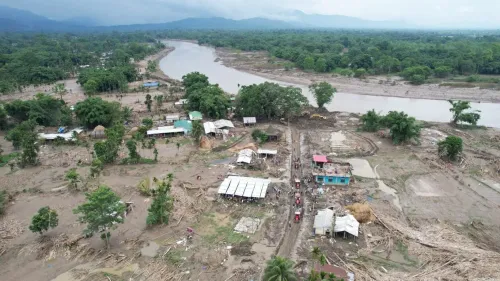
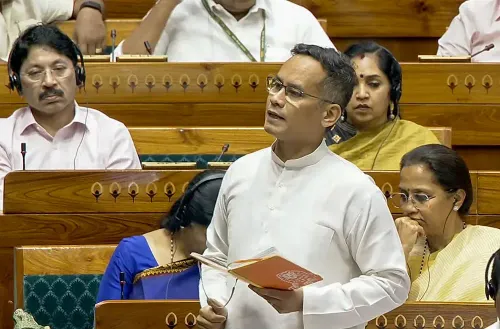
The Central Government on Wednesday, 12 August 2026, clarified in the Rajya Sabha that no cloudburst was recorded in Assam during the devastating July 2026 floods, attributing the inundation entirely to sustained heavy rainfall across Assam and the neighbouring states of Arunachal Pradesh and Nagaland. The clarification was made in a written reply by Minister of State for Home Affairs Nityanand Rai in response to an unstarred question raised by Rajya Sabha MP Terash Gowalla.
What Triggered the July Floods
According to the Centre, data furnished by the Assam government confirmed that the July flooding was driven by persistent, intense rainfall — not only within Assam but also in upstream areas of Arunachal Pradesh and Nagaland. Rai stated that the Regional Meteorological Centre–India Meteorological Department (RMC–IMD), Guwahati, did not record any cloudburst event during this period.
The clarification directly addressed the framing of the Rajya Sabha question, which had specifically sought district-wise details of casualties linked to cloudbursts in neighbouring states. The Centre's official position draws a clear line: the cause was prolonged rainfall, not sudden high-intensity cloudburst events — a distinction that carries implications for how relief and accountability are framed.
Ex-Gratia Relief: 71 Families Covered So Far
The Centre disclosed that ex-gratia assistance had been extended to the families of 71 deceased individuals as of 4 August 2026. The relief is being disbursed under the norms of the State Disaster Response Fund (SDRF) and the National Disaster Response Fund (NDRF).
District-wise details of flood deaths during July 2026 were reported by the Assam government through its Disaster Reporting and Information Management System (DRIMS), the Minister said.
Post-Mortem Requirement Waived for Disaster Deaths
Rai also addressed concerns raised by MP Gowalla about whether post-mortem examinations were conducted for all flood victims. Under a notification issued by the Assam government on 1 August 2026, submission of a post-mortem report is not mandatory for the sanction and payment of ex-gratia assistance in deaths caused by floods and other notified natural disasters, including state-specific disasters.
This provision is significant: it removes a bureaucratic barrier that has historically delayed relief payments to grieving families in remote or flood-affected districts where medical infrastructure is limited.
Broader Context: Assam's Recurring Flood Crisis
The July 2026 floods are part of a recurring annual pattern in Assam, which sits in one of the world's most flood-prone river basins. The Brahmaputra and its tributaries regularly breach banks during the monsoon, with upstream rainfall in Arunachal Pradesh and Nagaland compounding the impact downstream. Notably, the Centre's clarification reinforces that cross-border rainfall dynamics — not isolated extreme weather events — remain the dominant driver of Assam's flood vulnerability.
As the monsoon season continues, authorities are expected to update casualty and relief figures. The Centre's response signals that the relief mechanism is active, though questions about the adequacy of coverage for all affected families remain open.
Point of View
The government narrows the lens of scrutiny. Meanwhile, ex-gratia coverage of just 71 families, weeks after a major flood season in one of India's most disaster-prone states, raises legitimate questions about the pace and reach of relief delivery. The post-mortem waiver is a pragmatic step, but the deeper structural issue — Assam's chronic flood vulnerability driven by upstream hydrology in Arunachal Pradesh and Nagaland — remains unaddressed in the Centre's parliamentary response.
NationPress
27 Sept 2026
Frequently Asked Questions
What caused the Assam floods in July 2026 according to the Centre?
The Centre stated that the July 2026 Assam floods were caused by sustained, heavy rainfall across Assam and the neighbouring states of Arunachal Pradesh and Nagaland. The RMC–IMD Guwahati confirmed that no cloudburst was recorded during this period.
How many families received ex-gratia relief after the Assam floods?
Ex-gratia assistance was provided to the families of 71 deceased individuals as of 4 August 2026, under the norms of the State Disaster Response Fund (SDRF) and National Disaster Response Fund (NDRF).
Is a post-mortem report required for ex-gratia payment in Assam flood deaths?
No. Under an Assam government notification dated 1 August 2026, a post-mortem report is not mandatory for sanctioning ex-gratia assistance in deaths caused by floods and other notified natural disasters. This applies to state-specific disasters as well.
Who raised the question about Assam floods in the Rajya Sabha?
Rajya Sabha MP Terash Gowalla raised the unstarred question, seeking district-wise casualty data linked to cloudbursts, details of post-mortem examinations, and information on financial assistance provided to victims' families.
What system does the Assam government use to report flood deaths?
The Assam government reports district-wise flood casualty data through its Disaster Reporting and Information Management System (DRIMS), which was cited by the Centre in its Rajya Sabha reply.