Assam CMO Launches Mission Chenehjori: Rs 411 Cr for 2.5 Lakh

Synopsis
The Chief Minister's Office of Assam has announced the launch of Mission Chenehjori, a Rs 411 crore welfare initiative set to benefit 2.5 lakh people. The project extends Assam's pattern of targeted, vernacular-branded welfare schemes following the Orunodoi model, with operational details on eligibility and disbursal awaited.
Key Takeaways
Mission Chenehjori launched by the Assam CMO on 3 June 2026.
Project outlay pegged at Rs 411 crore.
Approximately 2.5 lakh beneficiaries to be covered.
Follows the lineage of the 2020 Orunodoi cash-transfer scheme.
Eligibility norms, implementing agency and sectoral focus not yet disclosed.
District-wise rollout and beneficiary lists to be watched closely.
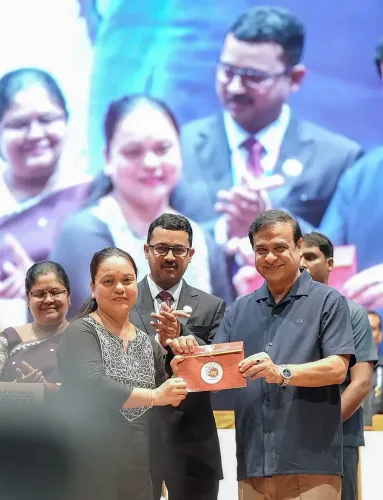
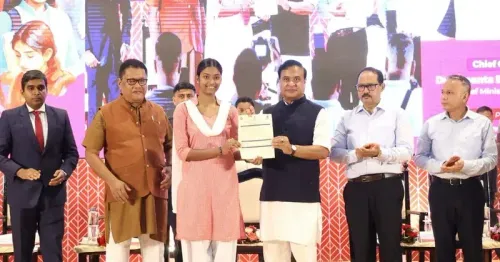
The Chief Minister's Office of Assam on 3 June 2026 announced the launch of Mission Chenehjori, a state welfare initiative with an outlay of Rs 411 crore aimed at benefiting 2.5 lakh people across the state. The post, in Assamese, described the rollout as the formal beginning ('shubharambh') of the project under the state government's social sector portfolio.
The CMO's message translates to: 'Launch of Mission Chenehjori: A Rs 411 crore project will benefit 2.5 lakh beneficiaries.' The brief announcement was accompanied by a link to further details and marks one of the larger single-day welfare commitments publicised by the office this fiscal year.
Context
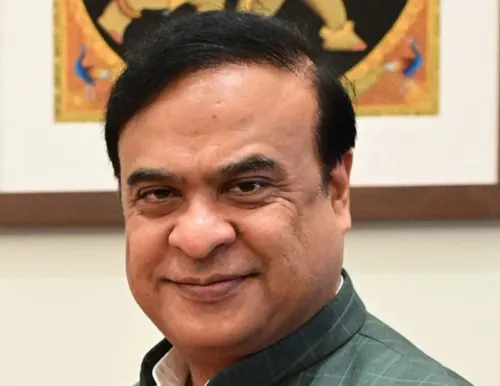
The launch comes from the office of Chief Minister Himanta Biswa Sarma, who has led the BJP government in Assam since May 2021. Welfare announcements have featured prominently in the administration's public communications, particularly those aimed at women and households in economically weaker brackets.
The Assamese name 'Chenehjori' loosely conveys a sense of affection and bonding, in keeping with a pattern of vernacular-branded schemes in the state. The Rs 411 crore allocation places it among mid-sized welfare interventions in the state's annual social sector spend.
Policy backdrop
Mission Chenehjori follows the lineage of the state's flagship Orunodoi scheme, launched in 2020, which provides monthly cash assistance to women from economically weaker sections. Successive iterations of Orunodoi have expanded both coverage and the transfer amount, establishing direct benefit transfer as a central plank of Assam's welfare architecture.
Subsequent initiatives have layered livelihood support, micro-finance linkages and targeted assistance for self-help groups on top of cash transfers. Mission Chenehjori appears to fit within this broader pattern of targeted, beneficiary-linked outlays, although the CMO post does not specify the sectoral focus, eligibility norms or the implementing agency.
Stakeholders and impact
With 2.5 lakh beneficiaries identified, the per-capita outlay works out to roughly Rs 16,440 if disbursed uniformly, although the actual unit assistance and mode of transfer have not been disclosed in the announcement. Based on the pattern of recent state schemes, women-headed households, rural families and self-help group members are the most likely target groups.
For the Brahmaputra valley and Barak valley districts, where reliance on agriculture and informal work remains high, even modest cash or livelihood support can shape household consumption and small-business activity. District administrations will be tasked with beneficiary verification and grievance redressal, areas that have drawn scrutiny in earlier welfare rollouts.
What's next
Attention will turn to the operational notification detailing eligibility, the disbursal calendar and the nodal department for Mission Chenehjori. District-wise beneficiary lists and the first tranche of transfers will be the earliest indicators of the scheme's reach.
Utilisation certificates submitted to the state assembly in subsequent sessions will offer a measure of how quickly the Rs 411 crore corpus is deployed. With state-level political activity intensifying ahead of upcoming electoral cycles, the pace and visibility of Mission Chenehjori's rollout are likely to be closely watched by both beneficiaries and the political opposition.
Point of View
Beneficiary-linked welfare schemes pioneered by Orunodoi. The state government's preference for direct outreach to women and lower-income households has emerged as both a development strategy and a political signalling device. With electoral cycles approaching, the speed and transparency of beneficiary selection will determine whether the scheme is perceived as a structural welfare expansion or a pre-poll outreach. Operational clarity from the implementing department will be the first test.
NationPress
22 Sept 2026
Frequently Asked Questions
What is Mission Chenehjori in Assam?
Mission Chenehjori is a welfare initiative launched by the Assam government with an outlay of Rs 411 crore, intended to benefit around 2.5 lakh people across the state.
How much money has been allocated for Mission Chenehjori?
The scheme has a reported outlay of Rs 411 crore, as announced by the Chief Minister's Office of Assam.
How many beneficiaries will Mission Chenehjori cover?
The project is set to benefit approximately 2.5 lakh people, according to the official announcement.
Who launched Mission Chenehjori?
The scheme was launched by the Government of Assam under Chief Minister Himanta Biswa Sarma, with the announcement made by the Chief Minister's Office.
Is Mission Chenehjori related to the Orunodoi scheme?
While both are state welfare initiatives, Mission Chenehjori is a separate project. It follows the broader pattern of targeted welfare schemes that began with Orunodoi in 2020, though its specific design has not been detailed yet.