Tezpur Litchi Takes Flight: Half a Tonne Exported to Singapore

Synopsis
Assam's Chief Minister's Office confirmed that half a tonne of Tezpur's celebrated 'Piyaji' litchi has been airlifted to Singapore, marking a milestone in the state's drive to export premium horticultural produce to international markets and boost farmer incomes.
Key Takeaways
The Chief Minister's Office of Assam confirmed the export of approximately 500 kg of Tezpur litchi to Singapore on 13 June 2026 .
The variety exported is locally called 'Piyaji' (পিঁয়াজী) , known for its thin skin, juicy flesh, and distinctive aroma.
Tezpur in Sonitpur district is Assam's primary litchi-growing belt and the source of this consignment.
Assam has been pursuing GI tagging and export promotion of horticultural produce since the mid-2010s as part of state agriculture policy.
Singapore serves as a regional logistics hub, offering onward distribution access to Southeast Asian markets under India–ASEAN trade frameworks.
Subsequent shipment volumes and farm-gate price realisation will determine whether this pilot scales into a sustained export channel.
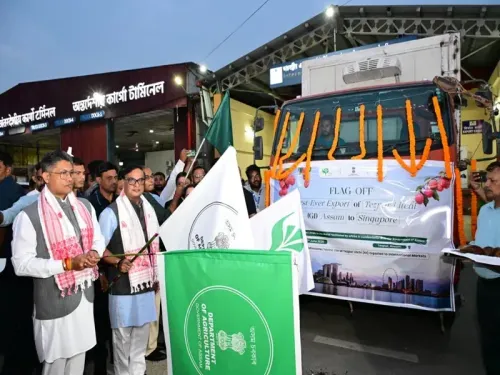
The Chief Minister's Office of Assam announced on Saturday, 13 June 2026 that approximately half a tonne (500 kg) of Tezpur litchi — locally known as 'পিঁয়াজী' (Piyaji) — has been airlifted and exported to Singapore, marking a significant step in Assam's push to take its prized horticultural produce to international markets.
Context
Tezpur, located in Sonitpur district of Assam, is renowned for its distinctive litchi varieties, cultivated across the Brahmaputra valley's fertile plains. The 'পিঁয়াজী' (Piyaji) variety is prized for its thin skin, juicy flesh, and aromatic sweetness — characteristics that have historically made it a favourite in local and regional markets. This shipment represents the variety's debut on an international air-cargo route.
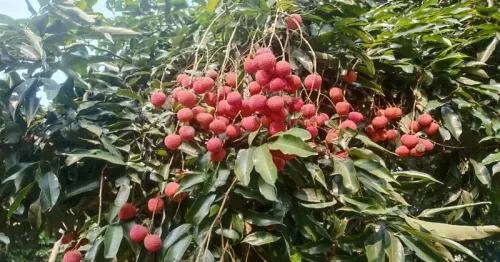
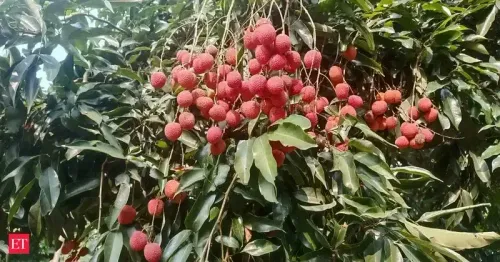
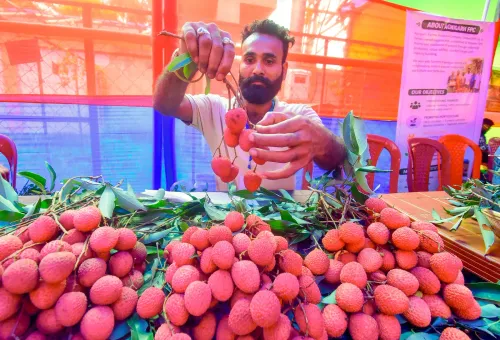
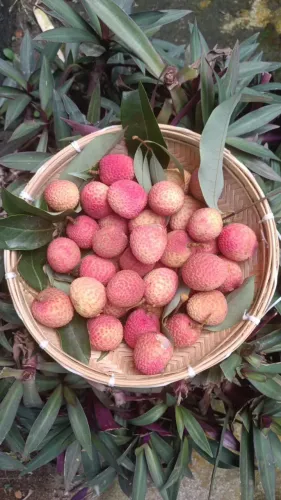
The post by the Chief Minister's Office of Assam declared that the litchi 'boarded a plane' and 'reached Singapore' — signalling that the export has been completed, not merely announced. The accompanying image shared with the post depicted the produce prepared for the consignment.
Policy Backdrop
Assam's state government has been working to promote Geographical Indication (GI) tagging and organised exports of local horticultural produce, including litchi, since the mid-2010s. These efforts align with national programmes aimed at increasing income for farmers growing high-value crops by connecting them to premium export markets.
Air connectivity improvements from Guwahati and other airports in the Northeast have been central to making perishable produce exports viable. Singapore, as a key regional logistics and trade hub, has been a natural destination under India–ASEAN trade frameworks, offering onward distribution access across Southeast Asia.
Stakeholders and Impact
Litchi growers in the Tezpur belt stand to benefit most directly if this export opens a repeatable commercial channel. Export-grade pricing for premium varieties like Piyaji can deliver significantly higher farm-gate returns compared to domestic wholesale markets, where the fruit's short shelf life often depresses prices during peak harvest.
Horticulture exporters and logistics operators in Assam are the other key stakeholders. A successful half-tonne pilot shipment can establish proof-of-concept for larger, sustained volumes in future seasons, attracting investment in cold-chain infrastructure and air-cargo capacity from Northeast India.
What's Next
The immediate questions for growers, exporters, and policymakers are whether this inaugural shipment will translate into regular commercial volumes and what price realisation farmers receive. Expansion of air-cargo routes for perishable produce from Assam to other ASEAN and Gulf markets is a logical next step if the Singapore pilot succeeds.
Sustained export growth will depend on formalising quality standards, scaling cold-chain logistics, and securing repeat buyer commitments — factors that will determine whether the Piyaji litchi's international debut becomes a lasting market presence or a one-season milestone.
Point of View
Geographically remote crop and premium international buyers. If the pilot translates into commercial volumes, it validates the state government's multi-year strategy of GI tagging and export facilitation as a genuine income lever for farmers, not just policy optics. The choice of Singapore as the first destination is strategically sound: it is both a quality-conscious consumer market and a distribution gateway into Southeast Asia. The real test, however, lies in whether cold-chain infrastructure, grower organisation, and buyer relationships can be institutionalised before the short litchi season ends.
NationPress
19 Sept 2026
Frequently Asked Questions
What is Tezpur litchi and why is it special?
Tezpur litchi, grown in Sonitpur district of Assam, is prized for its thin skin, juicy pulp, and distinctive aroma. The 'Piyaji' variety is among the most sought-after, and Assam has pursued Geographical Indication (GI) tagging to protect and promote it.
How much Tezpur litchi was exported to Singapore?
Approximately half a tonne (500 kg) of Tezpur litchi was airlifted and exported to Singapore, as announced by the Chief Minister's Office of Assam on 13 June 2026.
Which airport was used for the Assam litchi export to Singapore?
The post does not specify the exact airport. Assam's agricultural air-cargo exports typically route through Guwahati's Lokpriya Gopinath Bordoloi International Airport, which has expanded cargo connectivity in recent years.
What is India's policy on exporting horticultural produce to ASEAN countries?
India facilitates agricultural exports to ASEAN nations including Singapore through bilateral trade frameworks and national schemes aimed at boosting farmer income from high-value crops. Improved logistics and air connectivity from Northeast India have been key enablers.
Will Assam export more litchi to Singapore in future seasons?
The current shipment is a pilot consignment. Future volumes will depend on price realisation for growers, cold-chain infrastructure development, and the establishment of repeat commercial buyer relationships in Singapore and broader Southeast Asia.