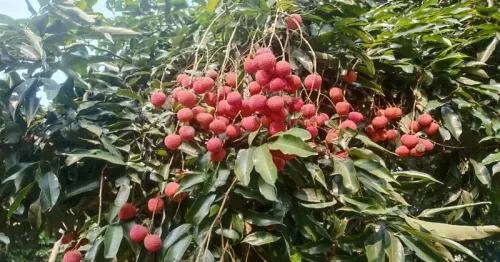
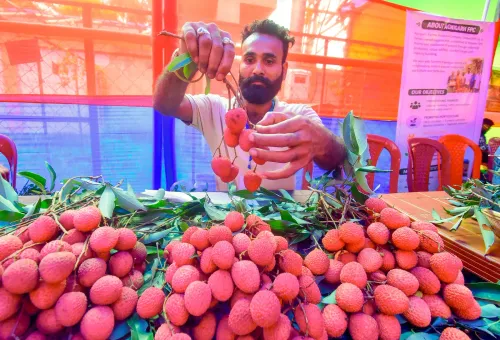
Piyush Goyal: Tezpur Litchi's First Export Reaches Dubai

Synopsis
Commerce Minister Piyush Goyal announced the first export consignment of Assam's GI-tagged Tezpur Litchi to Dubai, facilitated by APEDA. The move aims to give the fruit global recognition, improve farmer incomes, and open new export avenues for Northeast India's agricultural produce.
Key Takeaways
Union Commerce Minister Piyush Goyal announced the first export shipment of Tezpur Litchi from Assam to Dubai on June 8, 2026 .
Tezpur Litchi holds a Geographical Indication tag under India's GI Act, 1999 , which legally protects its regional identity and supports premium pricing.
The shipment was facilitated by APEDA , the statutory body under the Ministry of Commerce and Industry mandated to promote agricultural exports.
Dubai serves as a major re-export hub for the Gulf region and is a key destination for Indian fresh produce exports.
The initiative is expected to benefit Assam litchi growers through better prices and reduced dependence on domestic intermediaries.
A successful outcome could serve as a model for exporting other GI-tagged agricultural products from Northeast India .
Union Commerce and Industry Minister Piyush Goyal announced on Monday, June 8, 2026, that the first export consignment of Assam's GI-tagged Tezpur Litchi has been dispatched to Dubai, marking a significant step in integrating Northeast India's agricultural produce into global trade networks.
Posting on X, the Minister stated — 'असम की प्रसिद्ध GI-टैग प्राप्त तेजपुर लीची अब विदेशी बाजारों में अपनी मिठास बिखेर रही है' ['Assam's famous GI-tagged Tezpur Litchi is now spreading its sweetness in foreign markets'] — and credited APEDA (Agricultural and Processed Food Products Export Development Authority) for facilitating the shipment. He added that the move would bring global recognition to the fruit, ensure better prices for farmers, and create new opportunities for agricultural produce from Northeast India.
Context
Tezpur Litchi, grown in and around the Tezpur region of Assam, holds a Geographical Indication tag under the Geographical Indications of Goods (Registration and Protection) Act, 1999. The GI designation legally protects the product's regional identity and enables producers to command premium pricing in domestic and international markets. Assam is among India's key horticultural states, producing litchi alongside tea and other GI-recognised crops.
Policy Backdrop
APEDA, the statutory body under the Ministry of Commerce and Industry, has run targeted export promotion programmes for GI-tagged horticultural items from the Northeast since the mid-2010s, aligned with India's Act East Policy. The Authority's role spans market facilitation, quality certification, and logistics coordination for fresh produce shipments. Dubai has emerged as a preferred first destination for Indian fresh fruit exports, functioning as a major re-export hub for the wider Gulf and West Asian region, supported by direct air and sea connectivity with Indian ports.
India has systematically leveraged GI registration and APEDA facilitation to move niche agricultural products into higher-value export corridors, particularly in the Gulf. Bilateral trade frameworks between India and the UAE have further eased market access for fresh fruit consignments in recent years, reducing friction for time-sensitive perishables like litchi.
Stakeholders and Impact
Assam litchi growers stand to benefit most directly if the export channel delivers a measurable price premium over domestic market rates. For smallholder farmers around Tezpur, access to international buyers through a structured APEDA-backed channel reduces dependence on local intermediaries and price volatility. The development also signals a broader push to bring remote production clusters in the Northeast into formal global trade networks.
Northeast agricultural exporters and state horticulture agencies are also key stakeholders, as a successful Tezpur Litchi shipment could serve as a template for other GI products from Assam, Meghalaya, Manipur, and neighbouring states. The region holds several GI-tagged products that remain under-represented in export markets.
What's Next
The immediate focus will be on the commercial outcome of this inaugural consignment — whether it realises a meaningful price premium and generates repeat buyer interest in Dubai and other Gulf markets. Volume growth in subsequent shipments during the litchi season will be a key indicator of whether this is a one-off promotional exercise or the beginning of a sustained export channel. Replication of this model for other GI-tagged horticultural products from Northeast India remains the longer-term policy ambition flagged by the Ministry.
Point of View
The move reinforces the Commerce Ministry's narrative of using APEDA as an active market-maker for niche produce rather than a passive certification body. The Northeast angle is politically significant — it aligns with the Act East Policy and the BJP's sustained effort to showcase development dividends in a region it has increasingly prioritised electorally. The real test, however, will be whether this inaugural shipment translates into a durable, volume-driven export channel that materially improves farmer incomes in Assam.
NationPress
23 Oct 2026
Frequently Asked Questions
What is Tezpur Litchi and why does it have a GI tag?
Tezpur Litchi is a variety of litchi grown in the Tezpur region of Assam, known for its distinctive flavour and aroma. It holds a Geographical Indication tag under India's GI Act, 1999, which legally protects its regional identity, prevents misuse of the name, and allows growers to command premium pricing.
Where has the first export consignment of Tezpur Litchi been sent?
The first export consignment of Tezpur Litchi has been dispatched to Dubai, which serves as a major re-export hub for the wider Gulf region and is a key market for Indian fresh produce.
What is APEDA's role in the Tezpur Litchi export?
APEDA, the Agricultural and Processed Food Products Export Development Authority under the Ministry of Commerce and Industry, facilitated the first export shipment. It handles market promotion, quality certification, and logistics coordination for agricultural exports including GI-tagged products from Northeast India.
How will the Tezpur Litchi export benefit Assam farmers?
By accessing international buyers through an APEDA-backed channel, Assam litchi growers can potentially earn better prices than in domestic markets and reduce dependence on local intermediaries, improving their overall income from the crop.
Could this export model be applied to other products from Northeast India?
Yes, the Tezpur Litchi export is seen as a potential template for other GI-tagged agricultural products from Assam and neighbouring northeastern states, several of which hold GI designations but remain under-represented in global export markets.