Assam Govt Approves 13 Sectoral Councils for Public Input
Synopsis
The Assam government has approved 13 state-level sectoral councils to institutionalise public and expert feedback in policy-making, the Chief Minister's Office announced on November 15, 2026. The move places Assam within a broader Indian trend toward participatory sub-national governance.
Key Takeaways
The Assam government has approved 13 state-level sectoral councils to bring structured public feedback into policy-making.
The announcement was made by the Chief Minister's Office of Assam on November 15, 2026 .
The councils are designed as standing institutional bodies, not one-off consultations, covering 13 distinct policy sectors .
The initiative places Assam within a wider national trend of Indian states adopting participatory governance models at the sub-national level.
Specific details — sectors covered, council composition, timelines and meeting schedules — are yet to be publicly detailed in implementation guidelines.
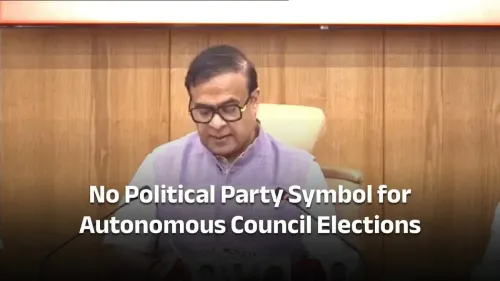
Chief Minister Himanta Biswa Sarma , in office since May 2021 , has positioned institutional reform as a cornerstone of his administration.
Assam just moved its governance model one step closer to the citizen. The Chief Minister's Office of Assam announced on Sunday, November 15, 2026, that the state government has approved the creation of 13 state-level sectoral councils — formal bodies designed to channel public feedback directly into policy-making.
What these 13 councils are meant to do
The core idea is structural, not symbolic. Rather than relying on ad hoc consultations or one-off public hearings, the councils would embed citizen and expert input into specific sectors as a standing institutional mechanism. Each of the 13 councils corresponds to a distinct policy domain, giving stakeholders — from sectoral professionals to ordinary residents — a defined channel to shape decisions before they harden into government orders.
The move positions Assam as part of a wider trend across Indian states that have been experimenting with participatory governance bodies at the sub-national level. Several states have introduced advisory or consultative frameworks in recent years, but Assam's decision to anchor this across 13 separate sectors simultaneously marks a notably broad commitment.
CM Himanta's governance push behind the councils
Chief Minister Himanta Biswa Sarma, who has led the state since May 2021, has built much of his administrative identity around accelerating institutional reform in Assam. The approval of the sectoral councils fits within that arc — an attempt to move the state's decision-making process from a purely top-down model toward one with formal feedback loops built in.
The practical test, however, lies ahead. Key questions — which 13 sectors are covered, how council members will be selected, when first meetings are scheduled, and how recommendations will actually feed into policy — remain to be detailed in implementation guidelines. The gap between council creation and genuine policy influence is where such initiatives most often stall.
Why this matters for Assam's 35 million residents
Assam's population carries a dense set of sectoral priorities — from agriculture and flood management to education, health, and infrastructure in a state that sits at the crossroads of Northeast India. If the councils are constituted with genuine representativeness and their outputs are made public, they could meaningfully shift how communities see their relationship with the state government. If they remain on paper, they join a long list of well-intentioned consultative bodies across India that never quite found their voice.
The announcement is a credible first step. The councils are approved — now Assam has to make them work.
Point of View
Partly to build legitimacy for contested policy decisions. For CM Himanta Biswa Sarma, it also serves a political purpose: demonstrating responsive governance ahead of the next electoral cycle in Assam. The real measure of ambition, however, will be whether council deliberations are made public and whether recommendations visibly alter policy outcomes — or whether the bodies quietly fade into bureaucratic routine, as similar bodies have in other states. Assam's geographic and demographic complexity gives these councils genuine potential value; the institutional design choices made in the coming weeks will determine whether that potential is realised.
NationPress
15 Nov 2026
Frequently Asked Questions
What are the 13 state-level sectoral councils approved by Assam?
The Assam government approved 13 state-level sectoral councils on November 14, 2026, to bring public and expert feedback into policy-making. The specific sectors covered by each council have not yet been publicly detailed in official implementation guidelines.
What is the purpose of Assam's sectoral councils?
The councils are designed to institutionalise public participation in state governance, giving citizens and sectoral experts a formal standing channel to provide input on policies before they are finalised — going beyond one-off public hearings.
Who heads the Assam government that approved these councils?
Chief Minister Himanta Biswa Sarma leads the Assam government. He has been Chief Minister since May 2021 and has focused on administrative and governance reform as a central part of his tenure.
How is Assam's sectoral council model different from other states?
Several Indian states have introduced consultative or advisory bodies, but Assam's move to simultaneously approve councils across 13 distinct sectors as formal standing institutions represents a notably broad and structured commitment to participatory governance at the sub-national level.
When will Assam's 13 sectoral councils begin functioning?
The councils have been approved as of November 14, 2026. Details on council composition, membership criteria, first meeting schedules and implementation timelines are yet to be officially announced.