Assam CM pitches geographic equity at NITI Aayog meet
Synopsis
Assam's Chief Minister's Office announced on June 14, 2026 that CM Himanta Biswa Sarma raised the 'geographic equity' principle at a NITI Aayog meeting, urging that terrain, borders, and historical underinvestment be factored into national resource allocation under the Viksit Bharat framework.
Key Takeaways
The Chief Minister's Office of Assam announced on June 14, 2026 that Assam formally raised 'geographic equity' at a NITI Aayog meeting.
CM Himanta Biswa Sarma argued that difficult terrain, international borders, and lower historical investment must be reflected in national resource allocation.
The pitch is framed around the central government's Viksit Bharat 2047 vision of making India a developed economy.
NITI Aayog replaced the Planning Commission in 2015 to promote cooperative federalism and give states a greater role in policy formulation.
Northeastern states have historically sought higher central funding shares; the Act East Policy (2014) was a prior attempt to address the region's connectivity deficit.
Outcomes could influence future Union Budget allocations and Finance Commission recommendations for northeastern and other geographically challenging states.
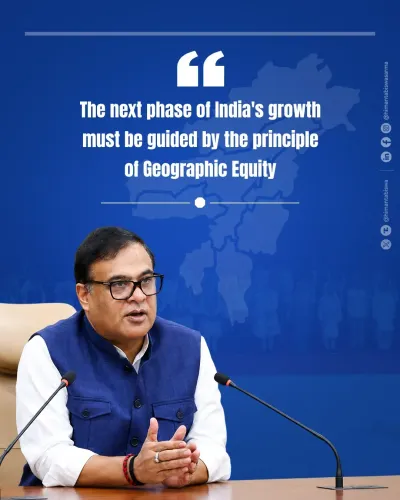
The Chief Minister's Office of Assam announced on Sunday, June 14, 2026 that Assam has formally pitched the principle of 'geographic equity' at a NITI Aayog meeting, framing it as essential to achieving the national Viksit Bharat vision of a developed India by 2047.
Context
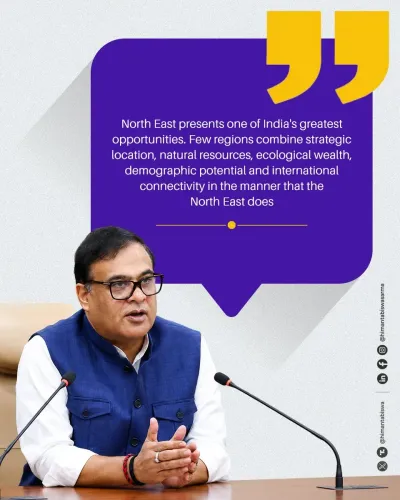
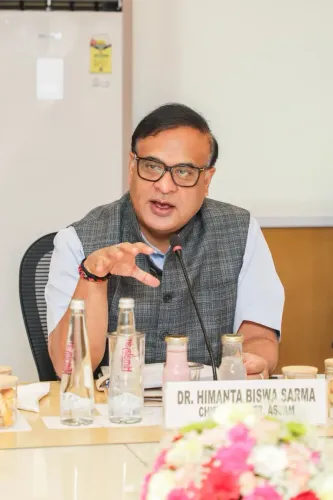
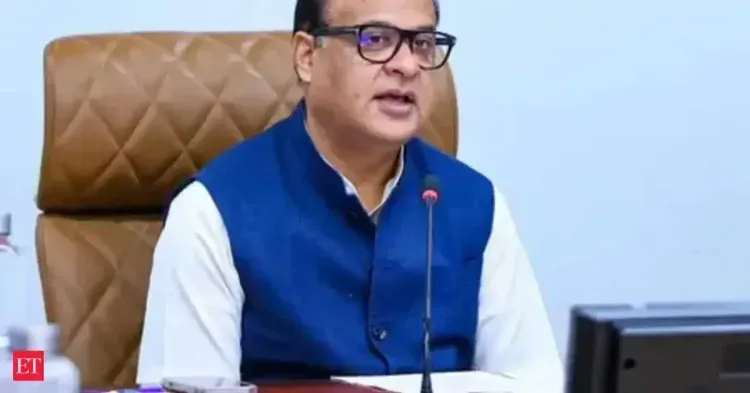
Chief Minister Himanta Biswa Sarma led Assam's advocacy at the NITI Aayog forum, arguing that states with difficult terrain, international borders, and historically lower investment cannot be measured by the same yardstick as mainland regions. The state's position is that geographic disadvantages must be factored into national resource allocation if the Viksit Bharat goal is to be genuinely inclusive.
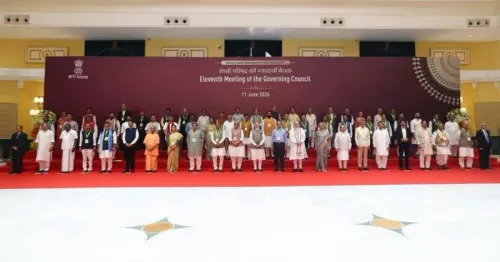
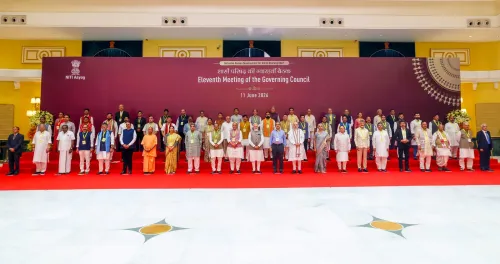
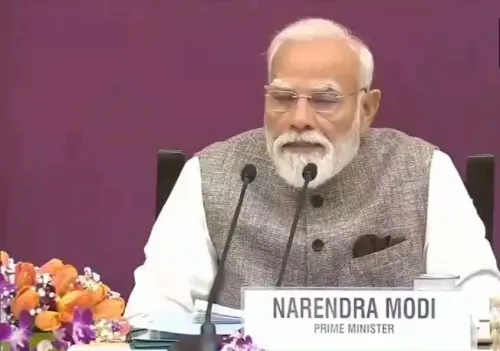
Assam's intervention came at a NITI Aayog Governing Council meeting, a platform established specifically to allow states to shape central policy priorities under the framework of cooperative federalism.
Policy Backdrop
NITI Aayog replaced the Planning Commission in 2015 with a mandate to give states a greater voice in national planning. Northeastern states, including Assam, have historically sought higher central funding shares, citing challenges that include hilly terrain, sparse connectivity, and long international borders with Bangladesh, Bhutan, and Myanmar.
The Act East Policy, launched in 2014, prioritised infrastructure connectivity for the northeast within broader national development goals. Despite these frameworks, northeastern states have continued to argue that resource distribution formulas do not adequately account for the cost of delivering services across geographically challenging landscapes.
The concept of 'geographic equity' — adjusting plan assistance to reflect the higher per-unit cost of development in remote or border regions — has been a recurring theme in centre-state negotiations, particularly around Finance Commission recommendations and Union Budget allocations.
Stakeholders and Impact
The pitch directly concerns all eight northeastern states, which collectively share borders with five countries and host significant strategic infrastructure. If the 'geographic equity' argument gains traction in central planning, it could influence how funds are distributed under centrally sponsored schemes and special packages.
State governments across the northeast, central planners, and communities in border districts stand as the primary stakeholders. A formal recognition of geographic equity in NITI Aayog frameworks could also set a precedent for other hilly or remote states such as Uttarakhand, Himachal Pradesh, and Jammu and Kashmir.
What's Next
Attention will now turn to whether the 'geographic equity' framing surfaces in formal NITI Aayog recommendations, upcoming Union Budget allocations, or the next Finance Commission cycle. Assam's advocacy at this meeting is part of a longer pattern of northeast states using NITI forums to press for structural adjustments in central transfers.
Any formal acknowledgement by the central government of geographic equity as a planning principle could mark a significant shift in how India's development architecture accounts for regional disparity beyond simple income-based metrics.
Point of View
CM Sarma is attempting to make northeastern exceptionalism a logical extension of national policy rather than a special pleading. This mirrors a broader pattern among peripheral states of co-opting central narratives to press for differentiated treatment in fiscal transfers. Whether the framing gains formal traction will depend on the Finance Commission's receptivity and the political calculus around the next Union Budget.
NationPress
20 Sept 2026
Frequently Asked Questions
What is 'geographic equity' as raised by Assam at the NITI Aayog meeting?
'Geographic equity' refers to Assam's argument that national resource allocation must account for the higher cost of development in states with difficult terrain, international borders, and historically lower investment, rather than applying uniform metrics used for mainland regions.
What is the Viksit Bharat vision and how does Assam's pitch relate to it?
Viksit Bharat is the central government's goal to make India a developed economy by 2047. Assam argues that this vision can only be achieved if geographically disadvantaged northeastern states receive proportionally greater support in national planning.
What is NITI Aayog and why do states pitch development demands there?
NITI Aayog is India's premier policy think tank, established in 2015 to replace the Planning Commission and promote cooperative federalism. Its Governing Council meetings are the primary platform where state chief ministers present region-specific development priorities to central planners.
Has Assam made similar demands for special central assistance before?
Yes. Assam and other northeastern states have sought higher central funding shares since the 1990s and 2000s under the Special Category Status framework. The Act East Policy of 2014 was a prior initiative aimed at addressing the region's connectivity and development deficit.
What could follow from Assam's geographic equity pitch at NITI Aayog?
The key outcomes to watch are whether the principle appears in NITI Aayog recommendations, upcoming Union Budget allocations, or the next Finance Commission's terms of reference, any of which could translate the argument into concrete additional funding for northeastern states.