Assam, Punjab Water Departments Meet in Guwahati to Share Flood Know-How
Synopsis
Engineers and officials from Assam and Punjab met at the Assam Water Centre in Guwahati on November 2, 2026, to exchange flood mitigation techniques and river basin strategies, deepening inter-state water management cooperation under India's federal framework.
Key Takeaways
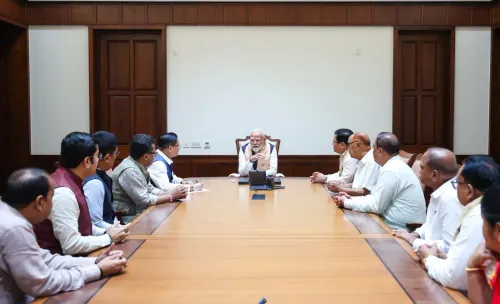
Officials and engineers from the Assam and Punjab Water Resources Departments met at the Assam Water Centre, Guwahati on November 2, 2026 .
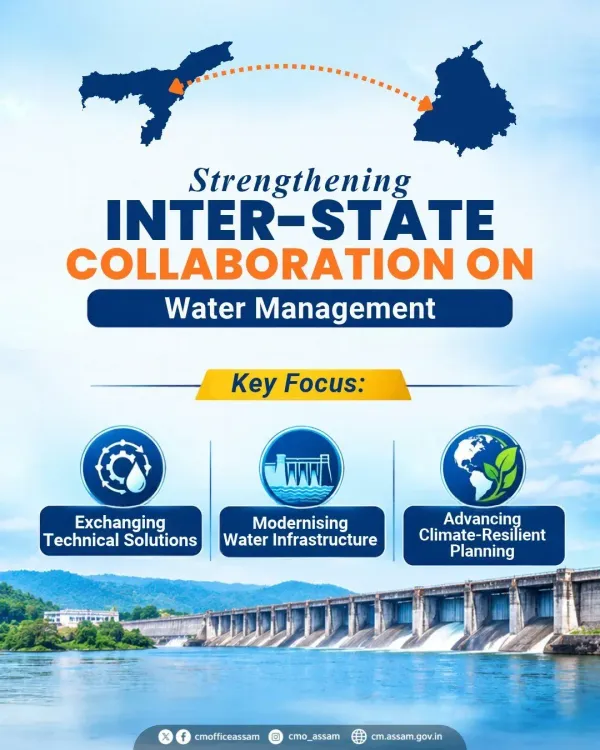
The exchange covered engineering best practices, modern flood mitigation techniques, and sustainable river basin management strategies.
The initiative aims to foster mutual learning and build resilient, collaborative water management across both states.
India's National Water Policy 2012 explicitly supports inter-state knowledge exchanges of this kind.
Assam manages the flood-prone Brahmaputra and Barak basins; Punjab operates one of India's largest canal irrigation networks — complementary expertise.
Possible follow-up joint workshops or pilot projects on river basin modelling are a realistic next step.
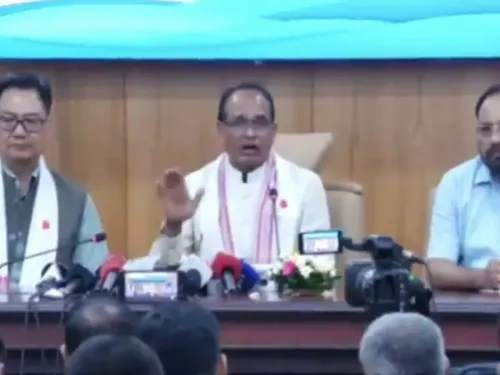
Two states at opposite ends of India's water challenge sat down together on Monday, November 2, 2026 — and the agenda was entirely practical. Officials and engineers from the Assam Water Resources Department and the Punjab Water Resources Department convened at the Assam Water Centre in Guwahati to swap engineering best practices, modern flood mitigation techniques, and sustainable river basin management strategies, the Chief Minister's Office of Assam announced.
Why Assam and Punjab Make Natural Partners on Water
The pairing might look unusual on a map, but it makes sharp technical sense. Assam grapples annually with the fury of the Brahmaputra — one of the world's largest and most flood-prone river systems — while Punjab operates one of the subcontinent's most extensive canal irrigation and drainage networks. Different problems, a large overlapping toolkit. The exchange at the Assam Water Centre, a dedicated facility in Guwahati for water resources training and technical coordination, was designed precisely to harvest those complementary strengths.
India's National Water Policy 2012 explicitly called for inter-state knowledge exchanges on flood management and river basin planning — the kind of peer-to-peer technical learning that formal dispute-resolution tribunals rarely deliver. Monday's meeting sits squarely within that federal framework, complementing central disaster-management guidelines without replacing them.
What the Engineers Brought to the Table
The agenda covered three concrete pillars: engineering best practices, modern flood mitigation methods, and sustainable strategies for river basin management. Assam's engineers bring hard-won experience in embankment protection, erosion control, and managing monsoon surges across the Brahmaputra and Barak basins. Punjab's delegation offers deep expertise in canal system hydraulics, drainage efficiency, and regulated water distribution — disciplines increasingly relevant as climate patterns push more erratic rainfall across the Indo-Gangetic plain.
Indian states have periodically run such technical exchanges under the country's federal architecture, favouring practical engineering solutions over political negotiation. What distinguishes this session is the explicit institutional framing: the CMO described it as an initiative to 'foster mutual learning and strengthen collaborative efforts towards more effective and resilient water management' — language that signals an intent to make this a repeatable mechanism, not a one-off visit.
The Road the Brahmaputra Keeps Reshaping
Flood-prone communities across Assam lose farmland, homes, and livelihoods with near-clockwork regularity every monsoon season. Modern river basin modelling, early-warning systems, and embankment engineering — precisely the techniques on the table at the Assam Water Centre — hold the most immediate promise for reducing that toll. A follow-up in the form of joint technical workshops or pilot projects on river basin modelling between the two departments remains a realistic next step, and Monday's meeting lays the institutional groundwork for exactly that.
When engineers from Guwahati and Chandigarh exchange notes, the communities downstream are the real audience. That is a bet worth watching.
Point of View
Battered by Brahmaputra floods each monsoon, importing Punjab's canal-engineering rigour could meaningfully sharpen its flood-response toolkit. The CMO's framing of the meeting as a structured 'initiative' rather than a courtesy visit signals an intent to institutionalise these exchanges — a model that, if it produces joint pilot projects, could serve as a template for other state pairs facing shared water stress under a changing climate.
NationPress
2 Nov 2026
Frequently Asked Questions
Why did Assam and Punjab hold a water management meeting?
The two states met at the Assam Water Centre in Guwahati on November 2, 2026, to exchange engineering best practices, modern flood mitigation techniques, and river basin management strategies, aiming to strengthen inter-state water cooperation.
What is the Assam Water Centre?
The Assam Water Centre is a facility in Guwahati used for water resources training and technical coordination by the Assam Water Resources Department.
What does India's National Water Policy say about inter-state water management?
India's National Water Policy 2012 called for inter-state knowledge exchange specifically on flood management and river basin planning, providing the policy basis for meetings like the one held between Assam and Punjab.
What are the main water challenges in Assam and Punjab?
Assam regularly faces severe flooding from the Brahmaputra and Barak rivers, while Punjab manages one of India's largest canal irrigation and drainage networks — different challenges that create a complementary basis for technical exchange.
What could follow from the Assam–Punjab water exchange?
Possible outcomes include follow-up technical workshops and joint pilot projects on river basin modelling between the two state water departments.