Assam CM Office: Tiger Cub Rescued From Garden Net, Released
Synopsis
A tiger cub trapped in a kitchen garden net in Assam was rescued by state forest authorities and returned to the wild, the Chief Minister's Office announced on September 25, 2026, highlighting the state's ongoing human-wildlife conflict response under India's Project Tiger framework.
Key Takeaways
A tiger cub was found entangled in a kitchen garden net in Assam and successfully rescued by state wildlife authorities.
The cub was assessed as fit and released back into the wild, consistent with standard Project Tiger protocol.
The incident reflects a recurring pattern of tigers entering human-use areas along Assam 's forest edges.
India's Project Tiger , launched in 1973 , governs rescue and conservation protocols that guided the response.
Assam hosts major tiger habitats including Kaziranga National Park , a UNESCO World Heritage Site.
Post-release monitoring by forest authorities is the expected next step to ensure the cub's safe reintegration.
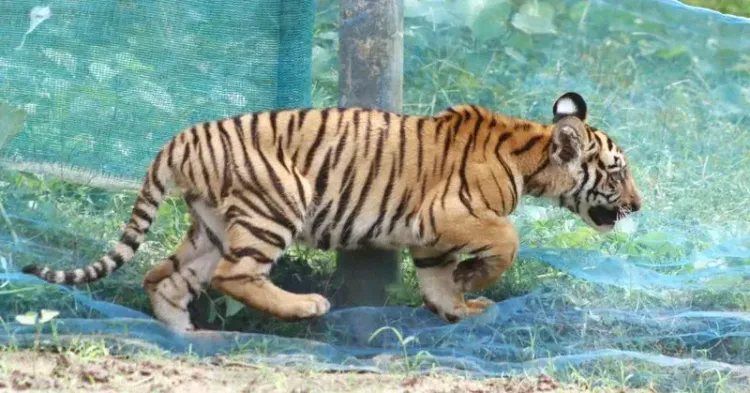
A tiger cub that became entangled in a kitchen garden net in Assam has been successfully rescued and returned to the wild, the Chief Minister's Office of Assam announced on Friday, September 25, 2026 — a small but vivid reminder of how thin the line between forest and farmland has become in India's northeast.
From a kitchen net to the forest floor
The cub was discovered trapped in netting typically used by local farmers to protect kitchen gardens — the kind of low-stakes snare never designed for wildlife, yet capable of proving fatal to a young animal on its own. Assam's state wildlife and forest authorities moved in, freed the cub, assessed its condition, and cleared it for release back into its natural habitat. The Chief Minister's Office shared the news with an image, signalling official pride in the outcome.
Why rescues like this matter to Project Tiger
This incident sits squarely inside a pattern that Assam has seen repeatedly: tigers — particularly young or dispersing animals — straying into human-use zones, triggering rapid-response rescues by state wildlife teams. These operations are standard protocol under India's Project Tiger framework, launched in 1973, which governs tiger conservation across the country's reserve network. The northeastern state is home to some of India's most significant tiger habitats, most notably Kaziranga National Park, a UNESCO World Heritage Site whose tiger population has grown steadily alongside its famed one-horned rhinoceros numbers.
Returning a rescued cub to the wild — rather than relocating it to captivity — is the preferred outcome when the animal shows no lasting injury and the conflict risk is judged to be manageable. It preserves the cub's chance of contributing to the wild gene pool, a priority as India works to sustain its tiger recovery across decades of conservation effort.
The human-wildlife frontier in Assam's villages
Kitchen garden nets and similar low-cost barriers represent the daily negotiation millions of rural households conduct with wildlife along India's forest edges. They are rarely set with any intent to harm large animals, but for a young cub separated from its mother or exploring new territory, such nets can be lethal. The successful rescue here underscores the value of community awareness and swift official response — the two factors that most determine whether these encounters end in tragedy or in a cub padding back into the trees.
Forest authorities are expected to monitor the released animal in the days ahead, watching for signs of return to human-use areas or distress behaviour that would warrant further intervention.
One cub, one net, one rescue — and a quiet signal that when communities and forest departments act together, India's wild tigers get another fighting chance.
Point of View
Which helps build community trust and encourages locals to report future encounters rather than handle them informally. Within the broader Project Tiger arc, every successful wild release strengthens the statistical case for habitat corridor investment and conflict-mitigation funding that Assam regularly seeks from the Centre.
NationPress
25 Sept 2026
Frequently Asked Questions
Where was the tiger cub rescued in Assam?
The cub was rescued after being caught in a kitchen garden net in Assam, though the specific location within the state was not disclosed in the official announcement.
Is it safe to release a rescued tiger cub back into the wild?
Yes, when a cub shows no lasting injury and is deemed fit, releasing it back into its natural habitat is the standard and preferred outcome under India's Project Tiger protocol, as it preserves the animal's chances of surviving and contributing to the wild population.
Why do tigers enter villages and farms in Assam?
Young or dispersing tigers exploring new territory, or animals pushed toward human-use zones by prey scarcity or habitat pressure, can stray beyond forest boundaries. Assam's dense forest-edge communities make such encounters relatively frequent.
What is Project Tiger and how does it apply here?
Project Tiger is India's national tiger conservation programme, launched in 1973 . It sets the protocols for tiger rescue, rehabilitation, and release, as well as habitat management. Assam's forest department operates under this framework when responding to incidents like this rescue.
Does Assam have a significant wild tiger population?
Yes. Assam is home to major tiger habitats, most notably Kaziranga National Park , a UNESCO World Heritage Site, which supports a notable tiger population alongside its globally recognised one-horned rhinoceros numbers.