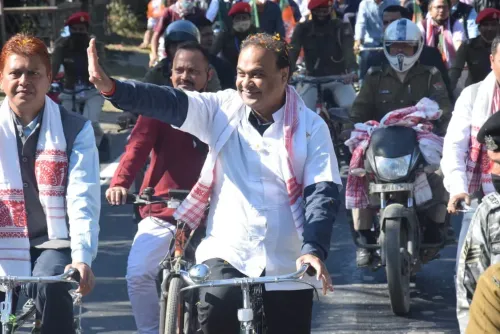
Assam Teen Cycles 5,000 km for Animal Welfare

Synopsis
The Chief Minister's Office of Assam amplified the story of a local teenager who cycled 5,000 km over four months to advocate for animal welfare, shining a spotlight on grassroots conservation efforts in a state known for its rich biodiversity.
Key Takeaways
The CMO Assam official account shared the story on 14 July 2026 .
An Assam teenager completed a 5,000 km cycling journey spanning four months to advocate for animal welfare.
Assam hosts major wildlife reserves including Kaziranga and Manas National Parks .
India's animal welfare framework is anchored by the Prevention of Cruelty to Animals Act, 1960 .
State governments increasingly use social media to amplify citizen-led social and conservation campaigns.
Formal state recognition or programme support for the initiative has not yet been announced.
The Chief Minister's Office of Assam on Tuesday, 14 July 2026 highlighted the remarkable journey of a teenage cyclist from the state who pedalled 5,000 kilometres over four months to champion the cause of animal welfare, amplifying the story across its official social media channels.
Context
The post, shared by the CMO Assam account, draws attention to an extraordinary feat of endurance undertaken by a young resident of Assam — cycling 5,000 km across four months on a single bicycle to raise awareness about animal welfare. The initiative underscores the growing role of youth-led grassroots campaigns in spotlighting causes that often receive limited institutional attention.
Assam is home to some of India's most celebrated wildlife corridors, including Kaziranga National Park and Manas National Park, making the state a natural backdrop for conversations around animal protection and conservation.
Policy Backdrop
India's foundational legislation on the subject, the Prevention of Cruelty to Animals Act, 1960, has long provided the legal framework for animal welfare in the country. However, enforcement and public awareness remain uneven, particularly in rural and semi-urban areas where human-animal conflict is frequent.
State governments across India have increasingly turned to social media to amplify individual citizen initiatives, using such stories to signal alignment with welfare and conservation goals without requiring direct policy announcements. The CMO Assam's decision to spotlight this teenager's journey fits squarely within that pattern.
Stakeholders and Impact
The primary beneficiaries of such campaigns are animal welfare organisations and advocacy groups that rely on public attention to build momentum for legislative and administrative action. By lending the weight of the Chief Minister's Office to this story, the state government signals institutional goodwill toward such causes.
Assamese youth in particular stand to be inspired by a peer demonstrating that individual action — even without institutional resources — can generate statewide and potentially national visibility. Animal welfare groups may also use the momentum to push for stronger local enforcement of existing protections.
What's Next
It remains to be seen whether the Government of Assam will extend formal recognition to the young cyclist, or whether this amplification will translate into concrete policy or programme support for animal welfare initiatives in the state. Upcoming environment and welfare programmes in Assam could provide a platform for similar youth-led campaigns.
More broadly, the episode adds to a growing national narrative around citizen-driven conservation efforts, and may encourage other young Indians to undertake comparable advocacy journeys for causes ranging from wildlife protection to environmental sustainability.
Point of View
Such optics serve double duty — projecting youth empowerment while subtly reinforcing the administration's conservation credentials. Whether this translates into substantive policy support or remains a social media moment will be the real test. The episode also fits a broader national pattern where individual endurance acts for social causes are increasingly co-opted by state machinery as soft-power narratives.
NationPress
14 Jul 2026
Frequently Asked Questions
Which Assam teen cycled 5,000 km for animal welfare?
The Chief Minister's Office of Assam highlighted the story of a teenager from the state who completed a 5,000 km cycling journey over four months for animal welfare, though specific personal details of the teen have not been officially disclosed in the post.
How long did the Assam teen's cycling journey take?
The journey covered 5,000 kilometres over four months, according to the information shared by the Chief Minister's Office of Assam.
Why did the Assam teenager cycle 5,000 km?
The teenager undertook the 5,000 km cycling journey to raise awareness about and advocate for animal welfare.
What is Assam's connection to animal welfare and wildlife?
Assam is home to major wildlife reserves including Kaziranga National Park and Manas National Park, making it one of India's most important states for biodiversity and wildlife conservation.
Will the Assam government formally recognise the teen cyclist?
No formal recognition or programme support has been announced yet; the CMO Assam has so far amplified the story on social media, and any official recognition may emerge through upcoming state environment or welfare programmes.