How is the Assam government planning to reclaim encroached land in the historic capital of the Ahom era?
Synopsis
In a significant move, Assam's Chief Minister Himanta Biswa Sarma announced the government's intent to reclaim the historic site of Rojabari in Charaideo district. This decision aims to protect this vital heritage site from illegal encroachments and safeguard its future. The government's ongoing anti-encroachment campaign has sparked both support and criticism.
Key Takeaways
Assam government is committed to securing Rojabari.
Encroachment concerns prompted action on historical land.
Widespread eviction drives aim to reclaim unauthorized settlements.
Public response reflects a mix of support and criticism.
Preservation of cultural heritage remains a priority.
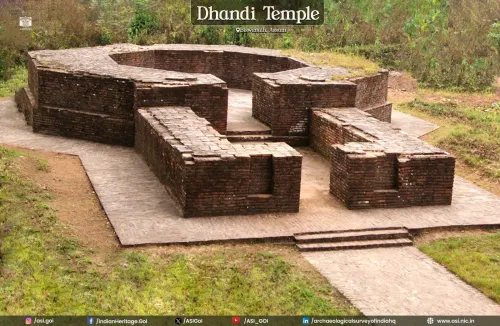
Guwahati, Feb 10 (NationPress) The Chief Minister of Assam, Himanta Biswa Sarma, announced on Tuesday that the government is poised to reclaim the historic site of Rojabari (also known as Raj Darbar) situated in Charaideo district, recognized as the initial capital of the Ahom dynasty. This decision arises amidst growing concerns about encroachments and the establishment of madrasas in this significant location.
In a statement posted on platform X, CM Sarma emphasized the administration's commitment to liberate this historic heritage from illegal occupations, ensuring its preservation for future generations.
“We have received reports regarding encroachments on the Rojabari land in Charideu, the first capital of the Ahom era, along with the establishment of madrasas. Our government is determined to protect our historical heritage from these encroachments. Rojabari will soon be secured,” the CM affirmed.
This declaration occurs in the context of an extensive anti-encroachment campaign underway across Assam, aimed at reclaiming government, forest, and reserve lands from unauthorized settlers.
Since mid-2025, the Assam government has undertaken numerous eviction operations, targeting districts like Golaghat, Hailakandi, Patharkandi, and Dhubri, focusing on encroachments on forest areas, reserve forests, and wetlands.
Recently, over 2,000 families received eviction notices as part of efforts to reclaim tens of thousands of hectares of encroached reserved forest land, with significant police and forest personnel presence overseeing these drives.
Assam is currently in the spotlight for its vigorous land reclamation initiatives under CM Sarma's leadership, asserting that these operations are crucial for maintaining ecological balance, upholding the rule of law, and safeguarding the identity and resources of indigenous communities.
Authorities claim to have recovered vast stretches of encroached land, stating that prior notices are given and operations are conducted with the backing of security forces. Nevertheless, these eviction drives have sparked controversy and backlash from political rivals, civil society organizations, and affected residents, who argue that these operations disproportionately affect specific communities and advocate for more compassionate rehabilitation strategies.
Amidst this ongoing debate, the Assam government is steadfast in its anti-encroachment pursuits, pledging to uphold legality and protect vital state assets.
In this light, CM Sarma’s remarks about Rojabari highlight the government’s resolve to extend similar enforcement and protective measures to ensure that sites of historical and cultural importance are shielded from encroachment, thus preserving them as integral components of Assam’s rich heritage.
Point of View
The ongoing eviction drives must be executed with sensitivity towards affected communities. Balancing law enforcement with humanitarian considerations is crucial in maintaining social harmony.
NationPress
20 Sept 2026
Frequently Asked Questions
Why is the Assam government reclaiming Rojabari?
The government aims to protect Rojabari from illegal encroachments and ensure its preservation for future generations.
What is the current status of anti-encroachment drives in Assam?
The Assam government has been actively conducting eviction operations to reclaim government and forest lands from unauthorized settlers.
How has the public reacted to the eviction drives?
The eviction drives have generated both support for land reclamation and criticism regarding the impact on certain communities.
What are the government's goals regarding land reclamation?
The government aims to uphold the rule of law, protect ecological balance, and preserve the identity and resources of indigenous communities.