CM Himanta lauds women masons trained in Majuli for PMAY
Synopsis
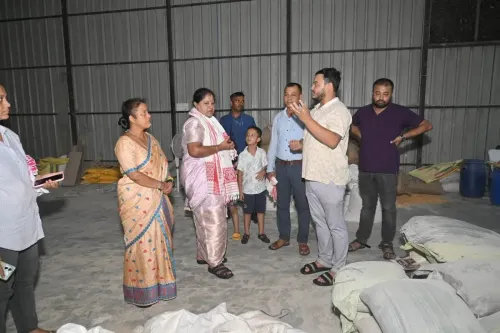
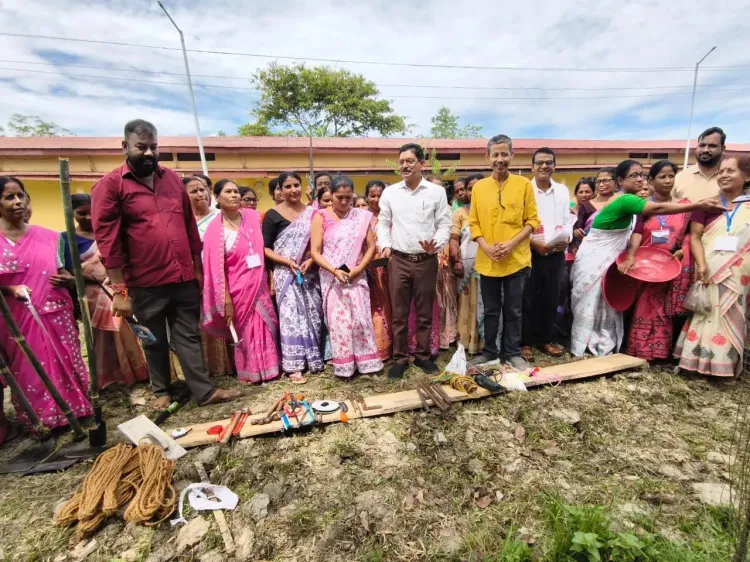
Women in Majuli, Assam's iconic river island, are being trained as masons and will work on school boundary walls and PMAY housing projects. CM Himanta Biswa Sarma appreciated the initiative, calling it a step toward an 'Atmanirbhar Assam' and breaking barriers in a traditionally male-dominated trade.
Key Takeaways
The Chief Minister's Office of Assam announced on 25 September 2026 that women in Majuli are being trained as masons in a barrier-breaking livelihood initiative.
CM Himanta Biswa Sarma appreciated the programme, which links skill training directly to construction work.
Trained women masons will first contribute to school boundary wall construction in Majuli.
Subsequently, they are set to work on Pradhan Mantri Awas Yojana (PMAY) housing projects, providing sustained livelihood.
The initiative aligns with the Skill India Mission (launched 2015) and Assam's broader push for gender-inclusive, demand-linked vocational training.
Majuli, the world's largest river island and a geographically isolated district, has been a priority area for state livelihood and infrastructure investment.
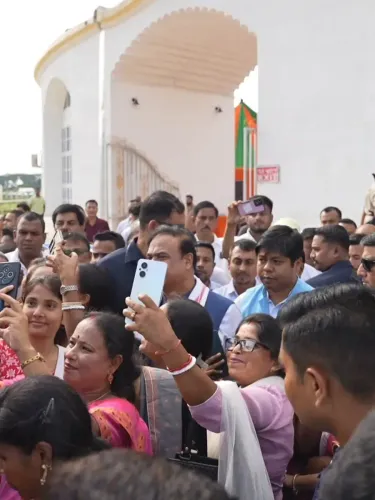
On a river island that has long been a symbol of Assam's cultural identity, women are now picking up trowels. Chief Minister Himanta Biswa Sarma appreciated an initiative on Friday, 25 September 2026, in which skilled women in Majuli — the world's largest river island — are being trained as masons, with the Chief Minister's Office of Assam calling it 'a promising step towards an Atmanirbhar Assam, built by its women.'
From Majuli's ghats to a construction site
Masonry has traditionally been a male-dominated trade across rural India, and Majuli is no exception. The trained women are first set to contribute to school boundary wall construction — a concrete, visible assignment that puts their new skills to immediate use in their own communities. That first deployment matters: it is both a proof-of-concept and a confidence-builder before the larger assignment that follows.
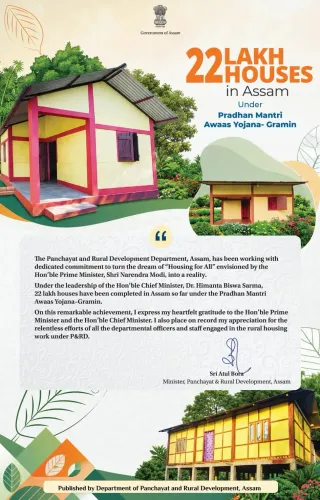
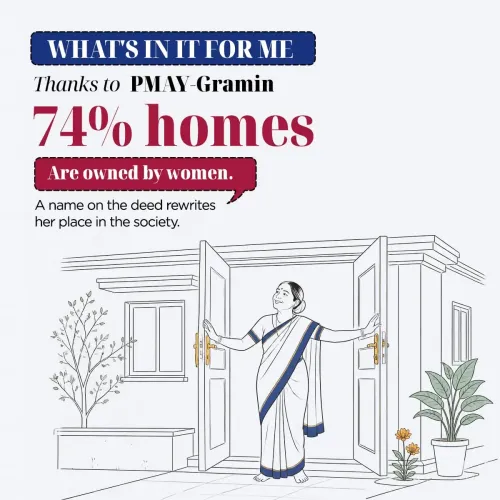
The bigger opportunity comes next — housing construction under the Pradhan Mantri Awas Yojana (PMAY), the central government's flagship scheme launched in 2015 to provide pucca houses to eligible rural and urban families. PMAY projects represent sustained, paid work, and plugging locally trained women masons into that pipeline turns a skill-training initiative into a durable livelihood.
Why Majuli, and why masonry
Majuli district has been a focus of state-level livelihood and infrastructure investment given its geographical isolation and the particular vulnerabilities that come with living on a flood-prone river island. By routing PMAY construction demand through locally trained workers, the state simultaneously addresses unemployment and keeps money circulating within the community.
The move also fits squarely within the Skill India Mission framework, active since 2015, which explicitly includes construction trades as pathways to formal employment. What distinguishes the Majuli model is the deliberate targeting of women for a trade they have historically been shut out of — breaking, as the CMO put it, longstanding barriers.
Assam's pattern of gender-inclusive infrastructure work
This is not an isolated gesture. Assam has, since roughly 2020, been weaving women into non-traditional trades by connecting skill training directly to existing infrastructure schemes — creating demand-linked training rather than certification that leads nowhere. The Majuli mason programme follows that logic: train women, then hand them a contract. The self-reliance framing echoes the national Atmanirbhar Bharat ('self-reliant India') agenda, but localised to community-level economic autonomy for women.
CM Sarma, who has led Assam since May 2021, has made women's skill development a stated pillar of the state's welfare agenda. His appreciation of the initiative signals that the programme is likely to attract continued administrative and budgetary attention.
The real measure will come when the first PMAY walls go up — built, brick by brick, by the women of Majuli.
Point of View
Where skill training is tethered to an actual contract rather than a certificate. Slotting trained women into PMAY construction pipelines is politically astute: it simultaneously advances gender-inclusion metrics and accelerates housing delivery, giving the state government a two-front win on central scheme targets. The broader pattern across Assam since 2020 suggests this is not a one-off pilot but a replicable model the administration intends to scale. Whether the programme achieves meaningful wage parity and sustained work volumes — not just initial deployments — will determine its real legacy.
NationPress
25 Sept 2026
Frequently Asked Questions
What is the women mason training programme in Majuli, Assam?
It is an initiative training women in Majuli — Assam's iconic river island district — in masonry skills, with the aim of deploying them first in school boundary wall construction and then in PMAY housing projects to provide sustainable livelihoods.
What is PMAY and how does it connect to the Majuli women masons?
PMAY, or Pradhan Mantri Awas Yojana, is the central government's flagship housing scheme launched in 2015 to build pucca homes for eligible rural and urban families. The trained women masons in Majuli are set to work on PMAY housing construction as a key livelihood assignment after their initial school wall project.
Who is Himanta Biswa Sarma and what did he say about this initiative?
Himanta Biswa Sarma is the Chief Minister of Assam, in office since May 2021. He appreciated the Majuli women mason training initiative, framing it as a step towards an 'Atmanirbhar Assam' — a self-reliant Assam built by its women.
Why is Majuli significant for this kind of programme?
Majuli is the world's largest river island and a geographically isolated, flood-prone district in Assam. Its economic vulnerabilities make locally demand-linked livelihood programmes particularly impactful, as they keep employment and income within the community.
How does the Majuli initiative fit into India's Skill India Mission?
The Skill India Mission, launched in 2015, includes construction trades as formal vocational pathways. The Majuli programme aligns with this framework by training women in masonry and immediately linking that training to real construction contracts, making skills employment-ready rather than theoretical.